
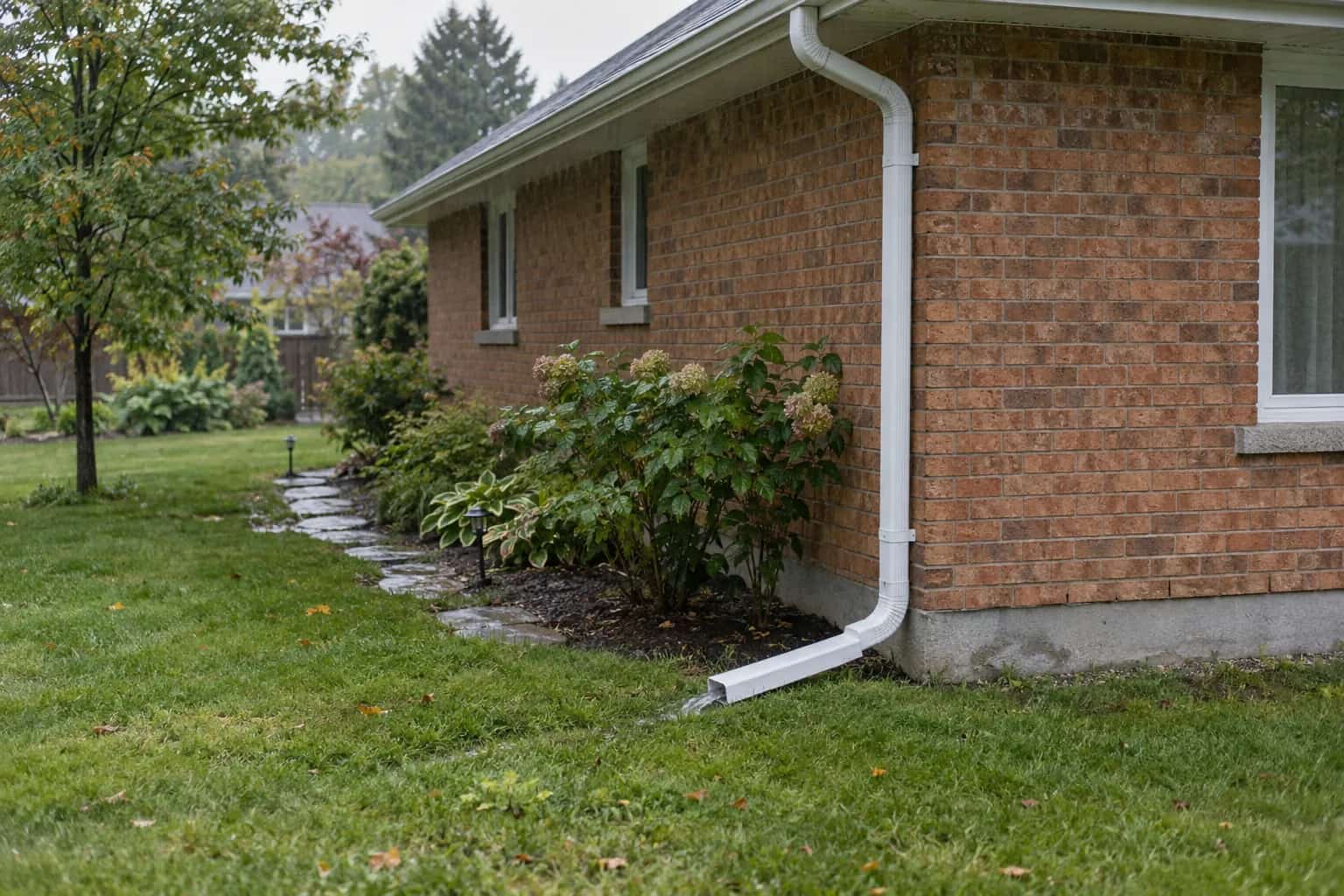
The downspout extension had become a small obstacle course across the lawn. Pat counted the joins while Dave looked at the same muddy patch waiting at its end.
"We are nearly at the shed."
"Then we will have a wet shed lawn."
More distance had not explained the receiving ground. We stopped shopping for pipe and started asking what had happened to that particular patch before the extension arrived.
Distance from the house does not establish that the receiving ground can manage the water. Once separation and discharge rules are addressed, investigate the lawn itself: its levels, soil condition and route for excess water. A longer pipe can move the wet patch without correcting it.
First Decide Whether It Is a Bowl or a Sponge Problem
A local depression can hold water even where surrounding soil drains reasonably. A compacted surface or slow-draining layer can limit absorption. A high water table or already saturated ground can change the problem again. The word clay does not distinguish these conditions.
Look at the shape of the wet area after safe access returns. Does it match a hollow left by old landscaping? Does it follow a machinery route? Is a much wider area wet, including ground not receiving the downspout? Keep those observations separate from assumptions about the soil.
Ontario's stormwater introduction explains that infiltration measures depend on receiving soil that allows stored water to drain. That is why a bag of gravel at the pipe mouth cannot establish that a buried clay layer has become permeable.
Different Reasons a Lawn Stays Wet
Distance alone cannot identify which receiving-ground condition needs correction.
Local depression
Water can collect in a low area even when nearby soil drains.
Restricted absorption
Compaction or a slow-draining layer may limit infiltration.
Wider wet conditions
Groundwater or saturation can affect more than the outlet patch.
Blocked surface route
An obstruction can prevent excess water continuing safely.
The Muddy Rectangle Deserves a History
Picture a lawn repaired after a shed was removed. The surface is green, but the old working area beneath it was compacted and the finished patch is slightly lower. The downspout extension now ends there because it was the easiest place to put it.
We want the old site photograph before the shopping list. Not because every wet rectangle conceals a shed, but because previous use can explain a very specific patch. The investigation should test that explanation rather than turn it into a verdict.
Collect dates of paving, excavation, heavy equipment access and imported soil. Note whether the problem existed before the downspout moved. If the lawn was already wet, the new outlet may have added to an existing condition instead of creating it from nothing.
Observe What Happens Between Events
Record roughly when the water appears and whether it recedes during dry weather. Include nearby rain, snowmelt and any irrigation. Do not deliberately saturate the area to create a more impressive photograph.
Persistent wetness across the yard deserves a broader assessment than one outlet. A local pool behind a new raised border suggests a different starting point. Side-yard swales can be obstructed even when the pipe now seems far from the building.
Winter adds another variable. If the problem only occurs during a thaw, compare it with frozen-ground runoff before assuming the lawn performs the same way all year. Keep the seasonal record; it helps distinguish conditions a single summer visit cannot show.
An old photograph showed where a shed and its working area had been. That did not prove the cause, but it gave the soil investigation a better question than "is this clay?" We kept the compacted-area possibility separate from the visible depression. Two plausible explanations can occupy the same muddy rectangle.
Choose Work That Addresses a Finding
A drainage assessment may involve measuring levels, investigating soil layers and identifying groundwater constraints. Ask where and at what depth any test was performed. A result from the upper garden soil should not be presented as proof of the conditions beneath a proposed deep installation.
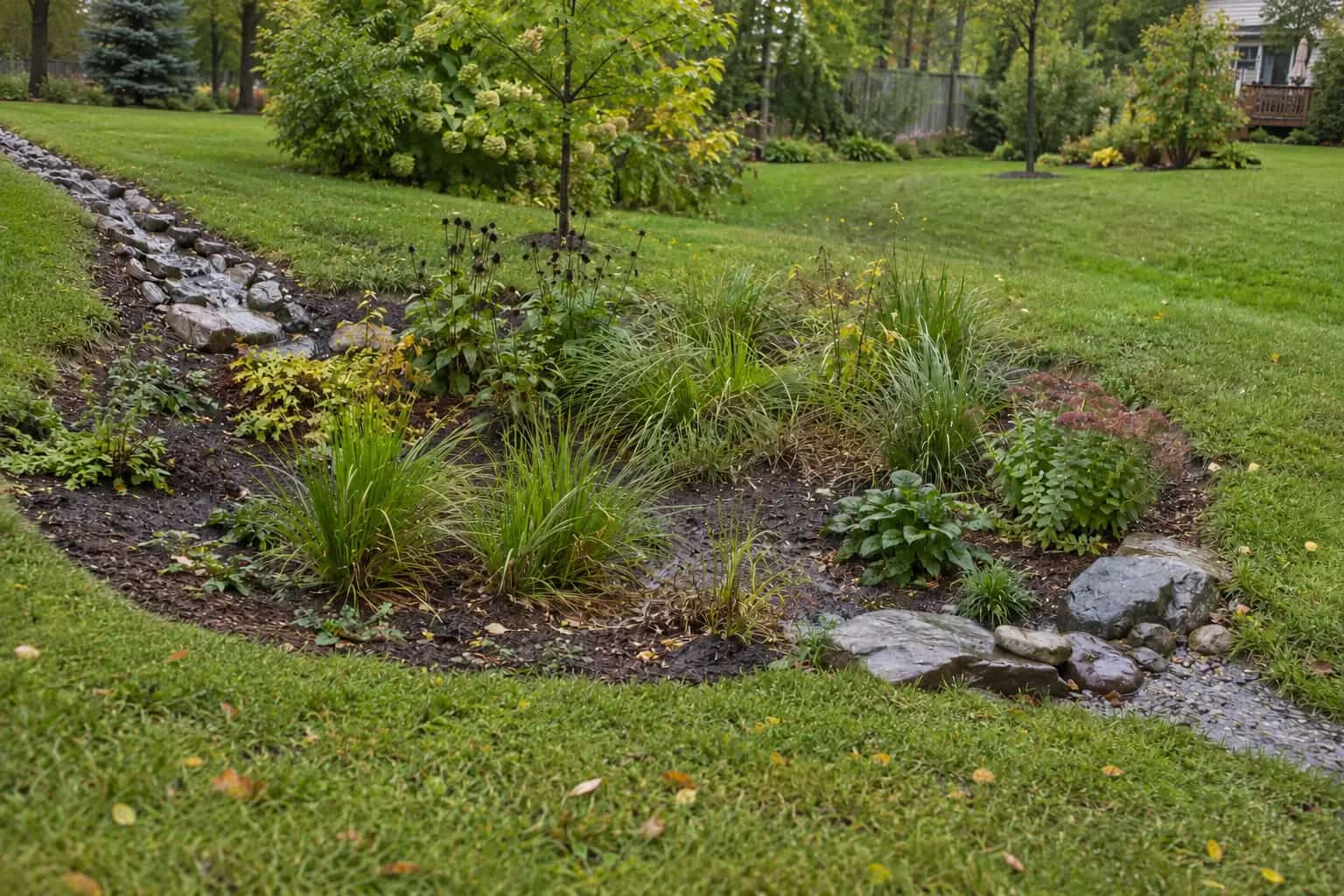
Possible responses might include correcting a depression, addressing compaction through an appropriate landscape treatment, revising the receiving area or designing a drainage measure. Each needs a reason tied to the finding. Do not raise soil against building openings or fill a functioning shared channel to make one patch dry.
A soakaway is not the automatic next purchase. Credit Valley Conservation's soakaway guidance excludes high-water-table and excessively ponded locations. If the proposed solution depends on infiltration, the reason it will perform better than the current receiving area needs to be explicit.
Keep a Safe Route for Water That Does Not Soak In
Even an improved lawn needs consideration of where excess water travels. Mark the next-lowest route and nearby foundations, window wells and paths. A patch that dries faster is not a success if the correction sends water toward the neighbour's basement.
Have the final scope distinguish the pipe work from the soil or grading work. Keep photographs of the original wet area and the completed levels. Compare the same location during later ordinary rainfall.
The extension has a useful job: delivering water to a suitable place. Once it reaches that place, adding more pipe is no longer the only question. Sometimes the lawn needs a diagnosis before it needs another metre of white plastic.
The spare pipe stayed spare. If the receiving soil or levels needed work, another metre of plastic would only make the route to the same problem longer.