
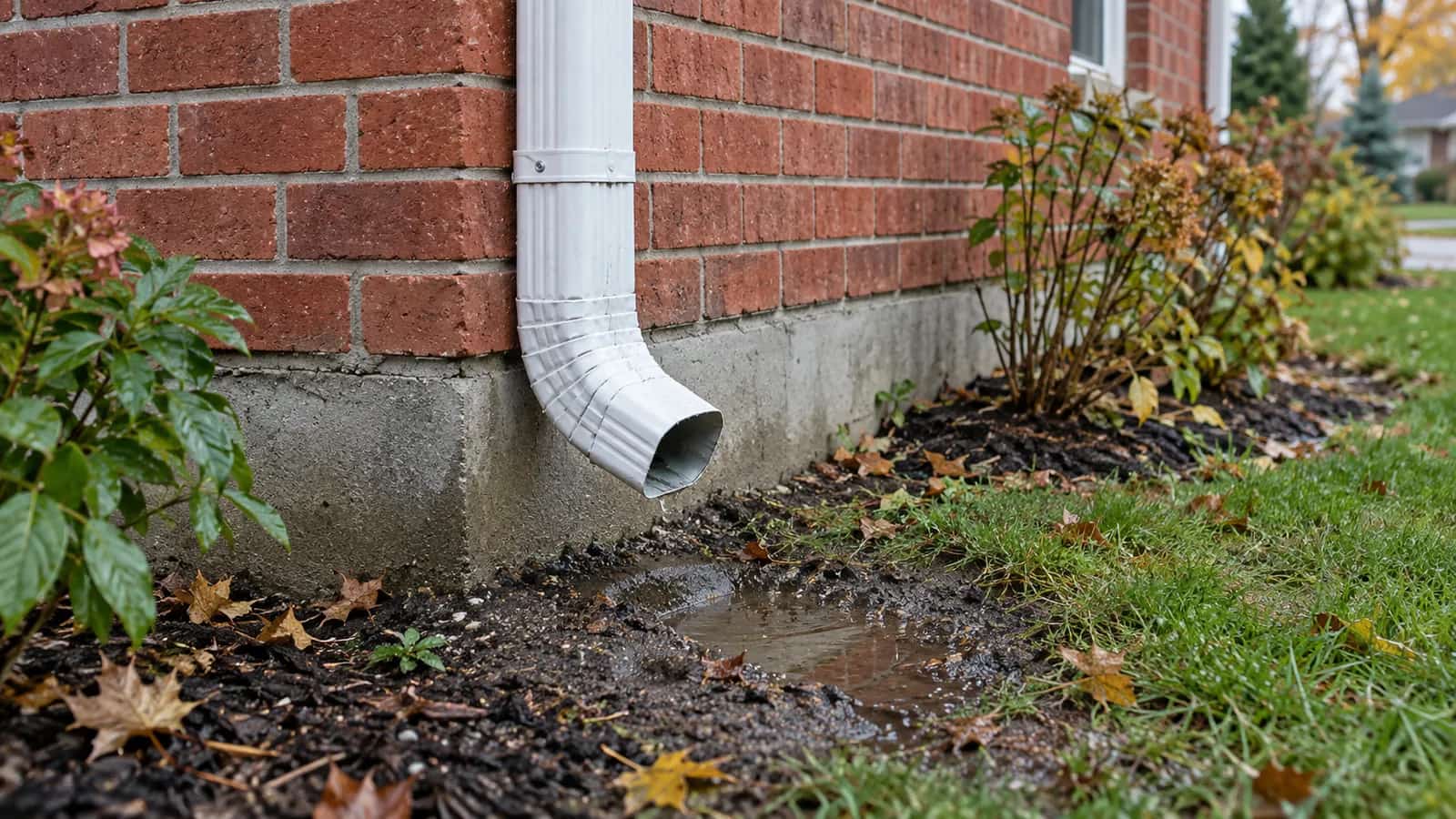
The downspout extension clears the owner's flower bed beautifully and sends the water straight toward the neighbour's gate. Dave follows the route with his eyes. "We have moved the puddle," he says. "We have not finished the drainage plan."
Runoff follows the ground after it leaves the pipe. Keeping an extension inside your boundary does not establish that its discharge stays away from neighbouring buildings or openings.
Draw the Route Beyond the Outlet
On a simple plan, mark the house, property boundary, neighbouring walls, doors, window wells and paved surfaces. Add arrows showing where water actually travels during rain. If the route is unclear, a grading or drainage professional can assess elevations rather than relying on an impression that the yard slopes away.
Distinguish a designed shared drainage feature from an informal channel someone has dug beside a fence. Existing swales and easements may have a defined purpose. Do not fill or redirect them without establishing what arrangements apply.
Mike starts with the ground beyond the pipe, including shared routes and any relevant easement or grading constraints. An extension length alone cannot say where water will end up. The fence is not a finish line.
If water starts collecting after landscaping, check whether the side-yard swale has been blocked before moving the outlet again.
The Fence-Line Test
On Dave's sketch, the side-yard strip falls toward a shared passage. Extending the pipe farther down that strip may move the splash away from your wall but deliver it more efficiently to the passage. The extra length has changed where the problem appears, not resolved it.
On a sketch, continue the water arrow until it reaches a genuinely suitable receiving area. If the arrow crosses a vulnerable neighbouring opening, a walking route or an uncertain shared feature, that is the point requiring redesign or site-specific advice. This is a better starting conversation than arguing over a single prescribed extension length.
The route does not end at the elbow
The ground must carry the discharge to a suitable location on your property. An extension that clears your foundation but sends water next door has not solved the drainage question.
Schematic view. Shows relationships, not installation dimensions.
Municipal Guidance Is Location Specific
Toronto's downspout guidance says discharge must not negatively affect neighbouring property. For a Pickering, Ajax or Whitby home, ask the relevant municipality about that address and proposed route. A Toronto web page does not establish the rules elsewhere.
Avoid a universal distance quoted without context. The necessary arrangement depends on ground slope, soils, building locations and local requirements. An extension can be long and still send water to the wrong place.
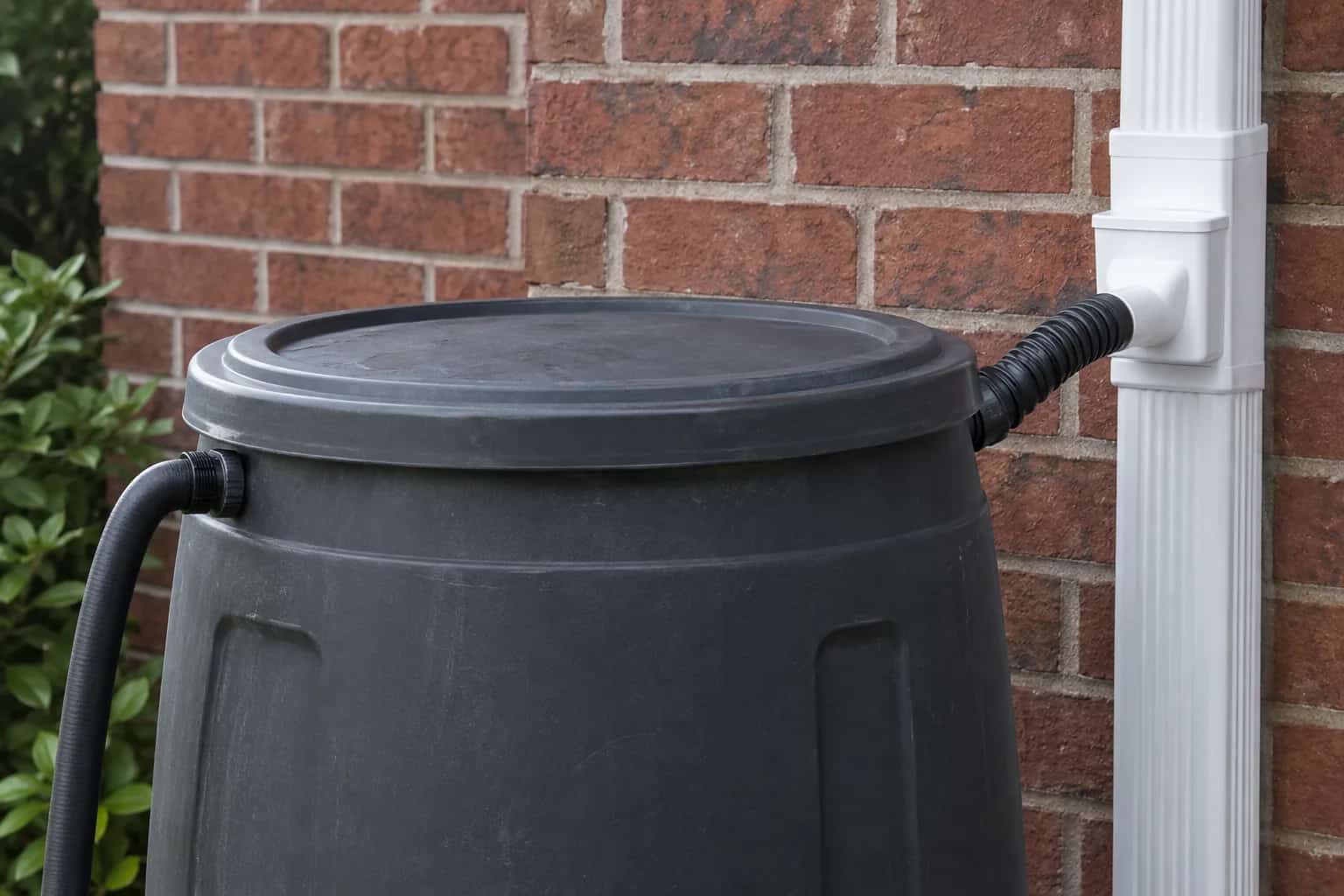
Pat asks what happens when the rain barrel is full. The charming barrel in the catalogue has an overflow somewhere, and that water still needs a suitable destination. A storage container cannot settle a property-boundary question by looking pleasant. Its overflow must work even when nobody is home to empty the barrel.
When There Is Very Little Space
Possible options include relocating the downspout along the building, correcting an unsuitable gutter fall, or obtaining a properly designed drainage solution. Each changes more than the visible bottom elbow. A relocated outlet must still receive water from its roof area, and underground work needs a known, suitable destination.
If a neighbour reports runoff, ask where and when it appears and compare that with your own observations. Photographs of the discharge and receiving area are more useful than arguments about whose lawn was wet first. Arrange professional investigation if the cause is uncertain.
Agree on the proposed route before work, then compare it with the water path during rain. The useful result is safe drainage beyond the pipe end, including the parts near the boundary that are easy to leave out of a gutter quote.
Take the route, photographs and local requirements into the conversation before altering the discharge. At Steady, we prefer an agreed drainage correction to two neighbours photographing the same puddle from opposite sides.