
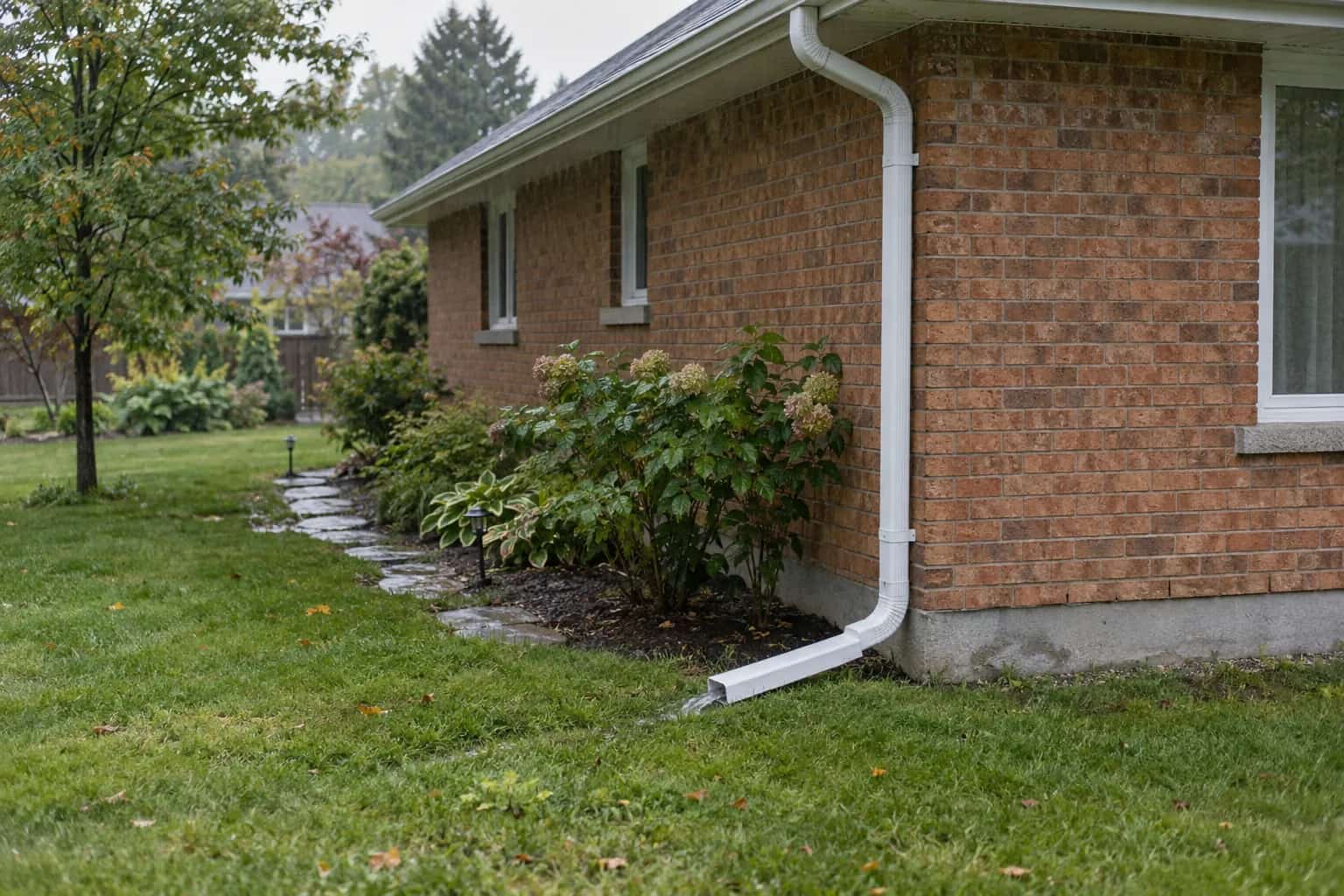
Dave stopped the mower with one wheel in the side-yard dip. Pat had already pointed out the new flower bed, the straight edging and the little lake gathering behind both.
"They fixed the bumpy bit," Dave said.
"The bumpy bit had a job."
The first instinct was to move the downspout. Then we followed the shallow route past the new bed and found that the ground no longer had a continuous way through. The interesting part was not the pipe at all. It was the strip of lawn everyone had been trying to improve.
That dip may have been the route carrying roof and yard water away. Before extending the downspout or filling another puddle, establish where the swale was meant to lead and what changed along it. The lowest part of a yard is not necessarily an unfinished part.
A Channel You Can Walk Across
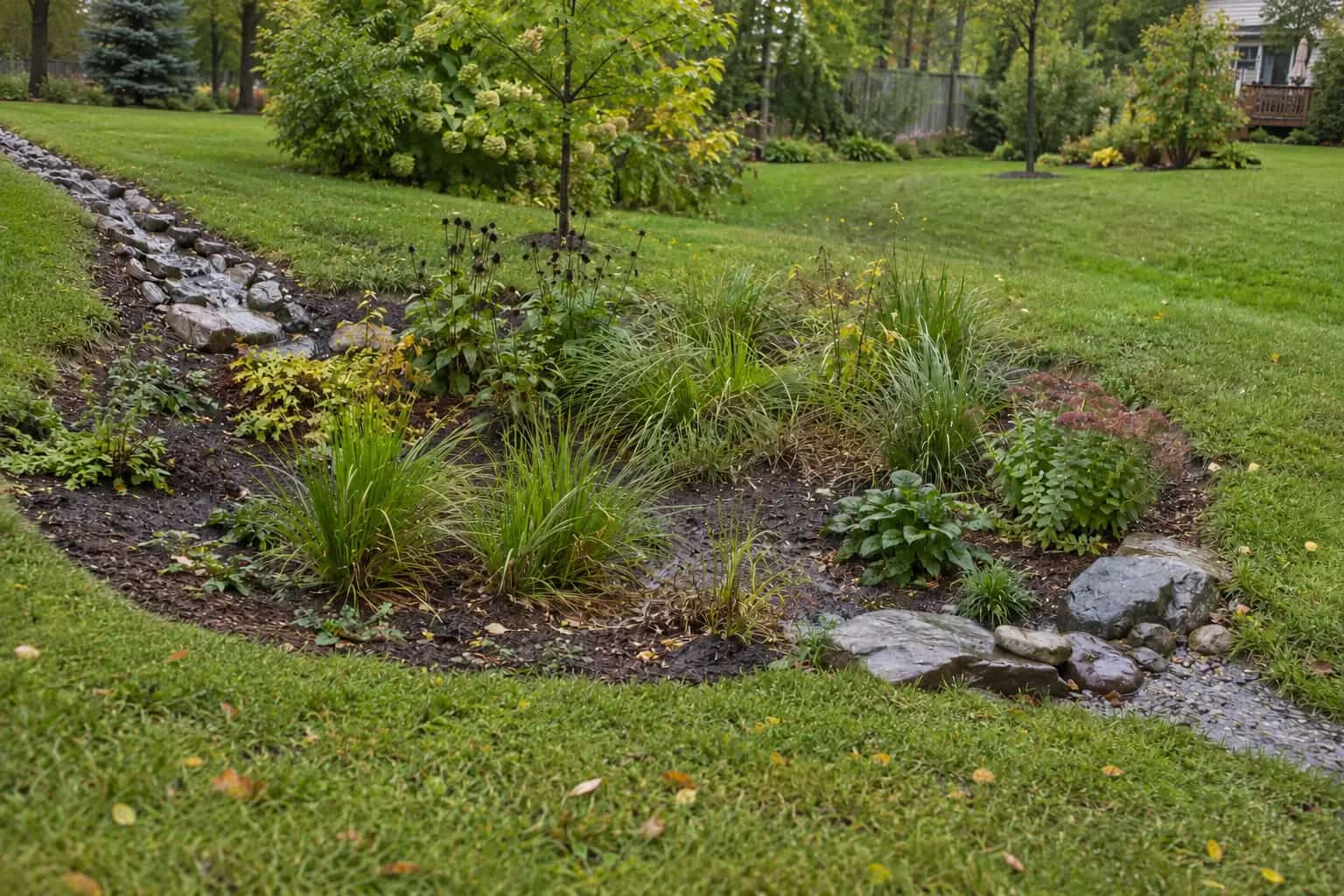
A swale is a shallow surface channel, often grassed. It collects water from adjoining slopes and conveys it toward an intended outlet. It need not look like a ditch. On some lots, the gentle depression between houses is easy to miss until water uses it.
Pickering's drainage guidance describes channels between homes and warns that fence-line gardens can obstruct them. That is a useful local explanation, not permission to reshape a shared boundary yourself. The approved grading arrangement, ownership and conditions on both properties matter.
Picture two lawns sloping toward the same shallow centre line. Raising that centre line changes the route even if neither house receives a new downspout. Adding a solid border across it may let light rain pass slowly while holding back the more concentrated flow during a downpour.
What Happens When the Low Route Is Raised
A raised obstruction can interrupt a route that serves more than one roof outlet.
Roof outlet
Concentrated roof water enters the receiving yard.
Side slopes
The ground directs water toward a shallow shared route.
Obstruction
A raised border or pad can make water spread toward buildings.
Continuous outlet
The correction must reconnect the route beyond the first puddle.
Find the First Place Water Stops
From a safe, dry position, record the route during ordinary rain. Include the downspout outlet, the first pool and the area beyond it in the same photograph. Stay away from deep or moving water and electrical equipment; this is observation, not a reason to walk into a flooded passage.
Then compare the wet-weather view with the dry yard. Useful questions are specific:
- Does water reach the garden border and spread sideways?
- Has a gate threshold or paving strip raised the route?
- Is soil from a new bed sitting in the depression?
- Does the channel continue beyond the shed, or disappear beneath its base?
A pool identifies a low area, but the blockage may be farther along. Removing leaves at the downspout will not lower a raised paving strip six metres away. Equally, a blocked underground inlet at the far end can make an otherwise intact swale appear ineffective.
Before Anyone Brings More Soil
Ask for the existing drainage direction to be marked on a simple site sketch. Add the house, fence, outbuildings, visible inlets and any easement information you have. Old landscaping photographs can show whether a low strip disappeared. Municipal grading records, where available, are more useful than a neighbour's recollection of which way water used to go.
A correction should name both the obstruction and the receiving route. "Regrade the side yard" is incomplete if the outlet remains higher than the new channel. The proposal also needs to preserve clearances at the building and avoid sending the problem onto someone else's property.
Public Safety Canada's grading guidance recommends professional advice before changing levels. In this situation, the useful work is a level survey and a connected grading proposal, not simply a truckload of soil. If the concern crosses a boundary, bring both property owners and the municipality into that conversation early.
At the gate, we put the garden sketch beside a photograph from before the border went in. The planting was not the enemy. The continuous raised edge was the part that needed another thought. Pat traced the old low route with his finger and stopped where the drawing now showed a shed pad. "And we have a sequel." That was the moment the scope grew from one little opening in edging to a proper look at the whole passage.
Make the Garden Fit the Drainage
A planted border may be moved, shortened or redesigned without abandoning the garden. The important choice is whether water still has an intentional, maintainable passage. A tiny gap cut into edging is not automatically enough; the complete route must carry the water expected to reach it.
Keep the route visible in the handover drawing so the next landscaping visit does not undo the repair. Mark where seasonal mulch and snow must not accumulate. Check the same viewpoint after suitable rain once work is complete.
For the separate question of where a pipe may discharge, see downspouts and neighbours. For a yard that remains wet despite an open route, the next question is what the receiving soil can absorb.
The mower could still have an easier life. It just did not get to decide the drainage levels. We kept the garden conversation and the water conversation on the same drawing.