
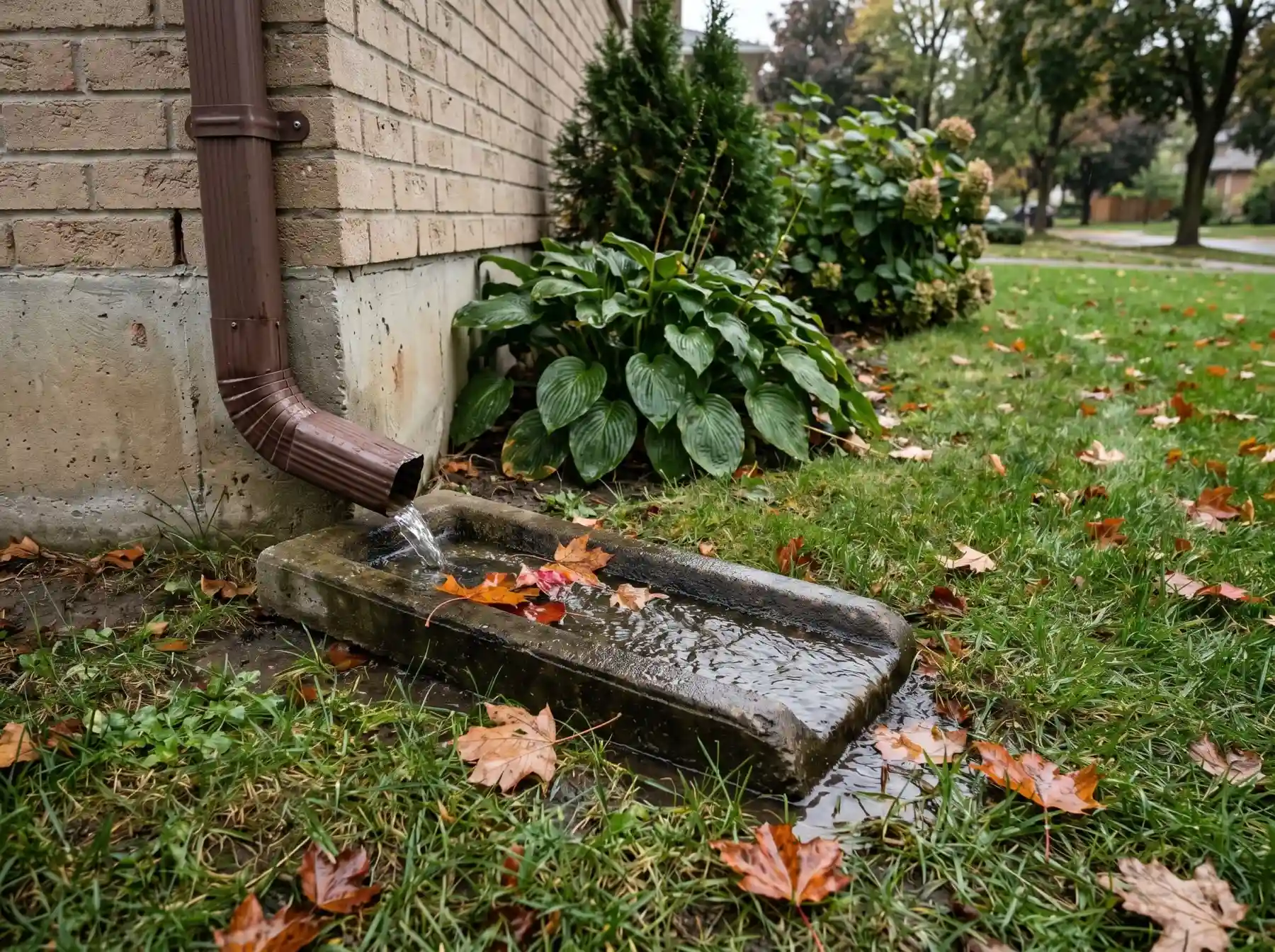
The dehumidifier is full again. You empty it, carry it back downstairs and notice the same damp corner. Outside, the downspout ends in the flowerbed against that wall.
Pat follows the owner outside before discussing another basement treatment. Roof drainage may be contributing, or it may be one of several causes. Either way, that downspout beside the damp corner belongs in the investigation. The dehumidifier has already put in enough shifts to deserve somebody checking where the water arrives.
Start where the water lands
A gutter's job does not end when the water enters the downspout. Follow it to the ground. Does it spread into the garden away from the house, or pool beside the foundation? Does the extension cross a path that will freeze in winter?
Toronto's drainage guidance puts the destination first: away from foundation walls, without harming a neighbour's property or discharging directly onto a City sidewalk. Check your municipality's requirements before changing the route.
Dave rules out the easy-looking turn toward next door. Moving the puddle across the boundary will not improve the drainage plan or relations with the neighbour.
Follow the rain
The job ends away from the wall
A gutter can catch every drop and still leave you with a problem at the downspout's exit.
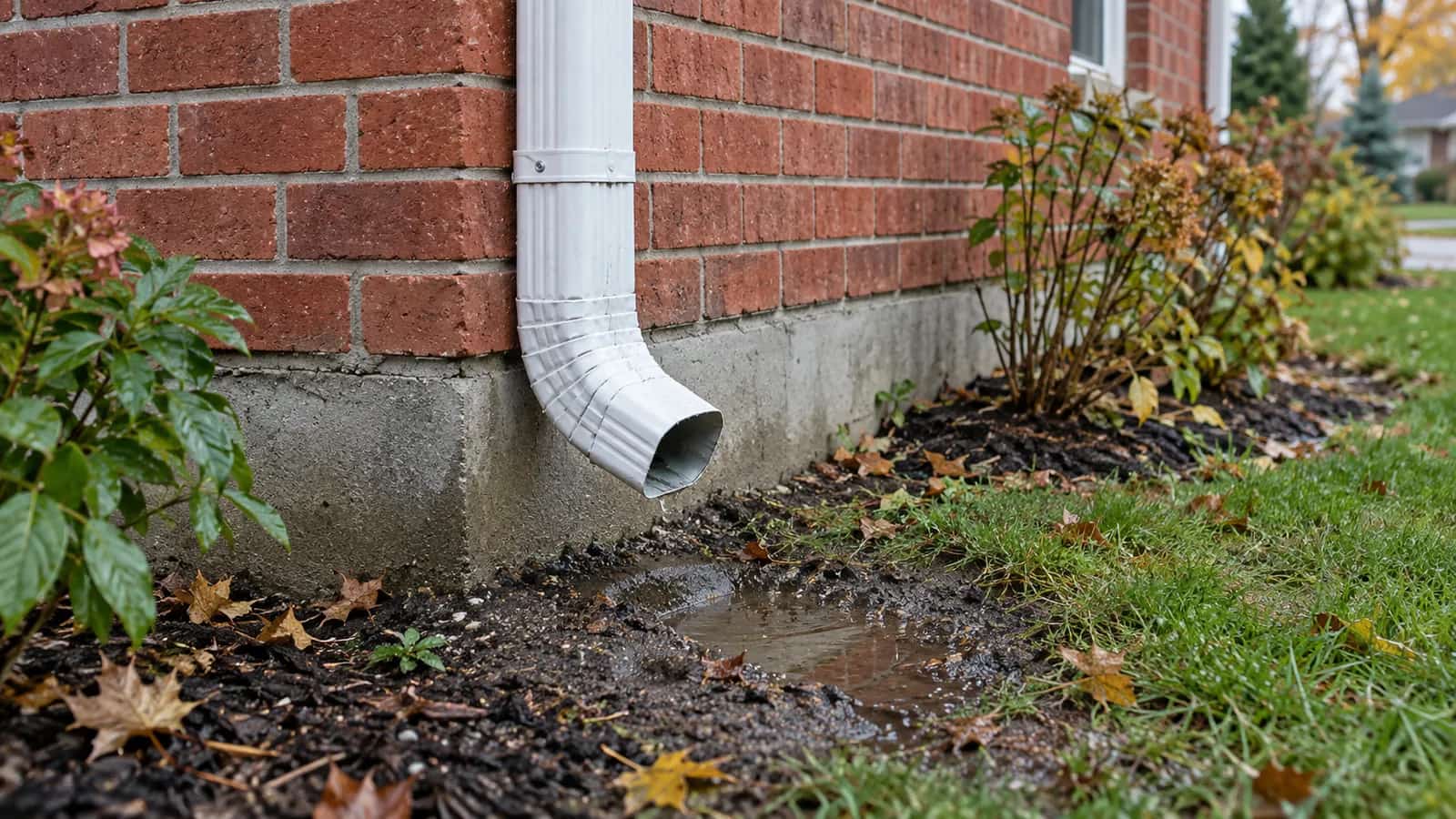
The water ends up beside the house.
A working eavestrough can still leave you with a drainage problem if its downspout empties against the foundation.
- Look for
- Pooling, splashing or soil washed away at the outlet.
- Ask about
- The discharge point and the slope of the ground beyond it.
Concept only. Site grading and local drainage requirements determine the right arrangement.
Three places to watch
The joint. A steady drip at a seam can soak the same strip of soil through a whole afternoon of rain. The repair might be local; one leaking joint does not condemn every gutter.
The front edge. Overflow can come from debris, a blocked outlet, poor slope or insufficient capacity. A clean gutter can still overflow. Ask what is restricting the route before buying a larger trough.
The exit. A crushed extension or an outlet buried in leaves can undo perfectly good work above it. Check accessible sections after the weather clears.
Observe from shelter or a window. A storm is a poor time to introduce a ladder into the story.
Give the contractor the whole picture
Show Mike the exterior pool and the damp area indoors, with their timing after rain. He wants both sides of the wall in the discussion. The relationship is useful evidence, but it does not prove that a gutter correction will cure the basement by itself.
Match the repair to the failure: a blocked elbow needs clearing; a low section needs its alignment corrected; an outlet beside the wall needs a better discharge route. Replacing everything is not the only possible scope. IKO explains why alignment matters; standing water can remain even after the leaves are gone.
A backwater valve addresses a different route; check which rain-entry problems it cannot prevent while fixing runoff beside the foundation.
Then check another rain
Take the next photographs from the same position after repair. Does the water now reach its intended destination? How will wet materials be assessed and dried? The first question tests the drainage change; the second deals with the water already in the building.
If the corner remains damp, continue the investigation. Pat is happy to retire the bad downspout route from the list of problems. The dehumidifier continuing to fill is a reason to keep looking, not defend a gutter repair as the answer to everything.