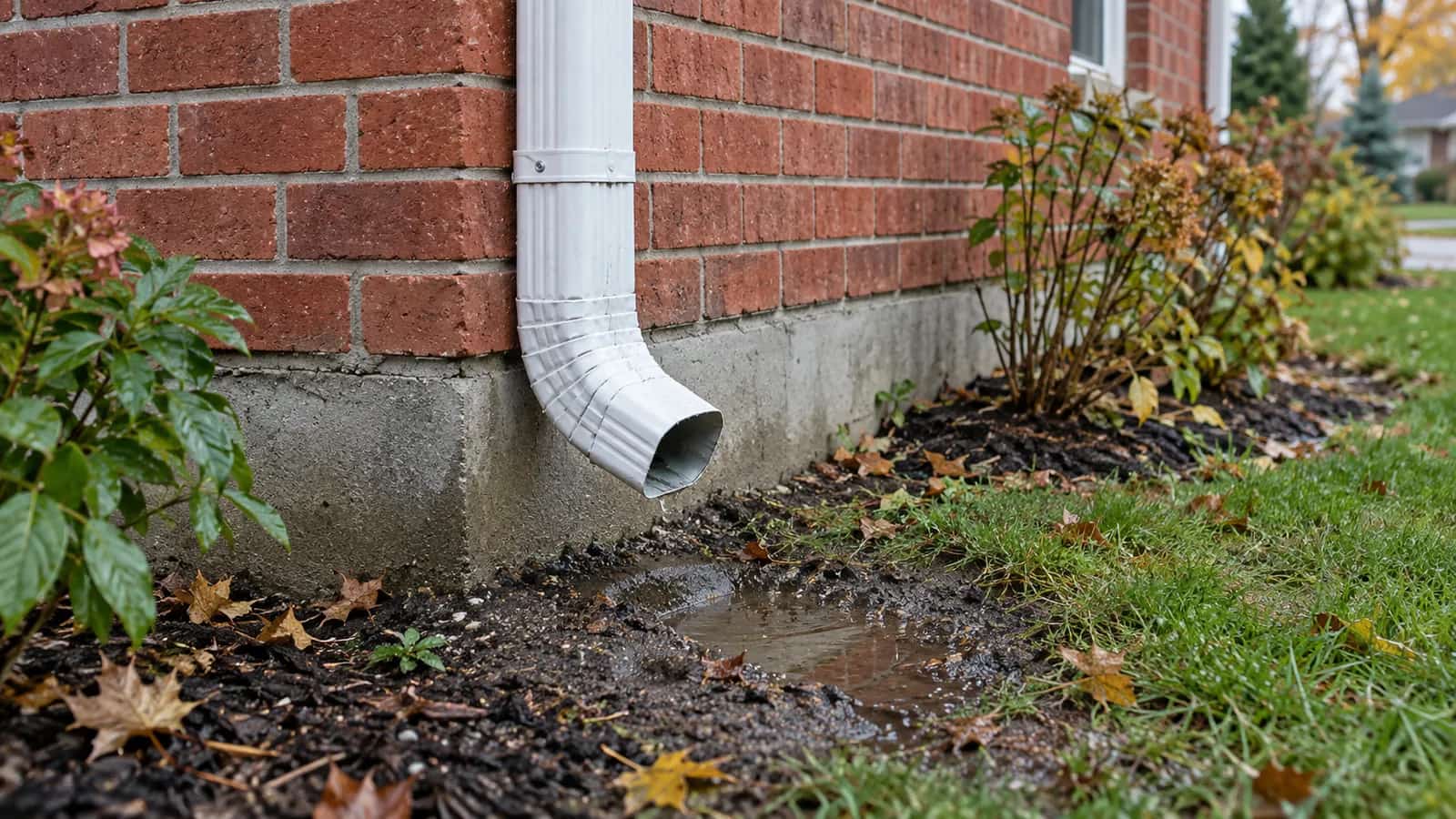
From the deck, the downspout extension looks sensible: water is going away from the house. At the ravine edge, Pat stops. The outlet is aimed at a fresh groove in the ground. Moving roof water away from a foundation is only half the job; its destination must be suitable too.
A roof collects water over a broad area and releases it at a concentrated point. That changes what the receiving ground must handle; moving the outlet onto your own slope does not establish that the destination is safe. The first decision is about the site, not the length of pipe. Before trenching, adding a soakaway or directing a new outlet toward the slope, obtain advice from the municipality and the conservation authority responsible for the property.
A Small Outlet Can Make a Deep Channel
TRCA's erosion guidance identifies concentrated runoff as a cause of gullies and slope instability. Water can remove surface soil and saturate the ground. An outlet that appears harmless in dry weather may become much more consequential during prolonged rain.
Look from stable, accessible ground for a channel beginning near the discharge, exposed roots, freshly washed soil or a change in the edge of the bank. These observations help an assessor locate the concern; they do not establish how stable the slope is. Keep away from a crumbling edge and do not descend the bank to find the end of the water trail.
A pipe ending farther downhill also needs assessment. It may move the visible erosion somewhere harder to see without resolving it. Likewise, spreading stones at the outlet is not evidence that the whole slope can accept the flow.
"Could we just make the pipe longer?" the owner asks. Pat follows the proposed route with a finger, then stops at the slope. A longer pipe would move the outlet, not answer what happens after discharge. They mark that destination on the sketch before comparing any hardware.
Where a splash pad is already present, check whether it protects the landing while erosion continues farther downstream.
Soaking Water In Is Not Always the Better Alternative
Rain gardens are useful in suitable places. That does not make a rain garden beside a steep bank a harmless substitute for a pipe. TRCA's rain-garden guide specifically cautions against locations near steep slopes because added infiltration can affect stability.
Back at the sketch, Pat adds the top and bottom of the slope, the buildings and the overflow route. That gives the adviser a site to assess. A generic garden setback cannot establish what this particular ravine can accept; separation and review depend on the actual conditions.
This is also where a rain barrel has a limit. It may capture useful water between storms, but a full barrel sends incoming water onward. Its overflow needs the same careful destination check. The barrel overflow article covers that connection.
The barrel is already on the shopping list. Dave adds a second line: overflow. The owner laughs, then draws the same troublesome slope beneath it. That small correction saves them from buying storage and calling it a drainage design.
Before Extending Toward the Slope
Each route needs a receiving-site assessment, including its overflow.
Pipe down the bank
Concentrates discharge at a new point; distance alone does not establish suitability.
Infiltration near the edge
Adds water to the ground; slope stability must be considered.
Site-designed route
Coordinates collection, receiving ground, overflow and applicable approvals.
Make the Assessment Useful Before Buying Materials
Explain whether you are correcting an existing outlet, adding roof area or changing the ground. Bring a simple location sketch and any available grading or drainage plans. Ask which approvals and technical assessments apply before choosing excavation or outlet work. TRCA's guidance is particularly relevant within its jurisdiction; another conservation authority may be responsible elsewhere in Ontario.
A useful proposed solution answers three questions: where does roof water go during ordinary rain, what happens when that route reaches capacity, and how does the change affect the slope? That is more informative than a promise to get the water farther from the house.
If new ground movement or rapid erosion is visible, keep people back and seek prompt site-specific help. Drainage is worth improving, but the repair should protect the house and the land below it together.