
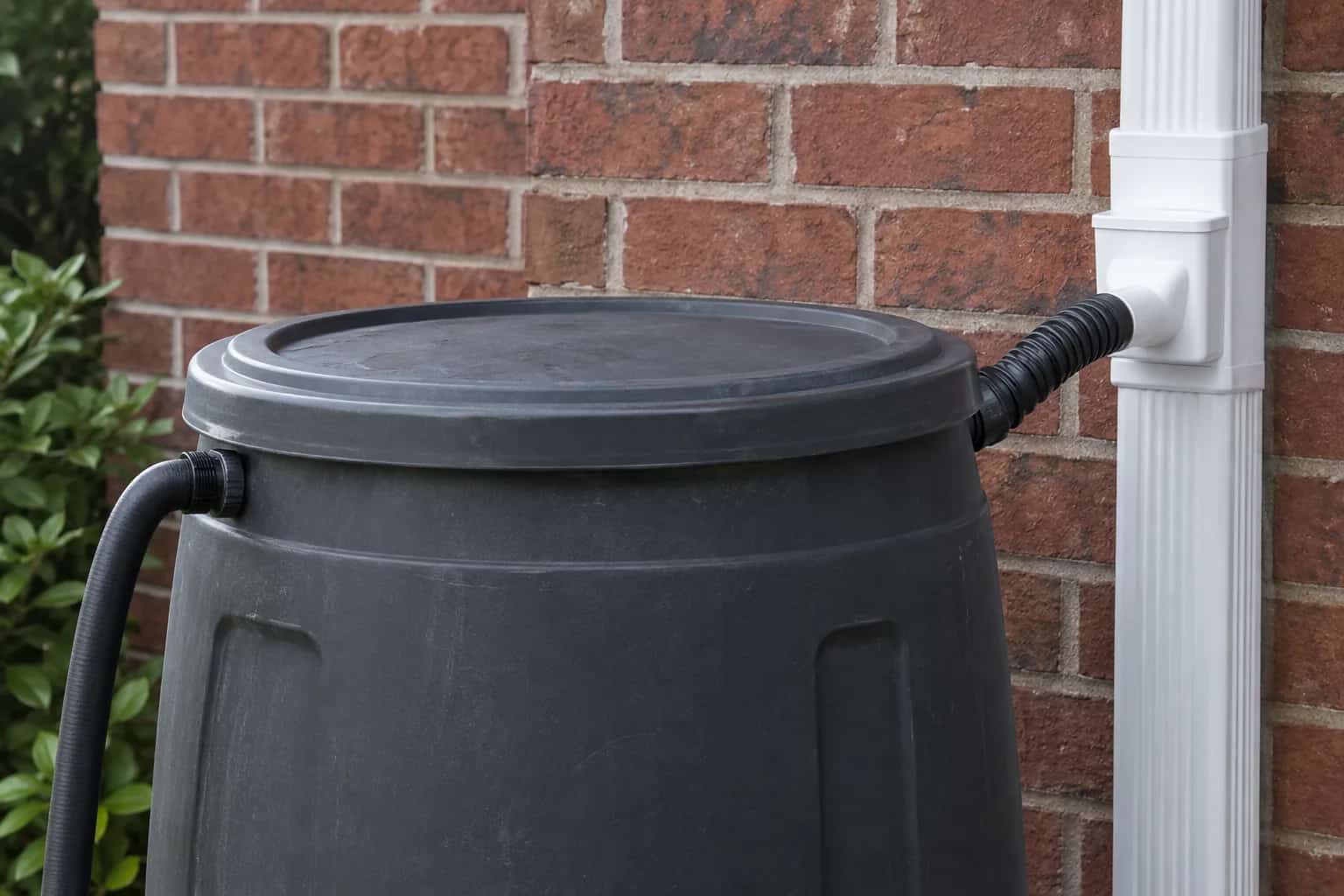
Pat was admiring the tomatoes when the overflow hose disappeared behind the barrel stand. Dave followed it and found its end pointed toward the house. The barrel had been placed beautifully for watering. Nobody had finished the plan for the afternoon when the garden wanted no more water.
Choose the full-barrel discharge route before choosing the barrel. The roof will keep supplying water after the storage is full and the tomatoes have had enough.
The amount can be surprising. Ten millimetres of rain falling on a 20-square-metre roof area represents 200 litres before collection losses. A barrel of roughly that capacity can therefore fill during an ordinary wet period. If it already contains water, the available storage is smaller still.
Understand the Particular Barrel
Some installations receive the downspout directly and use a separate overflow fitting. Others use a diverter intended to return excess flow to the downspout when the barrel fills. These are different arrangements, and installation height or hose routing may matter to the diverter's operation.
Read the instructions for the actual barrel and diverter together. For example, Lee Valley's 208-litre barrel includes a dedicated overflow connection. That feature does not establish where the homeowner should send the overflow on a particular lot.
A small garden tap near the bottom is for drawing stored water. Leaving it cracked open is not a reliable substitute for a properly sized overflow arrangement. It may be closed by the next person watering the pots, and a narrow hose can pass much less water than the roof supplies during heavy rain.
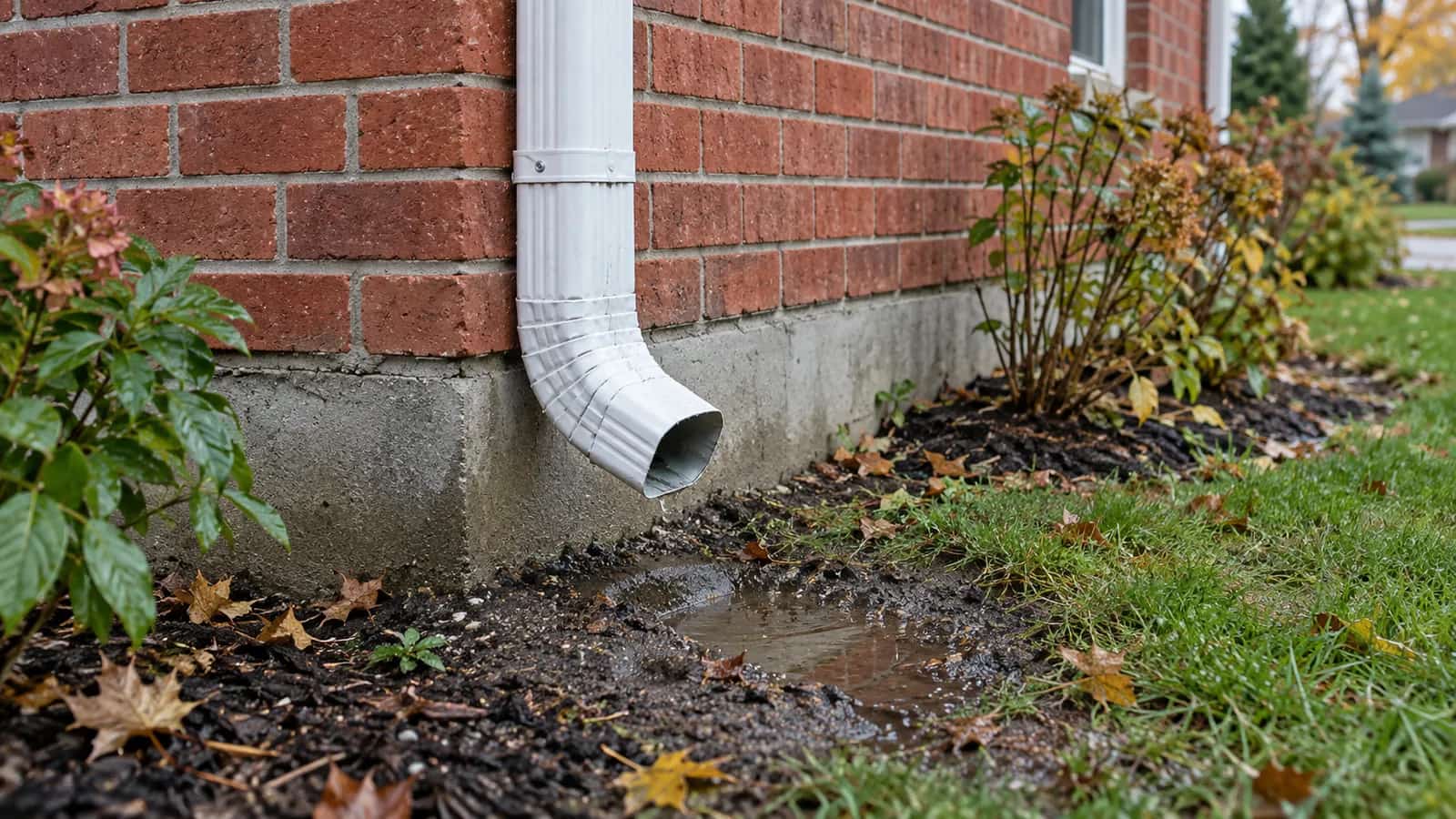
Now trace it with both barrels full
Adding a second container increases storage, which can be useful between showers. It also adds another connection and another place to check. Once both are full, the final overflow still has to pass the incoming water to a suitable destination.
The proposed answer was a second barrel. We liked the extra storage, but Dave traced the route again with both containers imagined full. Same question at the end. "The third barrel can't be me holding a bucket," Pat said. If the plan depends on opening a tap, carrying water or being home, give it a dependable overflow arrangement instead.
Before adding another barrel, compare roof catchment, usable storage and garden demand to see which part of the supply is actually limiting you.
A Small Rainfall Can Produce a Large Volume
One millimetre of rain on one square metre equals one litre. On a 100 m² horizontal catchment, 5, 10 and 20 mm therefore represent 500, 1,000 and 2,000 litres before losses. This is water falling on the catchment, not guaranteed barrel yield. Overflow planning also depends on rainfall intensity and duration, available storage and the safe discharge route.
Worked example, not a drainage sizing standard. Actual layouts and design conditions need separate assessment.
The Hose End Is Part of the Installation
Check for kinks, uphill loops and an outlet buried in mulch. A hose that disappears behind shrubs is not necessarily draining safely. Confirm that the receiving area can accept the water and that it does not run toward the foundation, a window well or neighbouring property.
If a barrel cannot serve the intended use, compare larger cistern storage and its full-tank overflow route before adding capacity.
Keep the Installation Serviceable
While we were behind the stand, we checked whether the fittings and screens could actually be reached. Debris can restrict entry or overflow, and moving a full barrel is a poor inspection routine. The design still needs its stable base and secure cover; leave enough access to spot a leak and service the connections without rearranging the garden.
A controlled check can confirm the diverter or overflow operates, following the manufacturer's directions. Observe the installation during rain too, including the wall behind it. Water escaping around the lid may mean the intended overflow is restricted or cannot keep up.
Before freezing weather, use the winter changeover guide to restore ordinary downspout drainage while the barrel is stored. A good installation has two complete configurations: useful summer collection and dependable winter discharge.
We finished at the hose end, not at the barrel lid. That less photogenic part of the garden decides where the next roof load goes. Keep it visible enough to check after mulching, moving pots or changing the stand.