
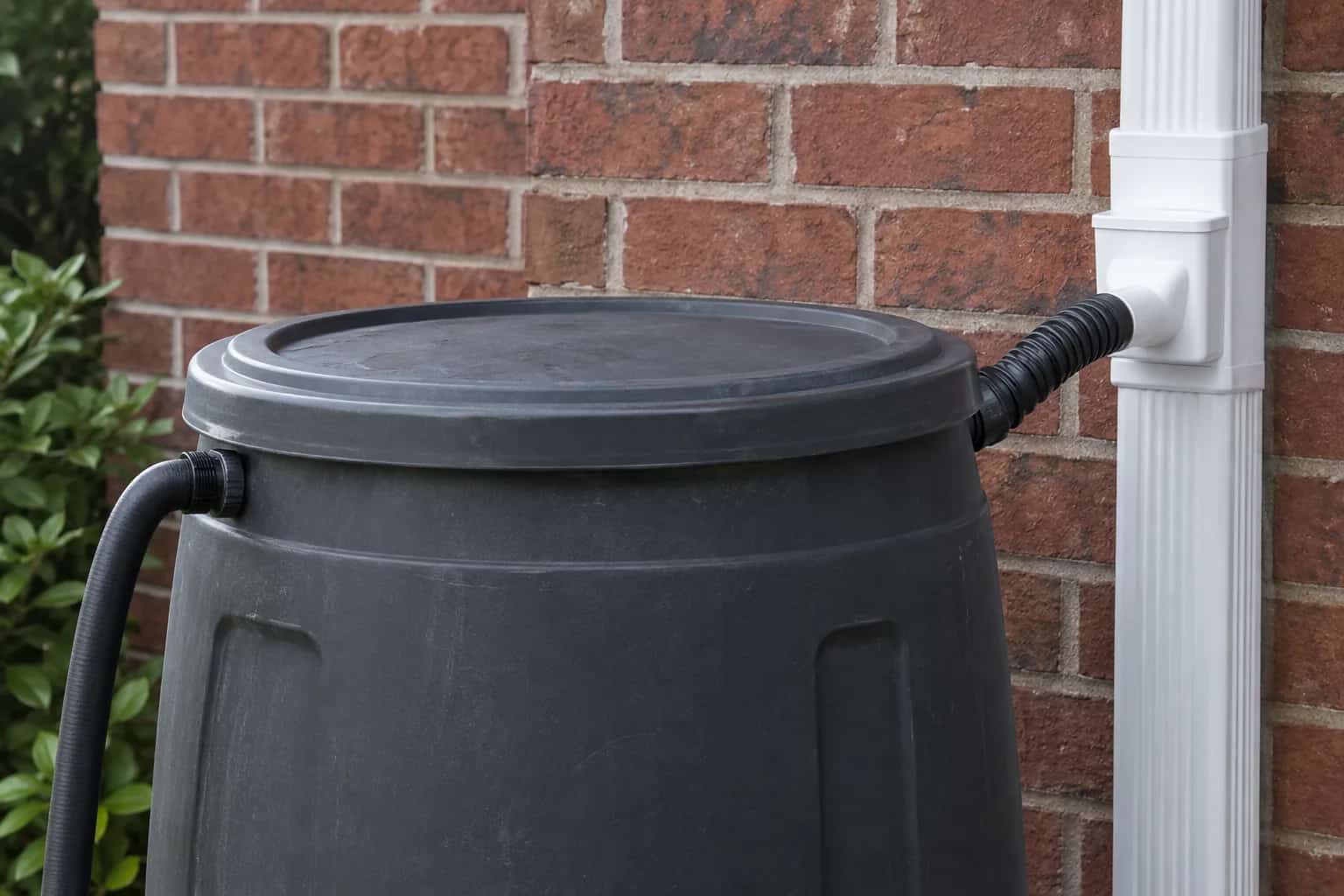
The barrel was clean, empty and proudly tucked into the shed. Outside, its cut downspout still aimed at the wall. Pat looked at the empty space. "The barrel has retired for winter. The roof hasn't."
Restore the roof's discharge route on the same day you remove the barrel. Drain and store the container to its instructions, including valves and low fittings, before freezing weather makes the job awkward.
Follow the barrel manufacturer's instructions for valves, hoses and diverter components too. A container that looks empty can still hold water in a low fitting.
Identify the Summer Arrangement
A downspout ending over a barrel opening usually needs a replacement section and extension to restore drainage. A diverter system may instead have a winter setting or a manufacturer-specified bypass arrangement.
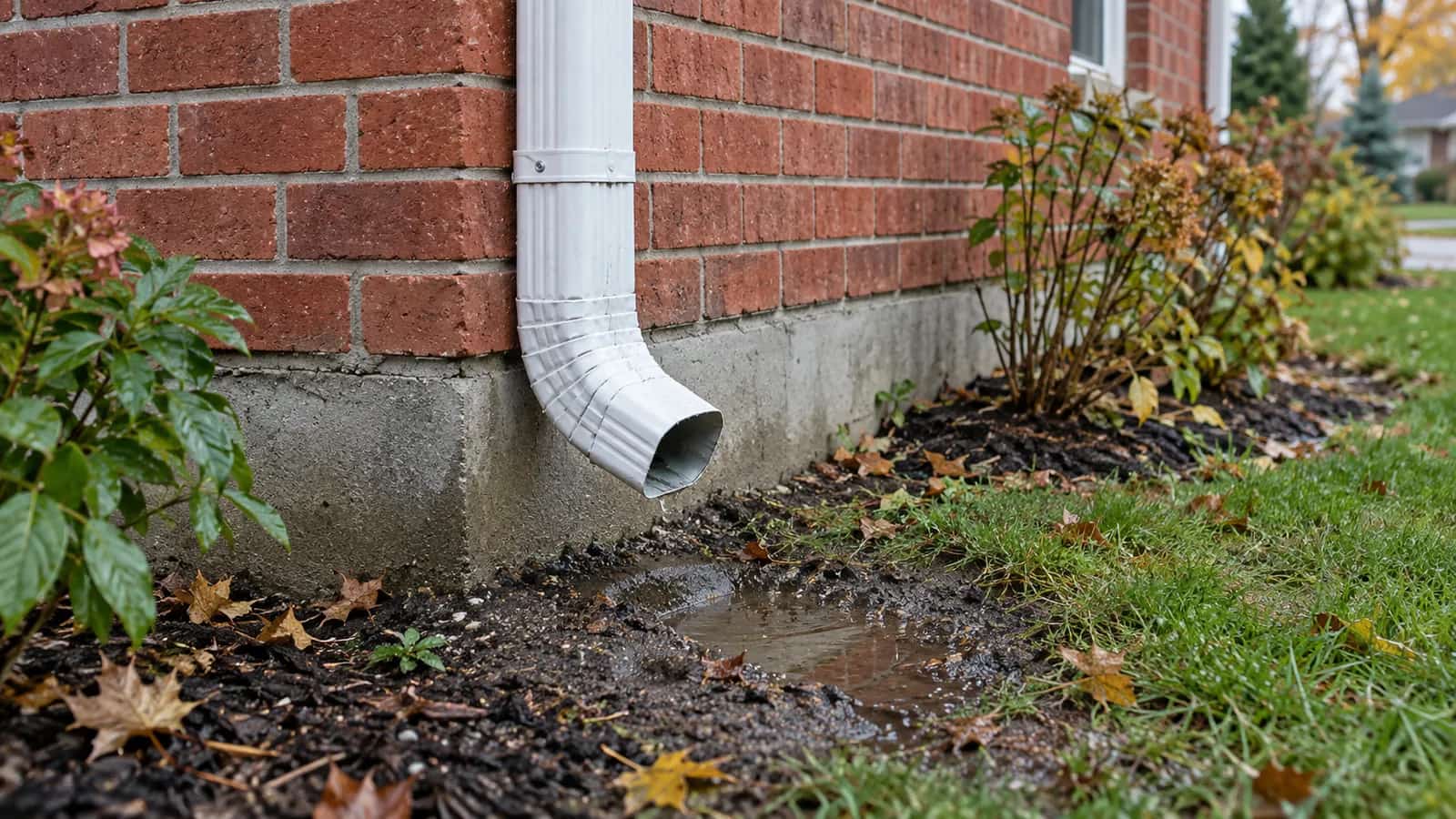
Find the winter elbow before dismantling anything
Dave found the winter pipe behind a stack of plant pots, but the elbow was elsewhere. We stopped dismantling until the complete route was ready. Store those parts together, check that they fit and confirm the discharge area is usable before removing the barrel. "Temporary" is a remarkably durable installation method once the weather turns unpleasant.
For a diverter, the equivalent preparation is understanding its actual winter setting and any parts that need removal. A shut hose valve may only close the hose. It does not prove the main waterway has been restored. Use the instructions for that model rather than the appearance of the lever.
Change Over Without a Drainage Gap
Storage removal and downspout restoration belong together.
Prepare parts
Identify the correct winter pipe or diverter setting.
Drain storage
Empty barrel and fittings to a suitable receiving area.
Restore discharge
Reconnect a secure, continuous downspout route.
Verify in rain
Check joints and the outlet before freeze-thaw weather.
Drain the Barrel Without Creating a New Problem
Choose a suitable receiving area for the stored water. Avoid emptying it onto steps or a path when temperatures could fall below freezing. Do not release the whole barrel beside a window well just because the hose already reaches there.
The barrel's weight changes substantially as it drains. Empty it before moving it, and get help if the container or location makes handling awkward. Clean and store it as instructed, keeping it secure against movement and unintended refilling.
Toronto's seasonal guidance pairs winter barrel removal with restoring an extension away from the house. That pairing is the important practical step: storage removal and roof drainage belong in the same task.
Look at the Former Barrel Connection During Rain
The replacement pipe should connect securely, without a reduced opening or a loose hose dangling from the diverter. Look along the extension for a low pocket that can retain water. Confirm the final outlet remains visible and that its receiving area does not send runoff back toward the wall.
We checked where the bins and cleared snow would go before choosing the winter outlet. The open patch in October could become a snowbank later. Leave a route that can be inspected from the ground without crossing ice or reaching beneath a heavy overhang. This was the part of the changeover the empty barrel in the shed could not show us.
Run a modest controlled check where safe, then observe the next rain. Water should follow the intended route without escaping from the former barrel connection. Check again after the first significant snow clearing, when the landscape around the outlet may have changed.
When spring collection resumes, recheck the overflow route as well as the inlet. Fittings can shift during storage and landscaping can change the receiving ground. The old arrangement deserves a fresh look before its first full barrel.