

Dave had just finished clearing the lawn when Pat spotted leaves still packed in the garage valley. Then the lowered gutter end came into view. "Good news," Pat said. "The grass is ready for winter."
A short ground-level inspection can find the roof work to arrange before snow hides it. Bring your phone and binoculars if you have them. Keep both feet on the ground and make a repair list rather than a climbing plan.
You can spot plenty worth fixing with both feet on the ground. Bring your phone and binoculars if you have them. The aim is a short, useful repair list, not a climb onto the roof.
First lap: look up
Choose a dry, bright day and stop where each roof slope is visible. Save a wide photo from each position. Next autumn, you can compare the pictures instead of debating whether that edge always looked like that.
- Shingles: look for missing sections, lifted edges or pieces on the ground. Photograph the area and its wider surroundings.
- Roof junctions: note visibly displaced metal around chimneys or where a roof meets a wall. You cannot judge every flashing detail from below.
- Leaves and branches: record debris collected in roof valleys and branches touching the roof. Arrange removal without walking onto the roof yourself.
- Roof edges: check for hanging trim, damaged soffit panels or an eavestrough pulling away.
GAF's ground-inspection guide recommends looking for damaged shingles, debris and visible drainage problems. Take the photos from stable ground. Keep a wider photo too, so the roofer can locate the detail.
Follow the rain
Include the whole water route
Your autumn check should continue past the shingles, through the gutters and onto the ground.
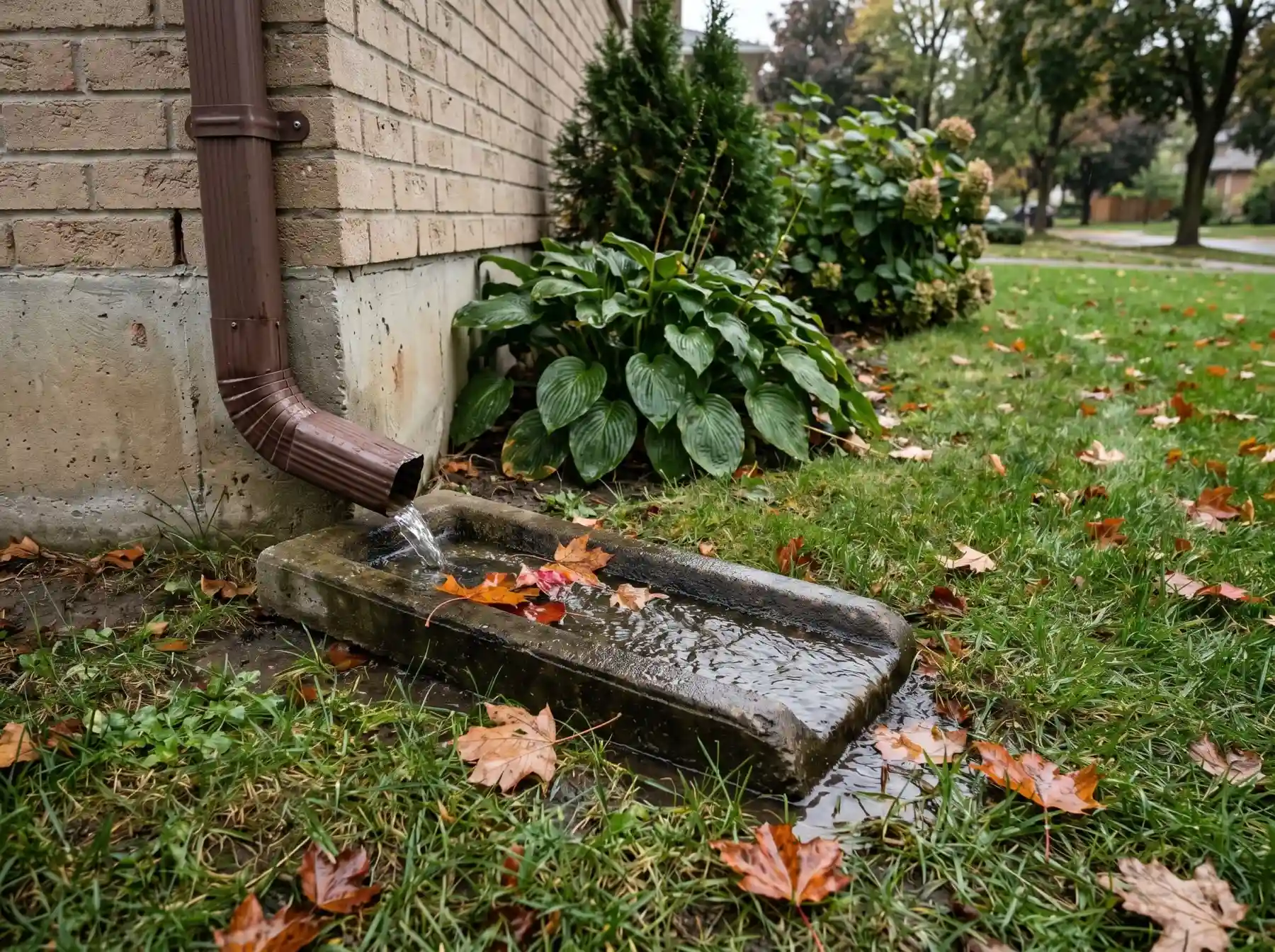
The water ends up beside the house.
A working eavestrough can still leave you with a drainage problem if its downspout empties against the foundation.
- Look for
- Pooling, splashing or soil washed away at the outlet.
- Ask about
- The discharge point and the slope of the ground beyond it.
Concept only. Site grading and local drainage requirements determine the right arrangement.
Come back when the water is moving
During ordinary rain, from a sheltered position, notice where water goes. Does an eavestrough spill over in one place? Is a joint dripping? Does the downspout discharge beside the foundation or across the path you use in winter?
Record the spill before ordering another cleaning. Leaves might be responsible, but a sagging section or restricted outlet needs a different fix. Cleaning cannot straighten a low gutter.
The City of Toronto's maintenance guidance recommends eavestrough cleaning at least twice yearly and checking elbows and outlets. It also advises directing discharged water away from foundations without sending it onto neighbouring property or City sidewalks. Keep local drainage requirements in mind outside Toronto.
If water collects beside the house, read how eavestrough problems reach the foundation.
Give last winter's problem a place on the list
Inside, check top-floor ceilings for new marks or peeling paint. Note the room and whether anything changes after rain.
Back inside, we found the March photograph of the heavily iced eave. It had somehow missed the autumn list. Dave added it beside the new observations; Pat declined to let "we'll see how it does this winter" count as an investigation. Our ice-dam guide explains why gutter cleaning alone may not address that recurring problem.
We put active leaks, missing shingles and loose components above appearance on the list. Then we marked what the walk could not show and requested inspection photographs, including the attic where moisture was involved. The ground check helped arrange the work; it did not certify concealed layers as sound.
Send the roofer your dated photos and short list. You have already made the conversation much more useful than "Could you have a look at the roof?"