

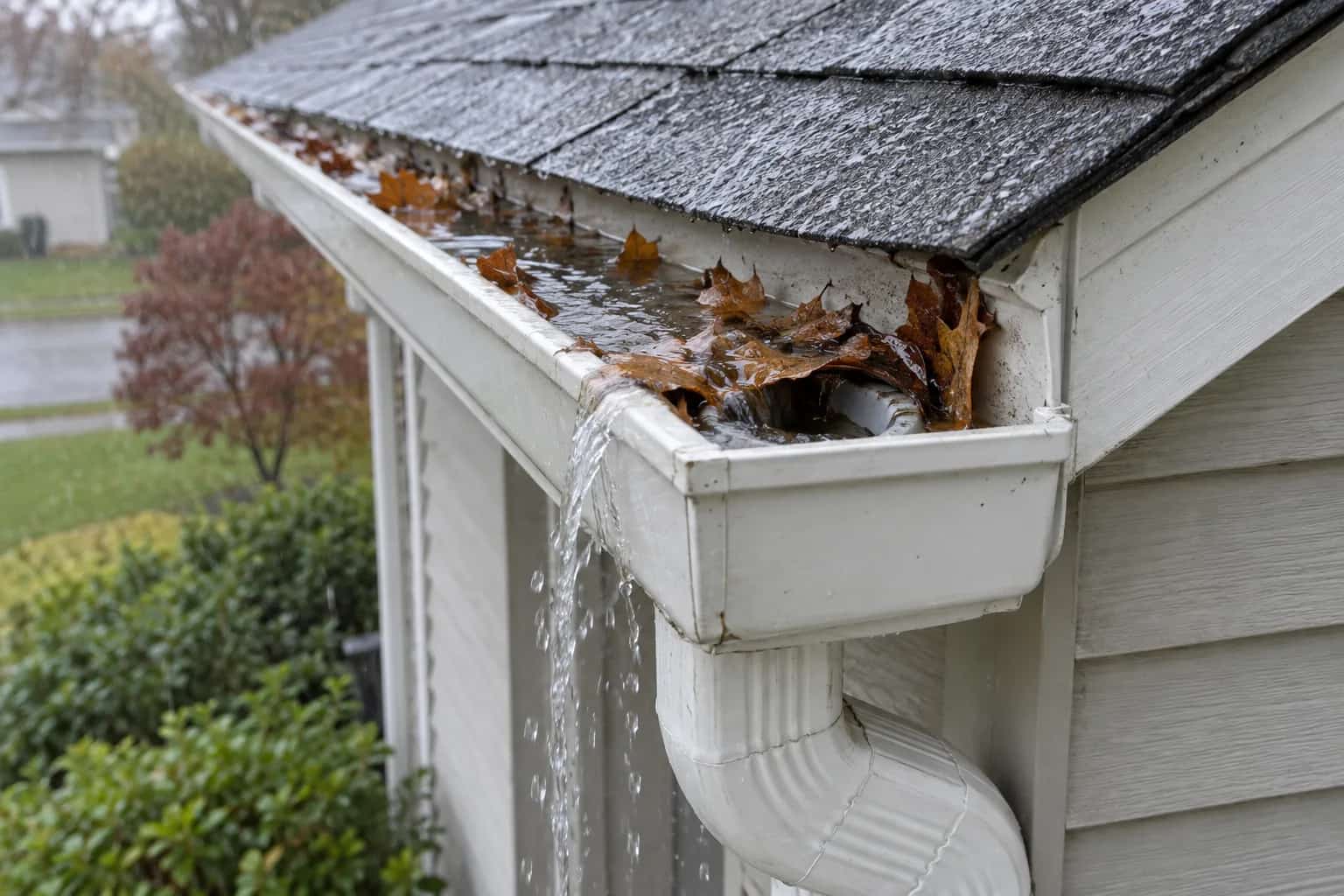
The gutters were cleaned in November. In May, the rear corner overflows again, and the maple has delivered a fresh collection of keys and blossoms. Autumn's receipt has not expired; the roof has simply received another load of debris.
Clear the valley through its receiving gutter and outlet, then inspect what the blockage hid. Packed leaves, seeds and twigs can obstruct a narrow route fed by two roof slopes. A removable mat needs cleaning; damaged shingles, metal or connections need repair as well. Neither diagnosis should be made from the bag of debris alone.
Follow the Whole Channel
A valley may be open, with visible metal, or formed with an approved shingle arrangement. Either way, the inspection should follow it from the upper collection area to its lower outlet.
A branch or packed mat of leaves can collect near a narrowing, behind a roof feature or above the gutter. The top of the valley may look clear from the ground while the lower end remains obstructed. Conversely, a clean gutter does not prove the valley above is clear.
IKO identifies valleys among the places worth checking during leak diagnosis. The practical reason is the concentrated water route, not simply that a valley is visually complicated.
Why Light Rain Can Pass the Test
During a small shower, water may slip through gaps in the leaves. A heavier burst delivers more runoff to the same restriction, and the flow can spread toward the valley edges. Then the storm ends, the leaves shift and the obvious blockage looks less impressive by the time someone visits.
That sequence explains why "it rained last week and nothing happened" does not rule the valley out. The useful comparison includes rain intensity and the condition of the route at the time.
A thaw introduces a different obstruction: snow and ice. If the wet ceiling follows melting rather than autumn rain, start with the ice-dam guide. Leaves and ice may occupy the same low point, but they do not call for the same long-term fix.
Dave clears the visible leaf pile from the valley and starts to call the route finished. Pat is looking at the outlet. Maple keys have collected there too. "Tree's doing the full package," he says.
The first glance found the dramatic blockage; the second found where water still had to leave. Mike records both ends of the route and the season's debris. That changes the next maintenance visit from a vague autumn clean into a check timed to what this tree actually drops.
Debris Removal and Leak Repair Are Separate
A clean route and a sound roof detail are separate results.
Collection
Spring seeds or autumn leaves collect in valleys and guards.
Complete route
Clear the valley, receiving gutter, outlet and downspout safely.
Exposed condition
Inspect shingles, metal and connections that debris concealed.
Next check
Use the actual tree-drop pattern and recurring rain symptoms.
Cleaning Should Expose the Detail
Once clean, ask for photographs of the valley surface, its edges and its outlet. The inspector should look for damage, corrosion where metal is used, compromised shingle cuts or fasteners in unsuitable locations. The applicable manufacturer's instructions determine the required construction; an internet picture of another valley is not the specification.
November Cleaning Does Not Catch May Maple Keys
A gutter cleaned after autumn leaf fall can collect maple keys, blossoms and twigs the following spring. Fine debris can mat on a guard while larger leaves slide away. Record what arrives, where it collects and roughly when; the trees above this roof determine the useful timing.
IKO's tree-damage guidance describes drainage concerns from accumulated leaves and needles. Its shingle-maintenance guidance supports keeping drainage routes clear. Neither means every leaf has already caused damage.
Imagine the rear dormer valley overflows while the front gutter runs normally. Start with that local collection route. If an entire clean edge spills in intense rain, capacity or alignment may also need investigation. Cleaning a debris mat and redesigning drainage answer different findings.
Clean, Then Decide
An exposed split, damaged cut edge or compromised flashing needs repair as well. Our guide to repeat patches explains why covering the damp area without restoring drainage can fail again.
Book the Valley and Its Outlet as One Job
Tell the contractor about height, access, nearby branches or wires and any indoor leak. The scope should include the upper collection area, full valley, receiving gutter, outlet and downspout. Moving a pile from the valley into the trough is unfinished cleaning.
Use appropriate roof-safe removal. Do not walk on a wet roof, pressure-wash the channel, scrape under shingle edges or force water into a hidden junction. Open metal valleys and shingle valleys need methods suited to their surfaces. Guards removed for access must be refitted to their product requirements.
Ask for a wide cleared-route photo and close views of any defect uncovered. A bag of leaves on the driveway does not show the lower outlet. If interior wetting stops after cleaning, keep that observation, but do not treat it as proof that every concealed layer is sound. A recurring leak needs the exposed condition and its weather trigger investigated together.
Keep the photo of the cleared route. Next spring, you can compare the outlet and valley instead of asking the maple tree to respect last autumn's maintenance schedule.