
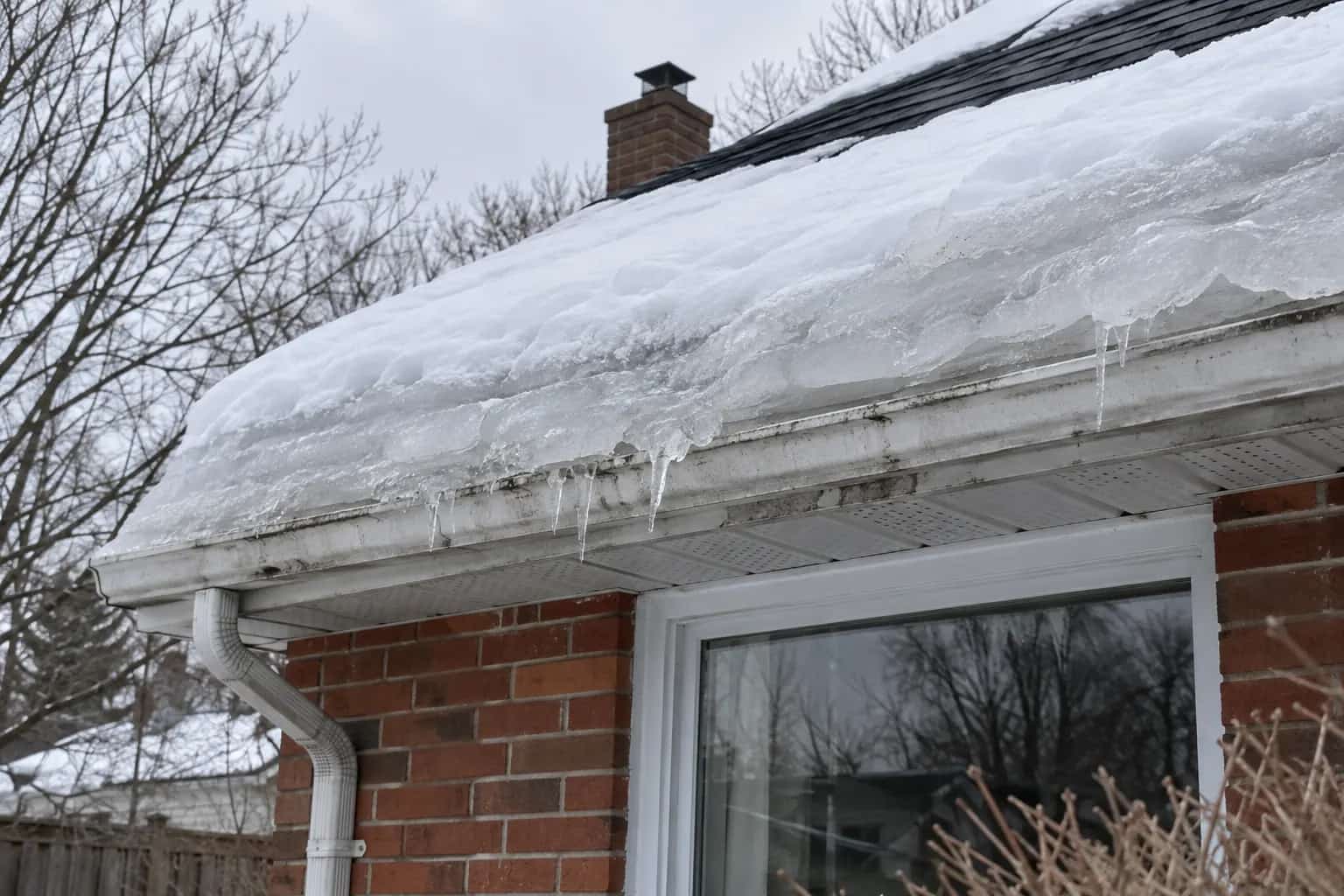
The icicles above the kitchen look impressive until a damp patch appears inside. Dave looks at the roof edge; Mike asks what is happening at the attic floor. The immediate water problem needs attention, and the recurring ice needs an explanation that reaches beyond the gutter.
An ice dam forms when meltwater refreezes at a colder roof edge and blocks drainage. Water can back up beneath the shingles, so lasting investigation commonly includes the attic as well as the roof.
A warm roof above a cold edge
Heat escaping from the house can warm the roof and melt snow. The overhanging eave stays colder. Meltwater reaches that edge, freezes, and can build a ridge that traps more water behind it.
Attic air leaks, insulation gaps and ventilation problems are worth investigating. Natural Resources Canada's attic guidance explains the relationship between heat loss, attic conditions and ice dams.
Pat points out that icicles and indoor leakage are different observations. Record both without treating one as proof of the other. Falling ice and any wet or bulging ceiling need appropriate precautions regardless of the diagnosis.
Trace the winter water path
How an ice dam forms
Follow meltwater from the warmer roof to the cold eave where it can refreeze.
Heat reaching the roof can melt the snow.
Indoor heat escaping into the attic can warm the roof above the living space. The overhanging edge can remain cold.
- Investigate
- Air leakage and insulation at the attic floor.
- Remember
- Sun and changing weather can also contribute to melting.
Simplified section of one possible ice-dam mechanism. The roof and attic need assessment to identify the contributors.
Which clues need attention?
Icicles alone: they do not establish that water is getting inside. Keep people clear of falling ice and watch for recurring buildup.
A thick ridge at the eave: arrange an assessment, especially if it keeps returning in the same place.
New indoor dripping or a ceiling stain: get prompt help. An ice dam is one possibility; melting attic frost can also cause winter drips.
Keep away from bulging ceilings and wet electrical fittings.
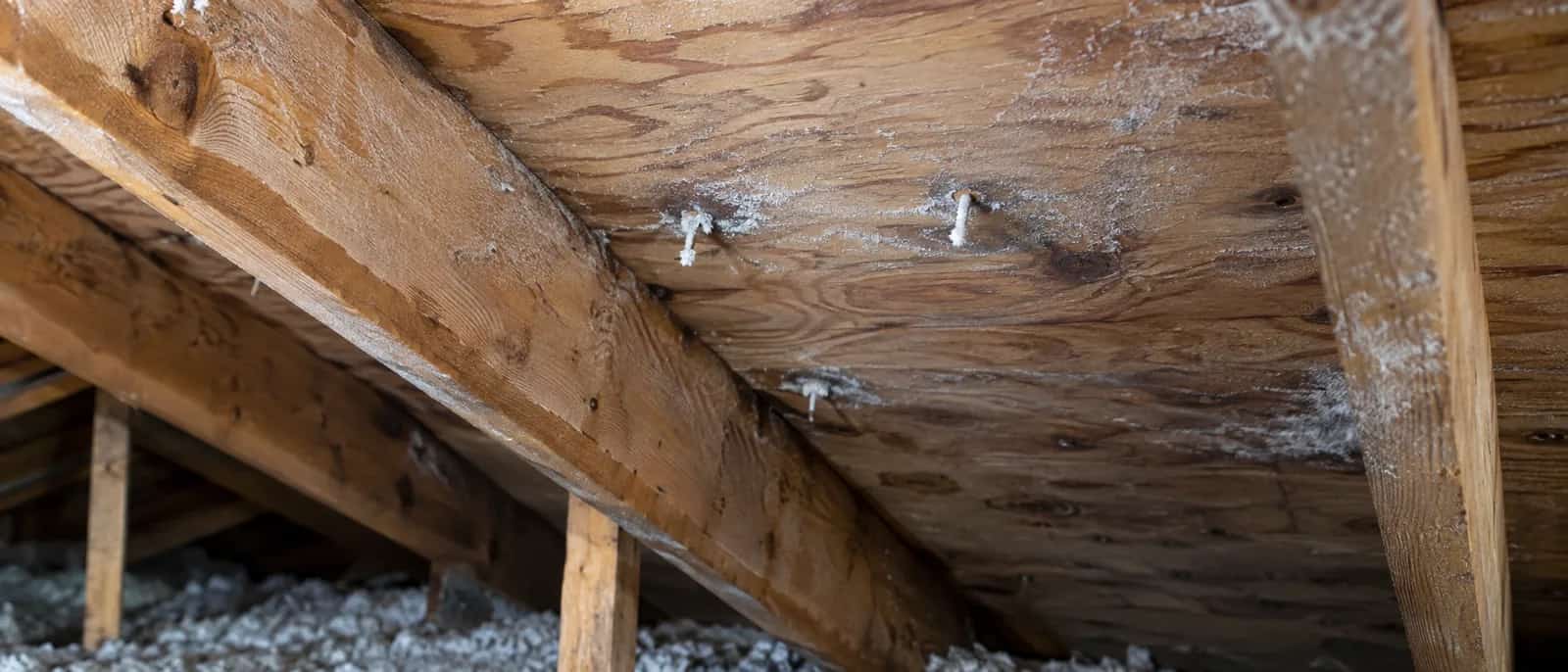
Leave the hammer in the toolbox
Mike leaves the hammer where it belongs. Chipping at an icy roof can add damaged shingles to an already unpleasant situation. Equipped professionals should decide how to manage the immediate problem. Do not climb an icy roof or work below hanging ice.
Before the next snowfall
Mike's lasting-work list starts at the attic floor: tracing air leakage, checking insulation gaps and following exhaust ducts to their outlets. Ventilation is part of that assessment, but adding vents alone does not close a gap around the attic hatch. A bathroom fan ending in the attic belongs on that list.
At reroofing, discuss the required eave protection for the actual roof geometry and products. Protective membrane helps manage water; it does not stop heat escaping through the ceiling.
After repairs, compare the same eave during similar winter conditions. Less repeated buildup is useful feedback; a new indoor stain still needs prompt attention, whatever the roof edge looks like.