
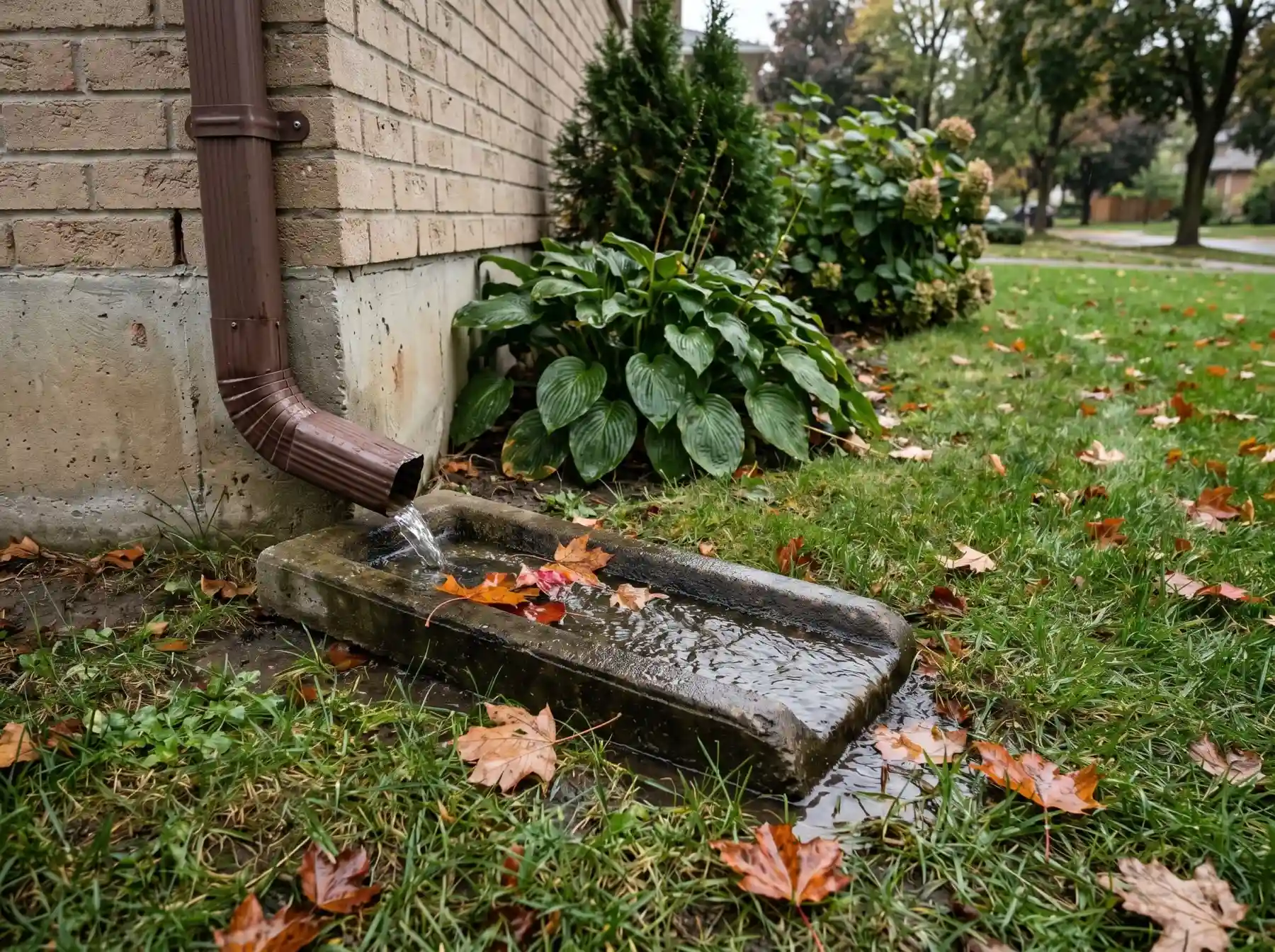
The gutter was cleaned last week. Tonight, a stream lands exactly where you stop to find the front-door key. Dave wants a sheltered video of the first spill, not another photograph of an empty trough. The clean gutter may be telling the truth; the water is taking a different route.
A clean gutter can still overflow when water misses it, cannot reach the outlet or cannot leave fast enough. If the spill is over the front door, follow the route all the way across the landing before choosing the repair.
Before paying to clean them again, follow the rest of the route. An empty trough can still feed a blocked outlet, a blocked downspout or a system that cannot carry the runoff. The place where water escapes helps decide what to inspect next.
When the Spill Is Over the Front Door
At an entrance, the source may be overhead or at the landing. A small porch can receive an upper downspout or a valley stream, so its apparent size understates the demand.
Record the incoming route, gutter corner and lower outlet from shelter, keeping clear of loose gutters and slippery steps.
A repair is incomplete when the door stays dry but the extension empties beside the bottom step. Follow the route from roof to landing to onward path, including snowbanks during a thaw. Never solve the wall problem by laying a pipe across the doorway; use the walkway routing guide.
After work, observe meaningful rain and check the frame, threshold, steps and receiving ground. If the door or frame still gets wet after drainage is corrected, investigate wind-driven rain and door or wall defects before changing the gutter again. The clean appearance of the trough on a sunny day tells you little about the trip home with shopping bags.
Where Does the Water First Escape?
Check whether a concentrated stream misses an otherwise unfilled trough. Check ground discharge and door or wall wetting separately.
Over the front
Check whether a concentrated stream misses an otherwise unfilled trough.
Out of a full gutter
Check fall, outlet restriction and capacity.
Behind the gutter
Investigate the roof-edge connection and flashing.
Across the landing
Check ground discharge and door or wall wetting separately.
Match the spill pattern to the next check
These observations narrow the investigation; more than one fault can contribute:
- Channel fills beside an outlet, little water exits below: inspect the outlet, elbows and downspout first, including a blocked extension at ground level.
- Water pools at a low section away from the outlet: check gutter alignment and supports. A clear downspout cannot drain water trapped below its route.
- Water shoots across an inside corner while the channel below is not full: inspect concentrated flow from a roof valley and whether water is being caught at all. This differs from a full gutter backing up.
- Water tracks behind the trough: inspect the roof edge and gutter position. Increasing trough capacity will not necessarily catch water travelling behind it.
- Several sections fill only in intense rain and outlets discharge strongly: review the roof area and capacity of the complete system after blockages and alignment are ruled out.
A useful video includes the roof junction above the spill and the outlet below. A close-up of water alone leaves out the route that needs fixing.
Did the cleaning include the downspouts?
Leaves can clear from the long channel while debris remains at the outlet opening or inside an elbow. Toronto's maintenance guidance specifically includes checking elbows and outlets.
If water spills beside a downspout but very little comes out below, that route deserves attention. Ask whether the cleaning included checking the downspouts. The answer may explain why the freshly cleared channel still overflows.
After the storm, inspect accessible ground-level extensions for crushing, disconnection or an obstructed exit. Have inaccessible sections checked professionally.
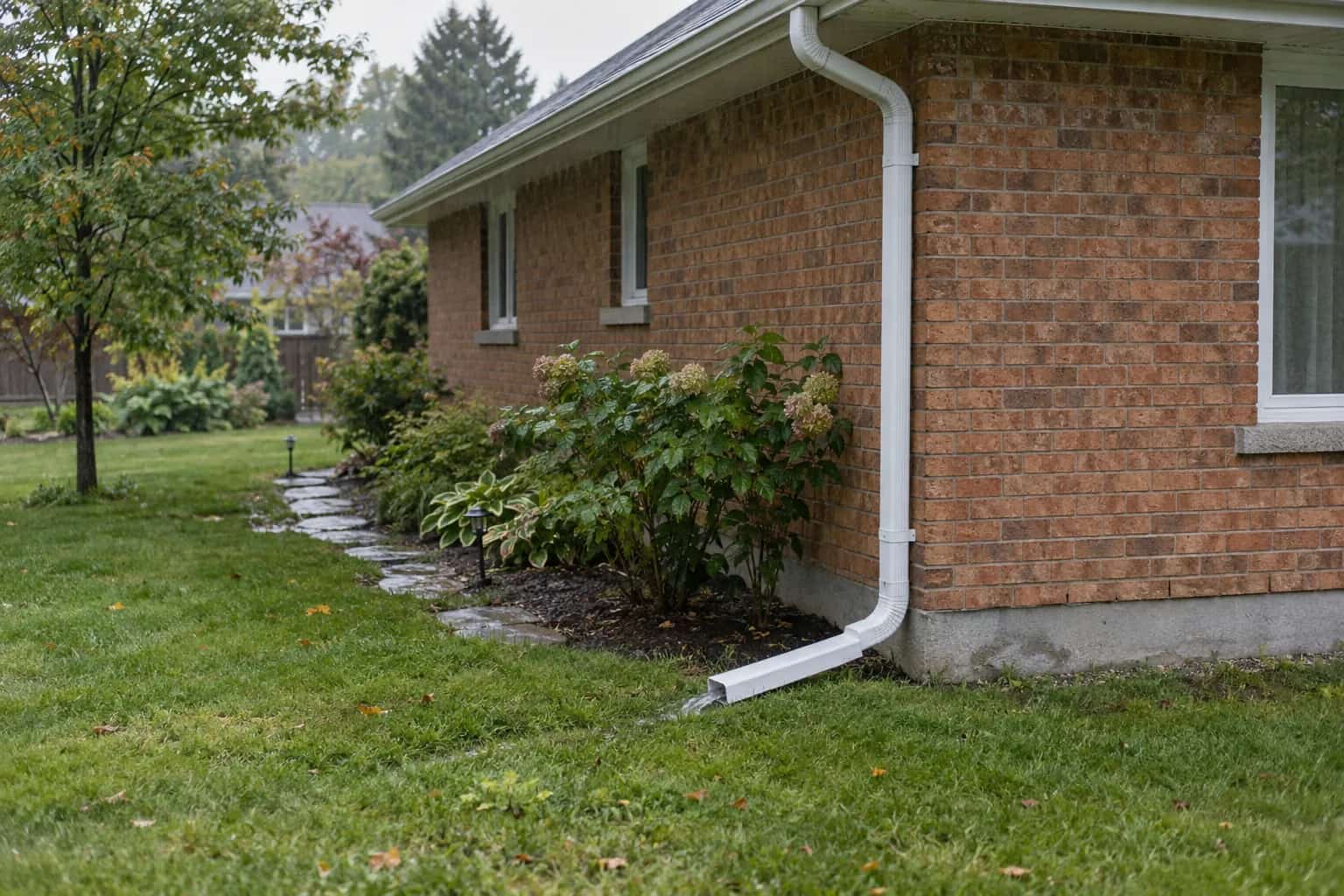
Clean water still will not run uphill
Repeated overflow midway along a run makes the alignment worth checking. A sagging section can hold water below the path to the outlet. Clearing leaves will not lift that section back into place.
IKO's gutter-maintenance guide explains how a professional checks and corrects alignment. Persistent standing water after rain is useful evidence, but you do not need to climb up to collect it. Request photographs during the inspection.
Water running behind the gutter also needs an inspection of the roof-edge detail. It should not automatically be diagnosed as insufficient gutter size.
After the repair, make the same trip to the door in rain without standing under a suspect gutter. The threshold, landing and bottom step all belong in the result. Dry shoulders above a flooded shoe are only partial progress.
Bigger gutters come after the simple checks
An open, properly aligned system can still be overwhelmed. Berger's sizing guidance considers roof area, roof slope, rainfall, gutters, outlets and downspouts together.
Ask which roof surfaces feed that section and which part restricts flow. A bigger gutter feeding the same undersized outlet can leave the problem unresolved. Another or larger downspout may help, but the recommendation should explain how the whole route will work.