

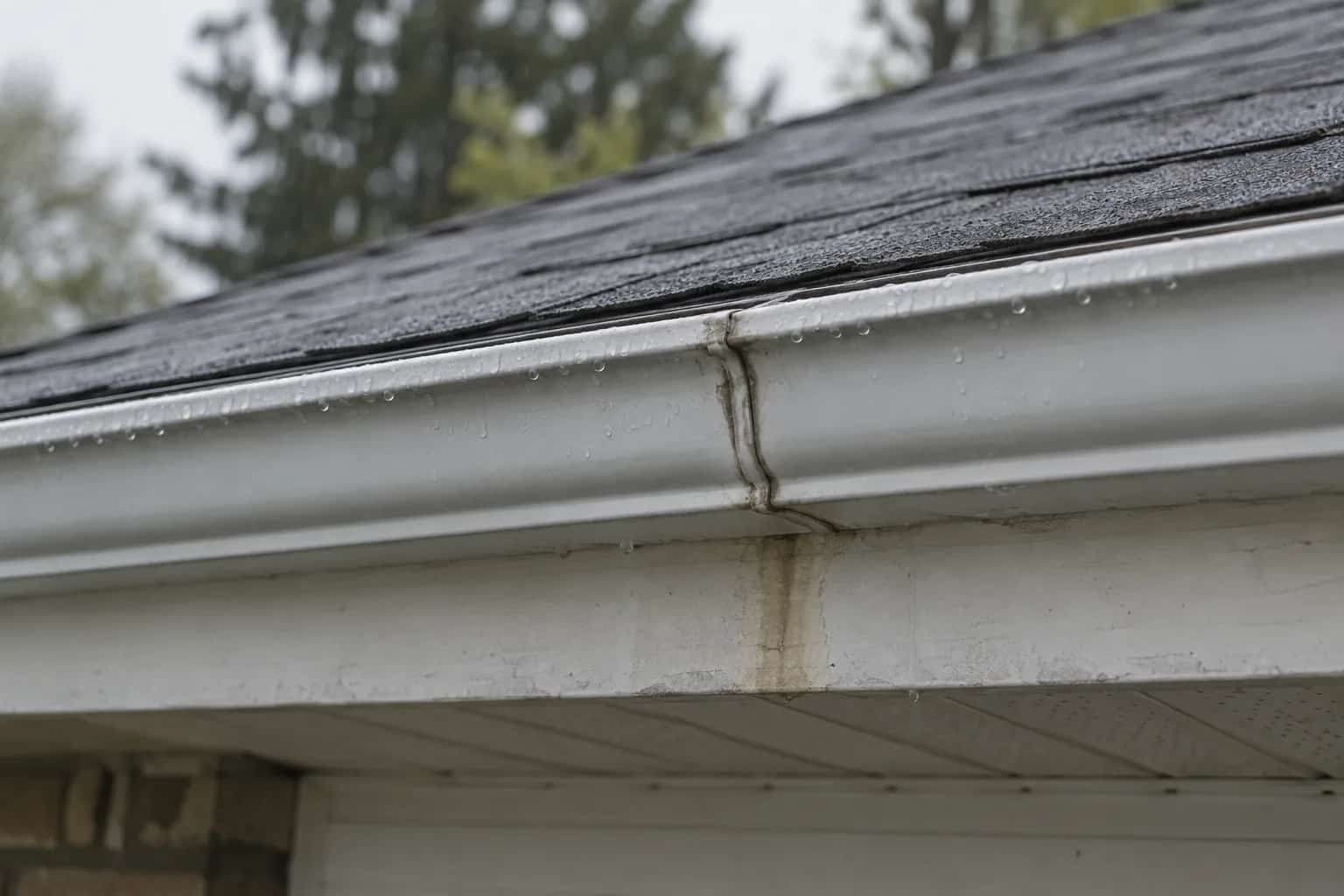
The photograph shows a very convincing drip below the fascia. The homeowner has circled it. Dave asks for a wider view during rain.
"That is where it falls," he says. "Let's catch where it starts."
The next video includes the roof edge, gutter and downspout. Now the useful detail is visible: whether the trough fills before spilling, whether a seam leaks while it is still low, or whether water misses the gutter from the start.
Those three routes need different repairs. The last drop beneath the fascia may be some distance from the point where water first escaped.
Full Gutter, Leaking Seam or Missed Entry?
These observations lead in different directions:
- The channel fills before spilling: investigate the outlet, downspout, blockage and drainage capacity.
- A seam drips while the channel is not full: inspect that joint and whether water is travelling along the underside to reach it.
- Water runs behind the gutter immediately: inspect the roof edge and how it delivers runoff into the channel.
The last case is why a clean gutter can still leave the fascia wet. IKO's flashing guidance explains the drainage role of edge details. Sealing a front joint cannot redirect water already passing behind the gutter.
Two routes can be active together. A repaired seam that reduces dripping without eliminating it is a reason to watch the edge again, not automatically a failed seam repair.
Photograph the Moment, Not Just the Aftermath
Keep the beginning of the clip, even if the first few seconds look uneventful. The full gutter at the end may hide the fact that water was already running behind it while it was nearly empty. That quiet part of the video can save another very tidy repair to the wrong component.
Keep a dry-day photograph too, so the contractor can locate the exact section and see what remains after the rain.
Note whether the issue happens in light rain, only during a downpour or during snowmelt. An ice-related event needs a different investigation from a summer downspout blockage. Mention recent roof or gutter work; changed alignment can be relevant without proving fault.
Which route wets the fascia?
Start with where water first leaves the intended route.
Trough fills first
Check outlet, downspout and capacity.
Joint drips early
Trace the seam and water travelling along the underside.
Water misses the trough
Inspect roof-edge layers and gutter position.
Backing stays wet
Assess fascia and deck-edge condition before closing the work.
The Gap Is Part of an Assembly
A gap is not automatically a defect. Roof-edge profiles have particular projections and clearances. Shingles, underlayment, eave protection, edge metal and the gutter need to work together so water is delivered outward and into the trough. IKO's roof-components guide distinguishes the edge metal from the gutter; replacing one does not automatically correct the other's position.
The first minute of rain can be revealing. If water reaches the back while the channel is nearly empty, roof-edge delivery deserves attention before blaming a full downspout. If wetting starts only after the trough fills, investigate the outlet route. Neither observation proves a concealed lap or excludes a second defect.
The repair may involve properly detailed replacement or extension of edge metal, gutter repositioning, or both. Ask who restores any shingles and membrane disturbed by the work. Pushing a strip into an unseen gap or caulking across its top can conceal an incorrect lap instead of correcting it.
Look Beyond the Painted Face
Repeated wetting can affect the fascia and adjacent roof-edge materials. A contractor should assess their condition before fastening a new gutter over the same area. Fresh paint can improve appearance while leaving deteriorated wood hidden behind it.
NRCan includes fascia and soffit condition in attic and roof assessment. Ask whether the inspection can establish the extent of damage or whether removal is needed to see it.
A sagging gutter may reflect attachment problems as well as water load. Do not assume tightening a few screws is suitable if the backing material has lost strength.
One Connection, Two Trades
If the roofer says the gutter sits too low and the gutter installer says the roof edge stops too short, ask them to agree on the finished section. The useful answer shows the roof water entering the gutter and identifies who changes which component.
Include fascia and backing repairs before new trim hides the damage, and use the seam-leak guide for an isolated failed joint. Afterward, judge fresh wetness during rain. Old discolouration may remain after a successful repair.
Fix the Entry and the Exit Together
Roof runoff has to reach the gutter, then leave through its outlet. Replacing one component without checking that relationship can preserve the fault with cleaner-looking materials.
If the channel fills, the guide to clean gutters that still overflow covers the next questions. At a roof beside a wall, check the kickout too: a concentrated stream can reach the same corner.
The meaningful follow-up is rain moving into and out of the gutter. Fresh paint on the fascia is the finishing work after that route is right.