
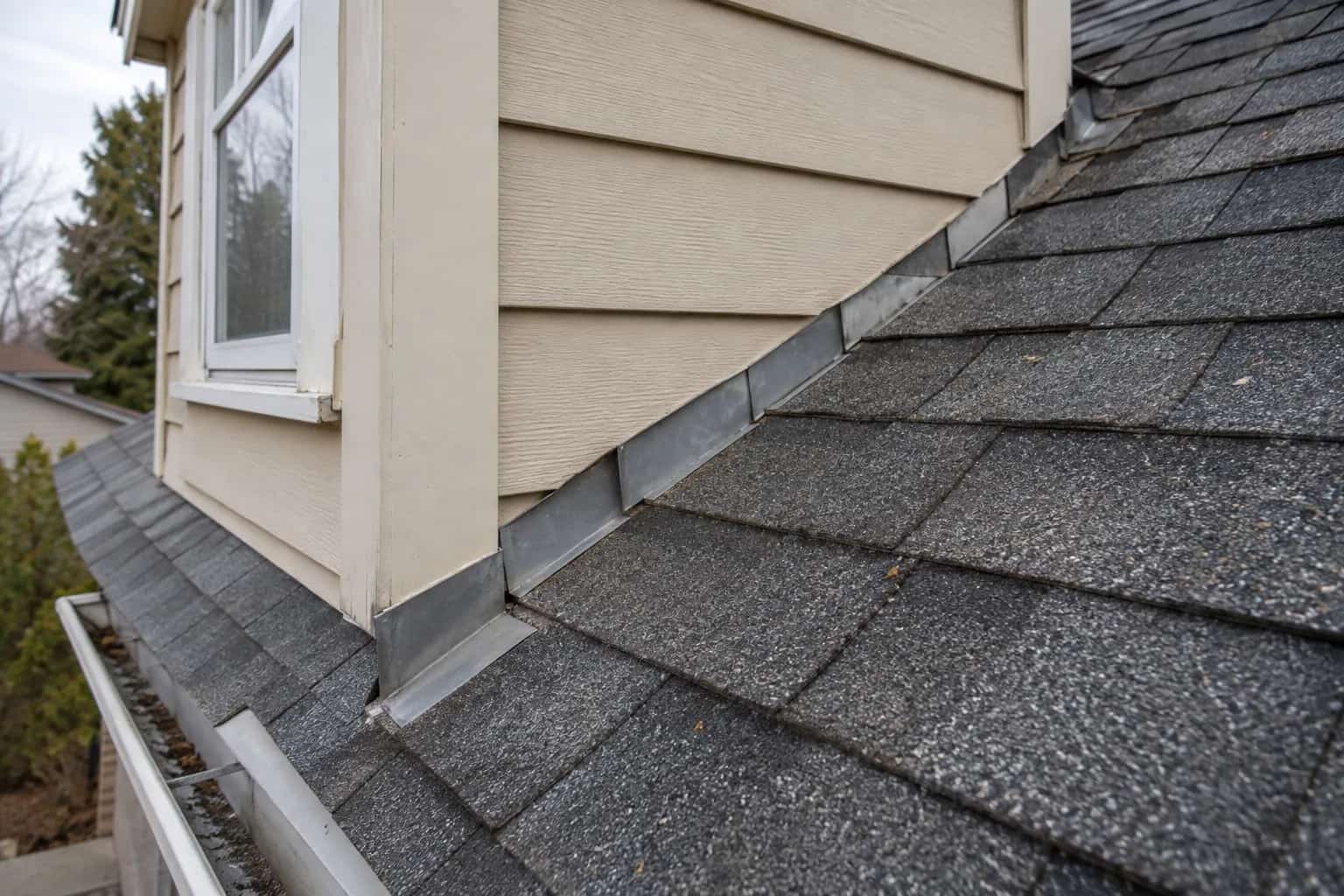
The gutter is spotless and the streak on the siding is back. The owner has already cleaned both twice. "The wall keeps winning," Dave says. At the bottom of the small roof-wall junction, inspect the kickout: a flashing that turns water away from the wall as it leaves that junction.
Without a working turn, runoff can continue down or behind the cladding. The gutter can be clean while the wall still gets soaked.
Why This Little Corner Gets So Much Water
A roof-wall junction may collect runoff along several metres of slope and deliver it to one lower corner. Rain reaching the wall above can contribute too. The small piece at the bottom therefore has to handle the water arriving along that route, not only the rain falling on the corner itself.
The Department of Energy's roof-wall guidance explains the deflector's protective role. The outlet needs to connect to the flashing above and discharge where the gutter can receive it.
From the garden, a metal scoop added over finished siding might look convincing. Mike wants to know what connects behind it. Water already travelling behind that shiny addition will ignore the effort. The concealed connection and the visible turn have to work together.
The last turn protects the wall
Step flashing brings water down the roof edge. The kickout changes its direction at the bottom so that runoff enters the gutter instead of tracking behind the wall finish.
Schematic view. Shows relationships, not installation dimensions.
What You May Notice From the Ground
Look for a recurring streak below the roof end, peeling finish or a damp patch that appears during rain. Inside, the symptom might be beside a window or at the ceiling below that corner. These are clues, not proof: siding, window flashing and gutter joints can cause similar marks.
Step back far enough to include the roof end, gutter and window underneath. Pat needs the route above the streak, not another portrait of the streak itself. Make the photograph from safe ground; close inspection belongs to someone with appropriate access.
Do not climb onto the roof to search for a tiny piece of metal. A zoomed ground photograph can help a professional plan the visit, and a close inspection can be made with suitable access.
What a Repair Needs to Connect
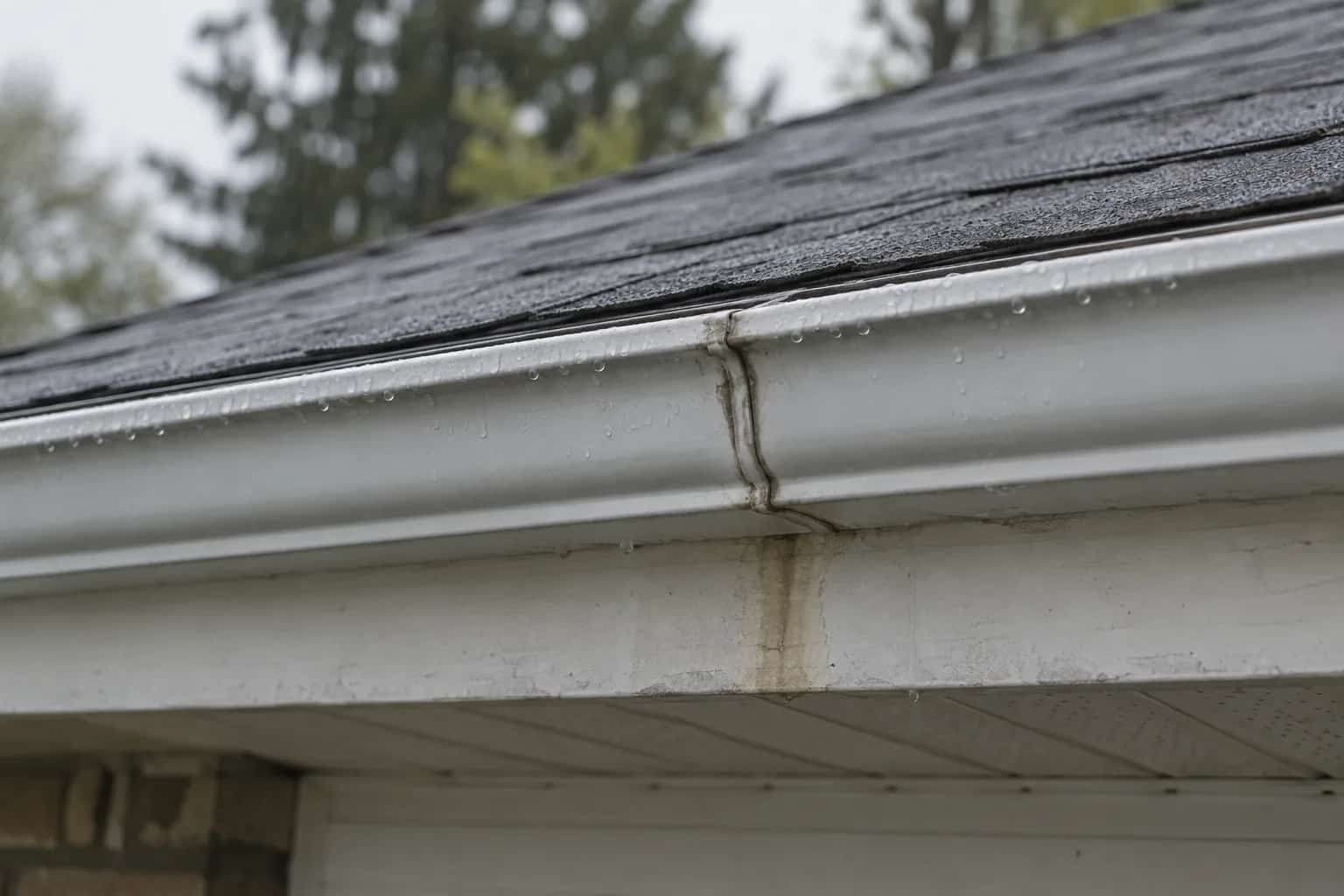
Ask how the proposed diverter joins the step flashing above, the wall drainage layer behind the siding and the gutter or other intended discharge below. Roof-to-wall flashing explains why those hidden connections matter.
The owner asks whether the wall can be painted once the metal is fitted. First assess existing damage behind the finish. A new diverter can change future runoff; it cannot tell us whether sheathing or insulation has already deteriorated. Save the paint decision until that question has an answer.
The IKO flashing overview provides useful background on the surrounding roof details. Use the actual cladding and roofing instructions for the repair specification.
Look for the Turn, Not a Cleaner Stain
The follow-up happens in rain, observed from safe ground: does water now leave toward the intended outlet? Dave is happy to see a clean wall, but a dry-day paint job does not demonstrate that the turn works. If water still follows the siding, revisit the connection and gutter alignment.
If water still tracks down the wall, revisit the connection and gutter alignment. If the route is now correct but finishes remain damaged, assess and repair the consequence separately. The metal can prevent further wetting; it cannot undo deterioration already inside the wall.