
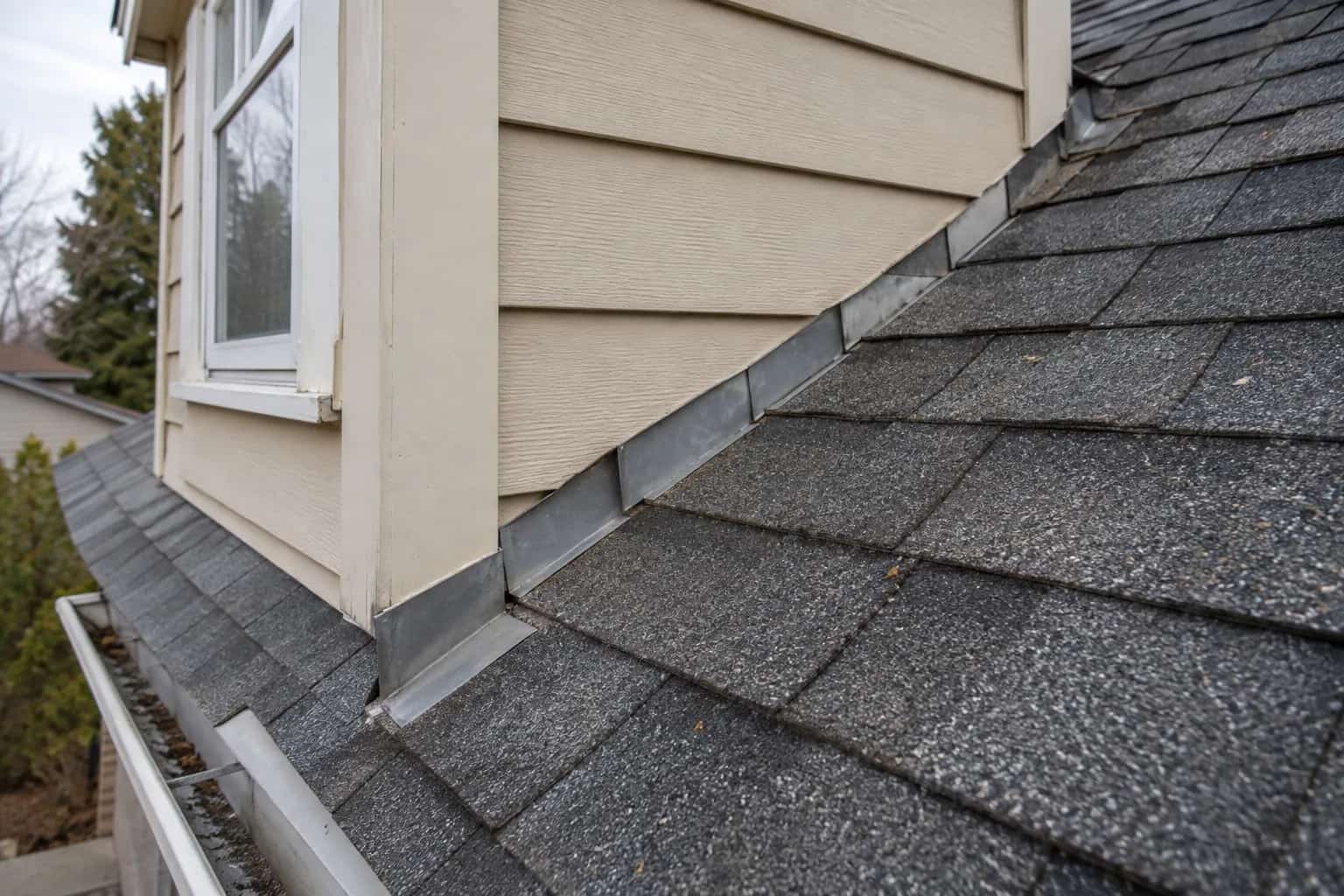
The owner has recaulked above the window twice. After the next downpour, the stain returns. Pat starts with a close photograph of the seal, then Mike asks him to step back. The wider view includes a roof edge and gutter above the mark. Before another tube is opened, they need to establish what is feeding the wall.
A roof outlet, a cladding joint and a window-head defect can produce similar symptoms. The useful question is where the wetting begins, not which gap sits closest to the stain.
What Is Feeding That Part of the Wall?
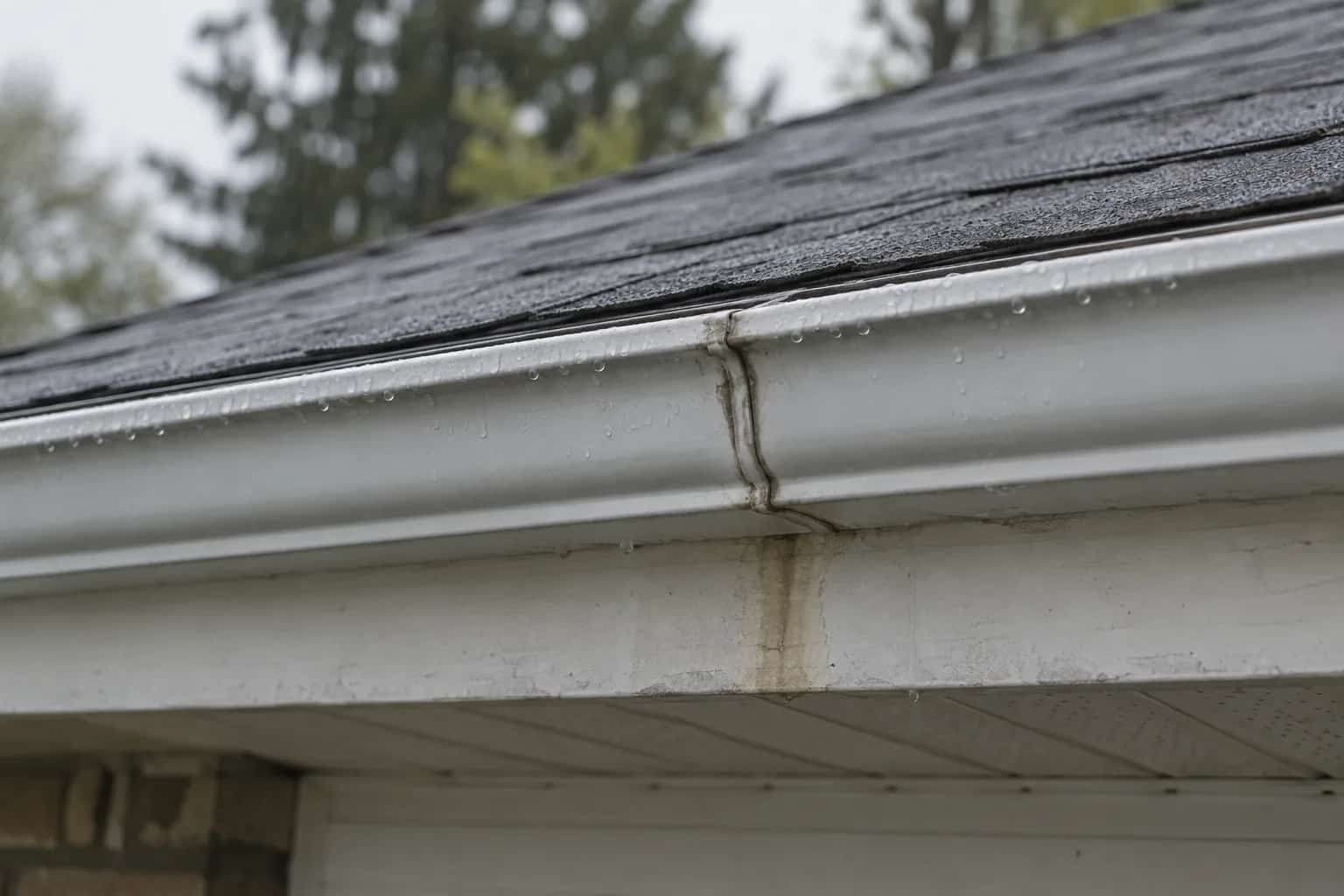
A roof ending beside a taller wall can concentrate runoff at one corner. A gutter seam can drip above an opening. A wall joint can admit wind-driven rain independently of either. Include all three in the wider view before narrowing the search.
Dave asks the owner to separate two observations: an exterior streak whenever the gutter runs, and indoor wetness when rain strikes the window face. They suggest different inspection priorities. He keeps both in the record; timing guides the work without proving the cause.
The Department of Energy's roof-wall guidance explains the protective role of directing roof runoff away from cladding. A missing kickout can wet the wall even when the attic stays dry.
A wall stain may begin at the roof edge
Water at a roof-wall junction should leave through the kickout. A missed lower turn can wet the wall below while the shingles still look serviceable.
Schematic view. Shows relationships, not installation dimensions.
Watch the Rain Pattern
Does the stain appear whenever the gutter flows, only when wind hits that wall or after prolonged rain? Does water visibly run down the face above the window? A short ground-level video during safe conditions can help answer those questions.
Do not spray a hose around the window yourself to settle the question. Uncontrolled wetting can introduce water through a route unlike the original storm and make the result harder to interpret.
Let Each Trade Inspect Its Interface
A roofer examines the roof drainage and flashing. A suitable window or building-envelope professional may need to assess the wall opening and concealed wall layers. Mike assigns someone to coordinate the findings if both trades are involved. Otherwise the owner can spend a wet fortnight passing the same photograph between people who each recognise half of it.
IKO's flashing overview describes the roof-side protection. The window's own drainage details and manufacturer instructions must also be respected; indiscriminate caulking can cover intended drainage openings.
A Streak and a Leak Are Different Findings
Dirt washed down the outside can leave a stain without water entering the wall. Damp drywall inside is stronger evidence of an interior moisture problem. Keep those observations separate so a cosmetic mark is not sold a structural repair, and concealed wetting is not dismissed as dirty paint.
The chosen repair should correct the confirmed route, followed by assessment of materials already affected. Pat leaves painting at the end of the list. The wall has already demonstrated that fresh appearance and a solved water route are different achievements. If testing is needed to separate the roof and window, it should isolate areas rather than soak them together; see controlled water tests.