

The ceiling corner dries after a patch and stains again in the next storm. Outside, a fresh bead runs along the siding. Beside it are traces of two older beads in different colours.
Pat studies the history. "We know everyone can reach this bit. Has anyone seen behind it?"
A roof-to-wall junction relies on connected drainage layers. A neat outer edge cannot show whether water behind the cladding reaches the flashing or slips behind it. Sometimes limited siding removal is the useful repair, even when the indoor mark is small.
Follow One Drop Down the Wall
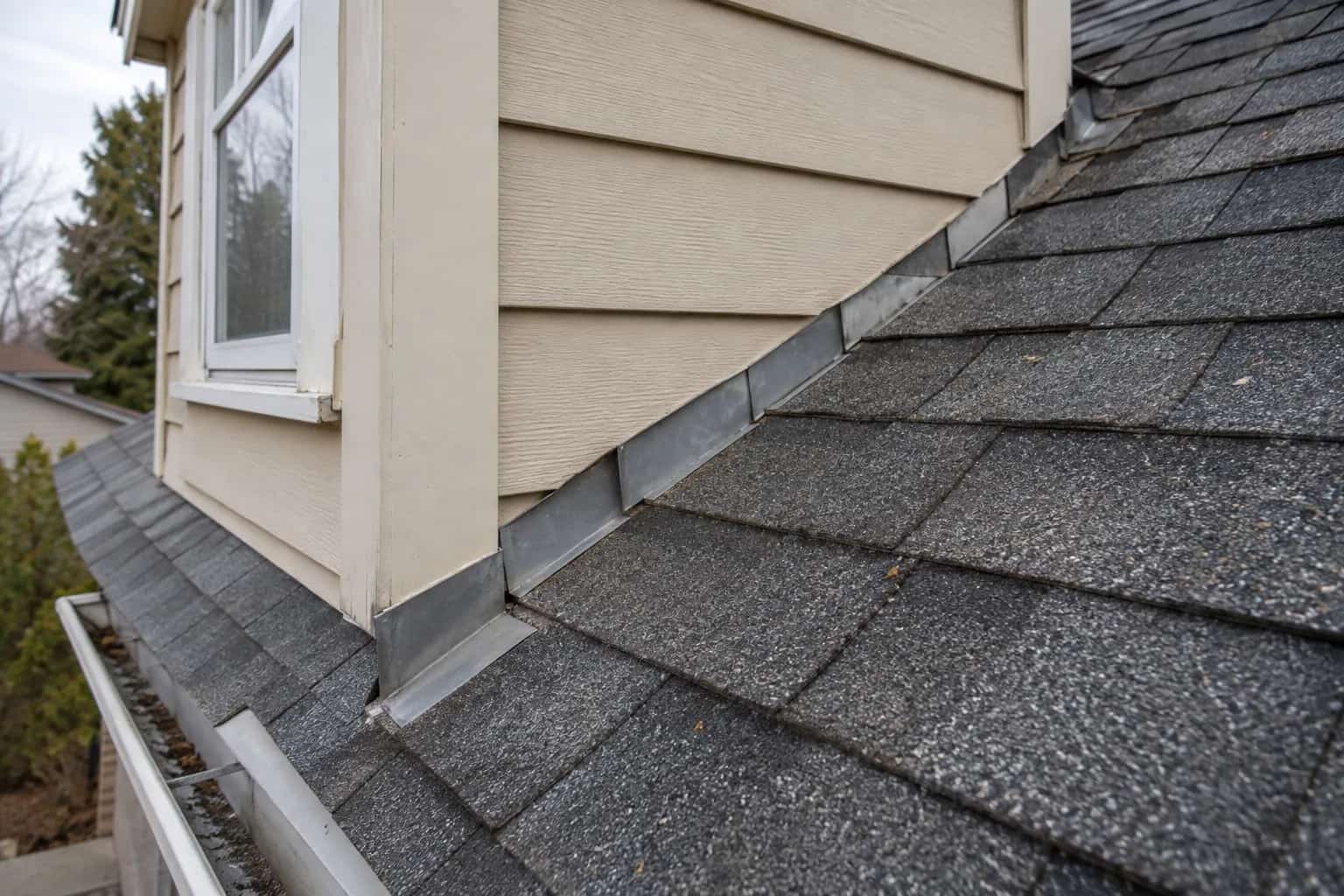
On a sloped roof, each step-flashing piece works with a shingle course. Water reaching it should pass outward onto the roof and continue downhill. The wall's drainage layer must deliver water onto that protection rather than behind it.
The distinction is easy to miss once the siding is installed. Two finished junctions can look similar from the garden: one has properly connected concealed laps; the other relies on a bead along the bottom of the cladding. The rain eventually notices the difference.
IKO describes the step-flashing arrangement. Its dimensions and fastening belong to the selected assembly, but the homeowner's test is simpler: can the repairer show how water stays outside through the entire connection?
Why a New Bead Can Buy Only a Pause
The different sealant colours tell a story about previous attempts, but not about the concealed lap. Keep that history for the inspector. The next proposal should explain what will be exposed and photographed, rather than simply promise a longer-lasting version of the same accessible bead.
Old caulking may have covered an accessible gap while leaving a reverse lap or damaged piece behind the siding. Water entering higher on the wall can bypass the visible repair altogether. Movement and weathering may then reopen the surface treatment, giving the impression that the same crack is the complete cause.
Keep the history of previous patches. Their location and timing can help the roofer decide what has already been tried. Ask them to photograph the concealed layers before rebuilding; those photographs explain the work far better than a finished picture with everything covered again.
Follow the water down the wall junction
Each step overlaps the next course downhill. Wall drainage must discharge onto that flashing route, and the last piece must turn water away from the wall.
Schematic view. Shows relationships, not installation dimensions.
Include the Bottom and the Top
At the lower end, water must leave the wall junction safely. A kickout detail may be needed to direct it toward the gutter rather than behind the cladding. At the upper end, the transition to a different roof plane or wall detail can be just as important.
The US Department of Energy's roof-wall guidance illustrates why these details work together. It is building-science guidance, not a substitute for Ontario requirements or the actual siding manufacturer's instructions.
Read the Section From the Wall Outward
PNNL's existing-home roof-wall guide shows why accessing the wall drainage layer can be part of a roof repair. Keep its US reference details separate from the requirements for the Ontario assembly in front of you.
Ask the proposal to name what will be exposed, what will be replaced and what will remain concealed. If access is restricted to one short section, the completion record should say so. A successful local repair does not document an unexamined junction several metres away.
The Expensive Part May Be Getting Access
Removing and reinstating siding can cost more effort than replacing a few flashing pieces. That does not make it unnecessary. It buys access to the concealed connection that the previous surface patches never reached.
A sensible local scope includes that access, any damaged backing discovered, the wall-layer connection and the required cladding clearance. If the whole junction can be inspected and rebuilt without removing siding, the contractor should be able to explain how.
Keep photographs before the layers are covered. They show the most important part of the repair, which is also the part least visible from the driveway.