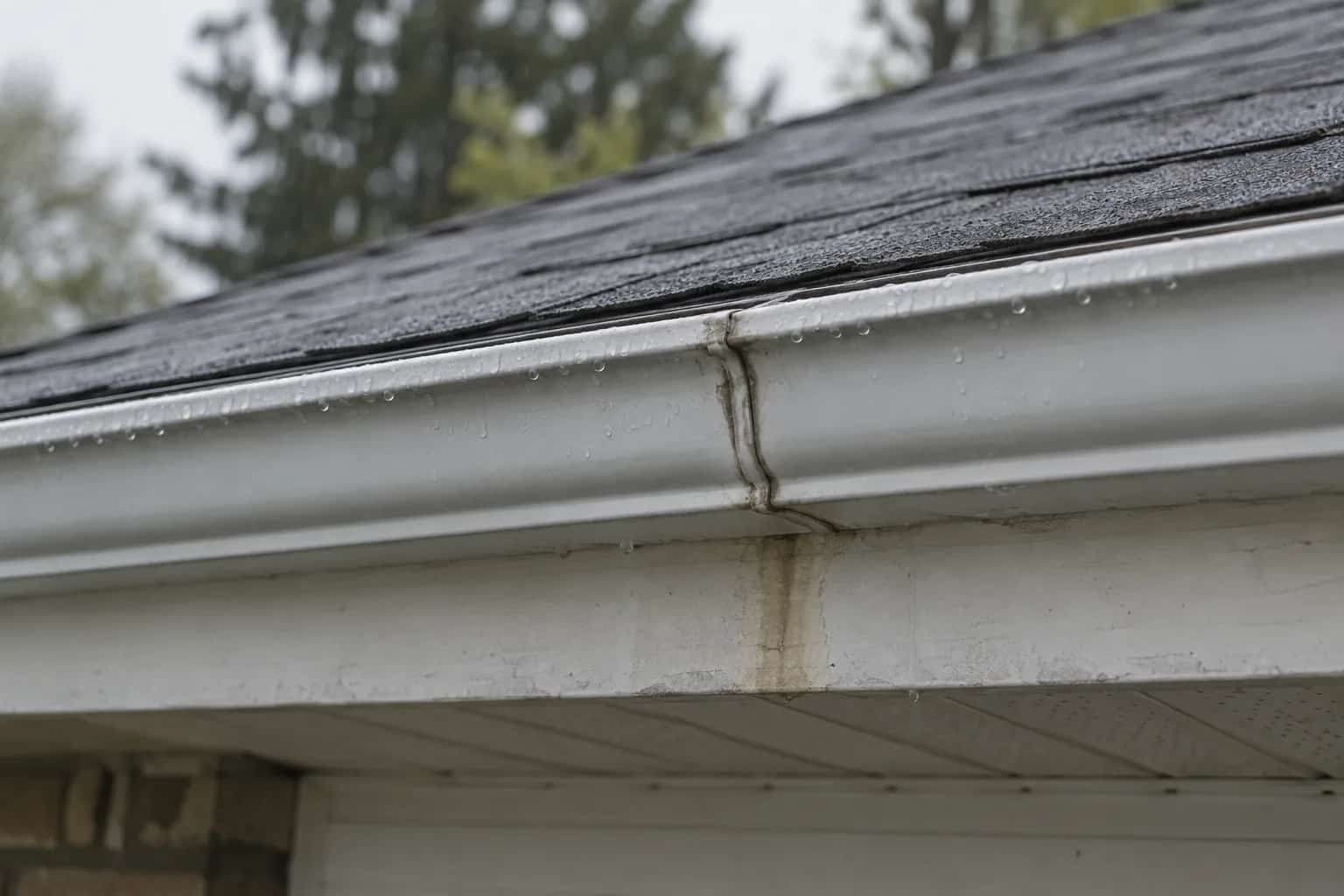
The gutter has started leaning away from the house. A few extra screws sound like a modest repair, until one comes back out with soft wood around it. Now the question is what the gutter can hold onto.
Repair the backing and wetting cause before rehanging the gutter. If a new roof and new gutters are being installed together, settle their shared edge before either trade covers it. Sound support, the roof-edge water route and a draining trough are three connected jobs. Keep people clear of visibly loose metal above an entrance while help is arranged.
One Loose Hanger or a Whole Run Moving?
One pulled hanger beside an otherwise straight run suggests a local attachment problem. Several fasteners withdrawing together, a bowed front edge or a corner that has rotated points toward a broader support or loading issue. Those are clues, not diagnoses that can be settled from a photograph alone.
Tell the contractor when you first noticed the change. A section that moved after a branch strike needs a different conversation from one that has slowly separated over several years. If it happened after a thaw, provide photographs of the earlier ice if you have them.
Why More Screws May Not Help
The replacement trough is on the truck. Then the old fascia covering comes off, and Dave puts the fitting tools down. The backing needs attention before it can carry anything new. "Lovely straight gutter," Pat says. "Shame about what we'd be hanging it from."
Mike photographs the exposed area and calls the owner before closing it. The inspection allowance now has a purpose: a visible finding, a defined timber repair and approval before concealment. The gutter crew can finish their part once the edge is ready to support it.
Ant activity beside the damaged wood warrants a pest and moisture investigation before new fascia hides the area.
Find Out What Loaded It
Water trapped by debris adds weight. Ice can add more, while sliding roof snow can strike or pull at a gutter. A contractor should also look for a distorted trough that now retains water because it moved. Failure can create the conditions for the next failure.
Gutters are not snow-retention devices. Where sliding snow is the concern, have the roof system assessed rather than simply adding larger screws. A metal roof may require a designed snow-management approach, with compatible attachment and a safe discharge area.
Repair the Edge Before Hanging the Gutter
Close the support and water-route questions before the final trim.
Inspect open backing
Distinguish stain from decay and agree any wider repair.
Stop wetting
Find seam leakage, edge bypass or retained water before covering repairs.
Coordinate trades
Restore support and the roof-edge detail with protection between visits.
Hang and check
Verify attachment, slope, outlets and final discharge separately.
Price the Opening Before the Hidden Repair
Stained paint, soft wood and a loose hanger are different findings. The quotation can include a controlled opening to assess the concealed fascia without pretending every centimetre has already been inspected. Agree what is included if only the board needs repair, what would trigger a wider deck-edge or rafter-end assessment, and how photographs and approval will be handled before extra work.
IKO's roof-component guide distinguishes the edge parts. Ask the installer to identify the actual hanger, fastener and sound receiving material. The Copper Development Association's gutter specifications illustrate system-specific support details; their copper arrangements and dimensions are not a fastening schedule for aluminium gutters. If the proposed hanger has no identified installation requirements, the specification remains incomplete.
New Roof and Gutters: Name the Handover
For combined work, settle these responsibilities in advance:
- Existing gutter: who removes it, or protects and clears it of tear-off debris if it stays.
- Open edge: who assesses fascia, deck edge and adjacent framing, authorises repairs and protects exposed areas between visits.
- Roof connection: who installs the system-specific edge metal and underlayment detail, with the future gutter position agreed. IKO's drip-edge guidance explains the water-directing role.
- Final gutter and guards: who hangs the run on sound support, removes/refits or replaces guards, and verifies that their fit does not compromise the roof.
- Water route: who checks outlets, downspouts and discharge, then handles a callback at the shared edge.
Final gutter installation commonly follows roofing, but the arrangement should not depend on the second trade improvising around finished work. If weather changes the roofing date, one named person updates both schedules.
Photograph the old overflow before removal if it can be observed safely. A new gutter still needs to solve the actual problem: front overflow, rear bypass and poor ground discharge are different routes. At completion, check both firm attachment and drainage. Neither proves the other, and a new downspout that still empties against the foundation leaves a separate problem.
Once the edge is closed, you should have more than a straight new gutter. You should know what supports it, why the timber got wet and who owns the whole connection if it needs attention again.