
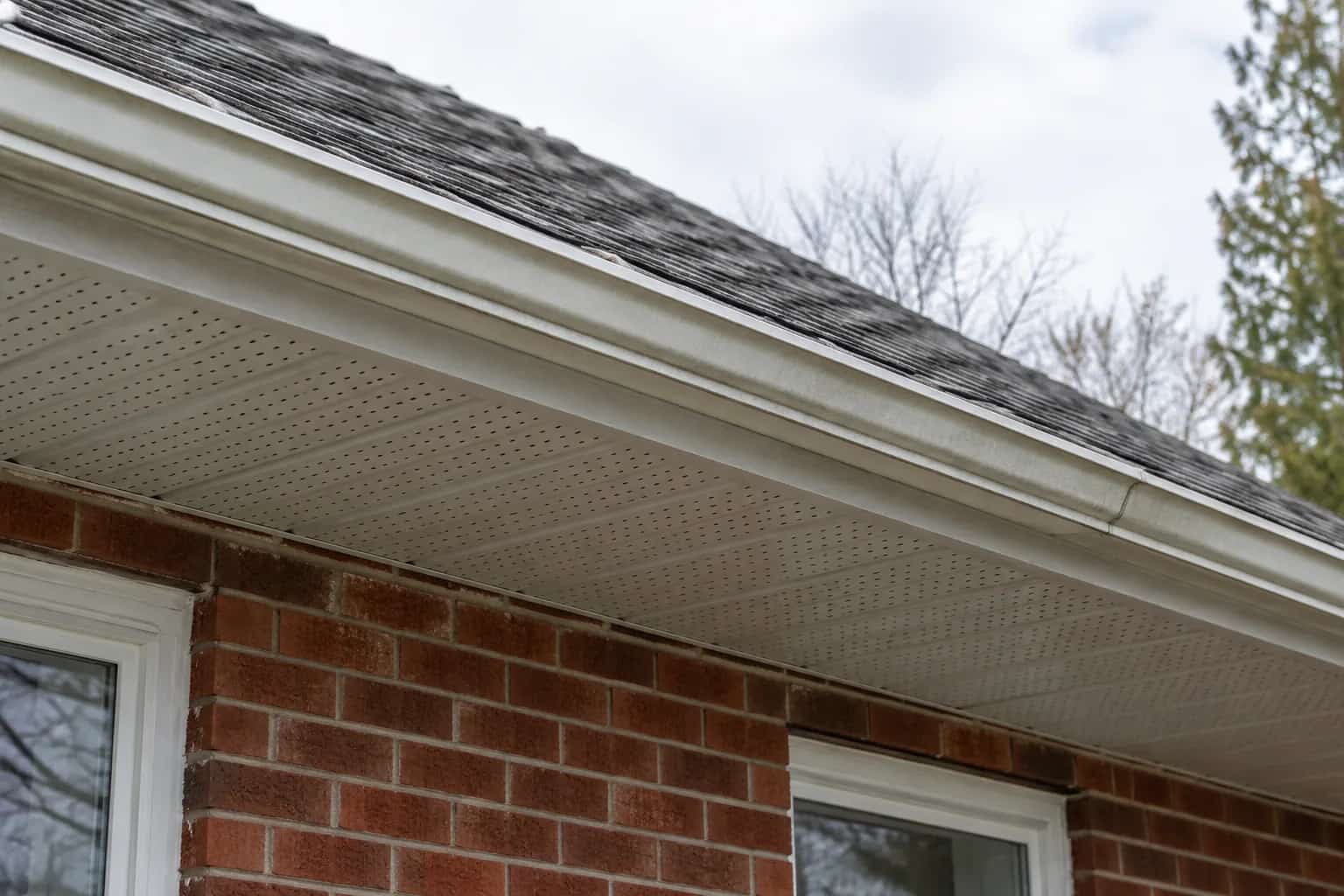
There is a steady line of large ants disappearing behind the gutter. It is tempting to choose one explanation: the roof is leaking, or the insects are the whole problem. Have the pest identified and the surrounding building condition assessed. The two investigations can inform each other without either replacing the other.
Health Canada notes that carpenter ants favour moist, decaying wood and can signal a moisture problem. That makes the trail worth following professionally. It does not prove that the nest is in the eave, or that every piece of nearby timber needs replacing.
The ants arrive at the eave in a neat line. The owner has already named the culprit: the maple branch. Dave watches the route disappear behind the gutter and asks about the water stain below it. The tree may explain access. It does not explain every condition waiting at the destination.
Save the Route Before It Disappears
From safe ground, record where the ants travel and enter, the time of day and any nearby tree contact. A short video can help a pest professional distinguish a route from a vague report of insects somewhere near the roof.
Do not remove soffit panels or spray into unidentified cavities to expose the nest. Wiring, insulation, other wildlife and the building's ventilation may share that space. Tell the pest contractor about any known roof leak or recent work before treatment is selected.
If you notice fine debris below an opening, photograph it without assuming it is proof of a nest. The professional can assess its composition and relationship to the activity. A pile swept away before anyone sees it is one less useful clue.
Two Investigations, One Repair Plan
Pest activity can guide an inspection without proving a water source.
Pest evidence
Identify the insect and record its route.
Water evidence
Find the moisture path independently of the ant trail.
Timber condition
Define any damaged area before replacing or closing it.
Coordinated follow-up
Track renewed activity and wetting through the responsible trades.
Locate the Moisture Separately
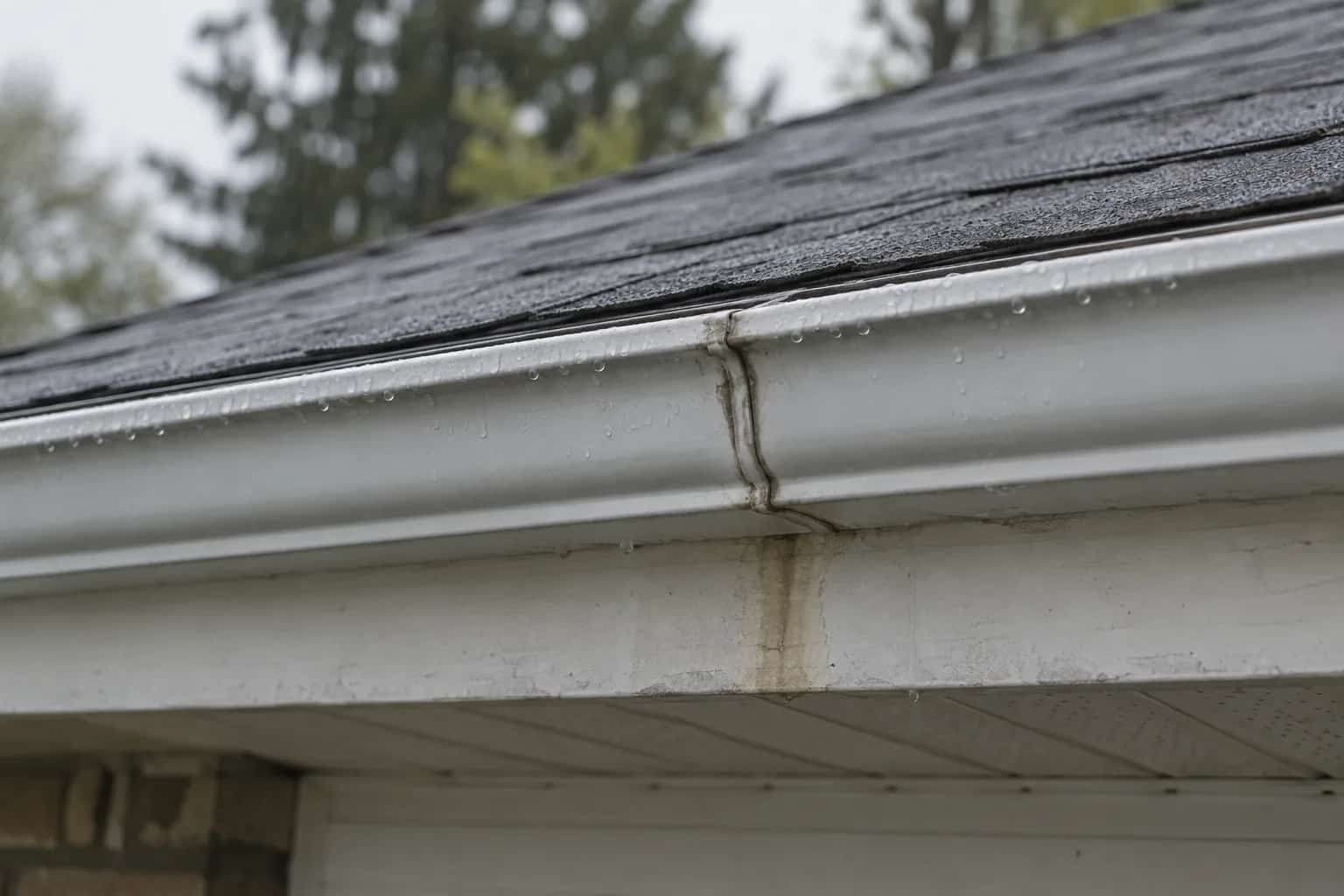
A damp fascia can result from gutter overflow, a failed roof-edge detail or a local joint. Timber farther inside may be affected by another water route. Ask the roofer to explain what evidence supports the suspected source and where the inspection stopped.
Picture a recurring gutter spill above an active ant trail. Clearing a blocked outlet may correct one moisture source, while the pest work still needs to address an established colony. Conversely, pest treatment without correcting repeated wetting leaves the building condition unchanged.
Our water-behind-fascia guide helps organise the roof-edge investigation. It distinguishes water that misses the gutter from water that backs up or leaks through a seam. The insect route is useful context, not a substitute for watching the water route.
Mike puts the pest contractor photograph beside the rain video. The water spills at one location; the ant route continues farther along. The overlapping evidence is useful, but the outlines are not identical. Replacing the entire fascia based on the trail would skip the timber assessment.
What Does the Timber Assessment Include?
Have the report distinguish surface appearance, moisture findings and loss of sound material. If an opening is necessary, agree its location, the protection needed and who reinstates the roof or soffit afterward.
A moisture reading at one point does not map the whole eave. Ask how the contractor will establish the repair boundary, including adjacent supports and concealed junctions. Replacement should extend as required by the actual damage and connections, not stop at the edge of a photograph.
NRCan's carpenter-ant factsheet connects prevention with keeping wood dry and free of rot. For the homeowner, that means pest control and building repair should have compatible aims. It does not mean ordinary exterior wood must always be moisture-free or that one wet reading identifies the colony.
Give Each Trade a Named Handoff
Before the work begins, agree who identifies and treats the pest, who investigates moisture, who repairs damaged material and who confirms that closing the cavity is appropriate. Share photographs and the actual findings, rather than asking each contractor to work from a second-hand diagnosis.
If the proposed repair blocks a vented soffit, have the ventilation detail corrected. If animal entry is also involved, coordinate that before closure. A sealed opening that traps a different occupant or removes necessary intake creates another visit.
Keep the treatment and repair records together. Afterward, report renewed ant activity to the pest professional and recurring wetness to the building trade. Check the repaired drainage during ordinary rain from shelter. The useful finish is not merely a quiet ant trail for an afternoon; it is a documented pest response and a building detail that no longer receives the avoidable wetting.
The owner wants to know which visit counts as finished. Pat makes two boxes on the notes: pest follow-up and water-route check. "Both," he says. It is a small administrative flourish, but it prevents a dry gutter from being mistaken for proof that the colony has gone.