

The bucket is empty for the first time in days. The owner is understandably ready to call the repair finished. Dave asks who is assessing the insulation above the stain. Mike keeps that item open: stopping fresh rain does not remove yesterday's water from the attic.
Whether that insulation can stay depends on its material, condition, contamination and ability to dry. Neither "replace it all" nor "it will air out" is a reliable answer without seeing the affected assembly.
Find the Extent, Not Just the Drip
A small ceiling mark may sit below a wider wet area. Water can travel along framing or spread across concealed layers before reaching the room. The person assessing the interior should map the affected area rather than remove only a handful of insulation directly over the stain.
Ask whether safe attic access is available. Crowded framing, hidden services and fragile ceiling surfaces make this professional work. Do not crawl across insulation or move unidentified older loose-fill material to investigate.
NRCan advises against covering wet insulation before the moisture source is corrected and the material is dry. Its guidance also cautions against disturbing vermiculite. If the material is uncertain, have it assessed before work proceeds.
Finish the Repair Below the Roof
Exterior repair and interior recovery are connected but separate tasks.
Stop new entry
Correct the identified roof or other moisture source.
Map wet materials
Assess insulation, ceiling and timber beyond the visible drip.
Dry or remove
Choose retention or replacement from material condition and contamination.
Restore the assembly
Reinstate affected air-control layers and insulation, then document completion.
Same Leak, Different Material Decisions
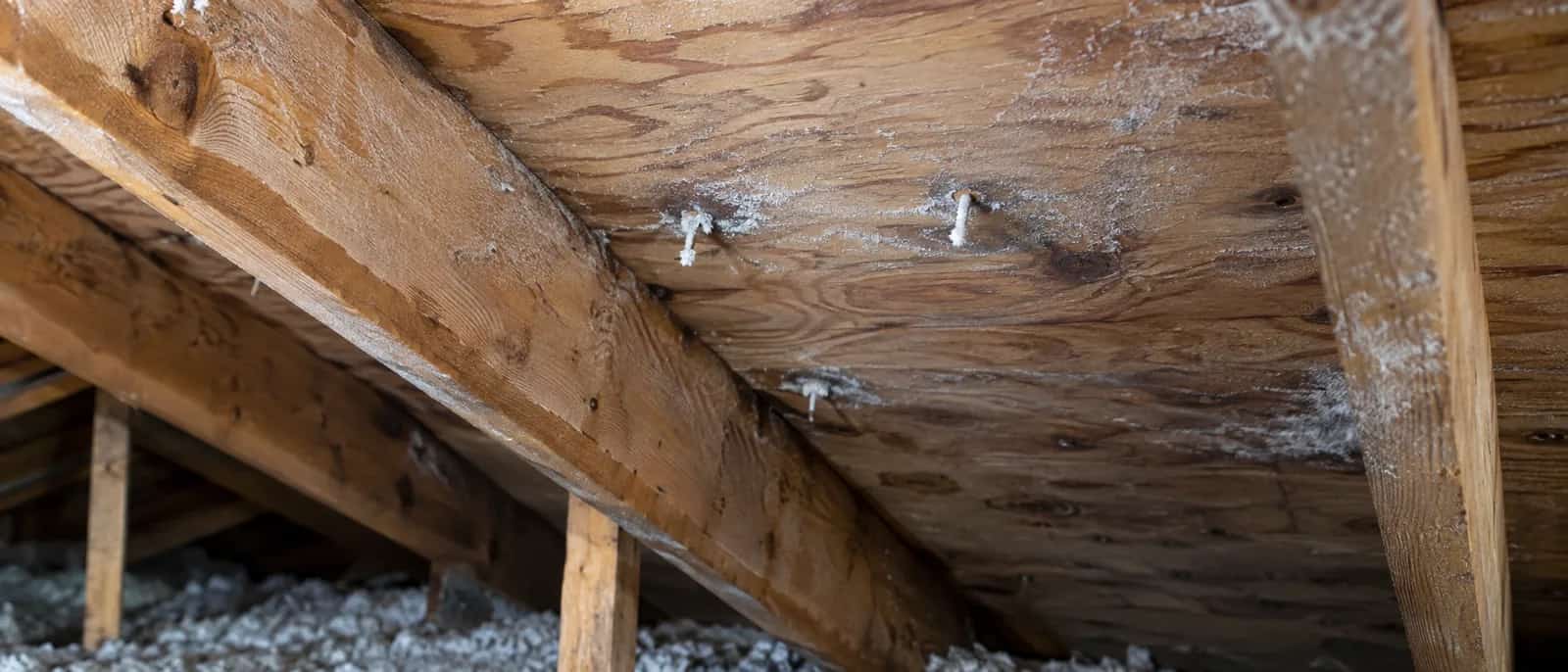
An intact material that can be assessed and dried is a different proposition from insulation that has compacted, become contaminated or remains wet against inaccessible surfaces. The decision should reflect those conditions, not simply whether the top feels dry.
Pat compares the accessible area beside the hatch with the tight eave farther away. The room-side marks may look similar, but the second area is harder to assess. It may need additional access or removal to establish the wet boundary. He cannot make the unseen area dry by giving it the same label as the first.
A useful assessment identifies the material, the wet boundary and the reason for retention or removal. For extensive wetting or uncertain contamination, a restoration professional may be needed. Mike asks how drying will be checked, not merely how long the hatch will remain open. A hopeful timetable does not establish the condition of concealed material.
Restore What Was Opened
Removing wet insulation can expose gaps in the ceiling's air-control layer. Any affected barrier and penetrations need appropriate restoration before replacement insulation conceals them. The insulation also needs to be reinstated without obstructing intended ventilation paths.
Dave adds reinstatement to the work list when the removal scope leaves an empty patch. "Dry" and "put back properly" deserve separate ticks. Ask who restores the specified material and depth, and who verifies the work after drying. The roof contractor's scope may not include that step.
Health Canada's moisture and mould guidance supports prompt action and addressing the source. If mould or widespread contamination is suspected, the assessment should determine the appropriate cleanup scope rather than relying on a fragrance or surface spray.
Keep the leak date and a clear account of what was removed, retained and reinstated. If moisture returns later, that distinction helps separate fresh rain entry from a different attic problem. The useful outcome is a complete, serviceable assembly rather than merely the end of the dripping.