
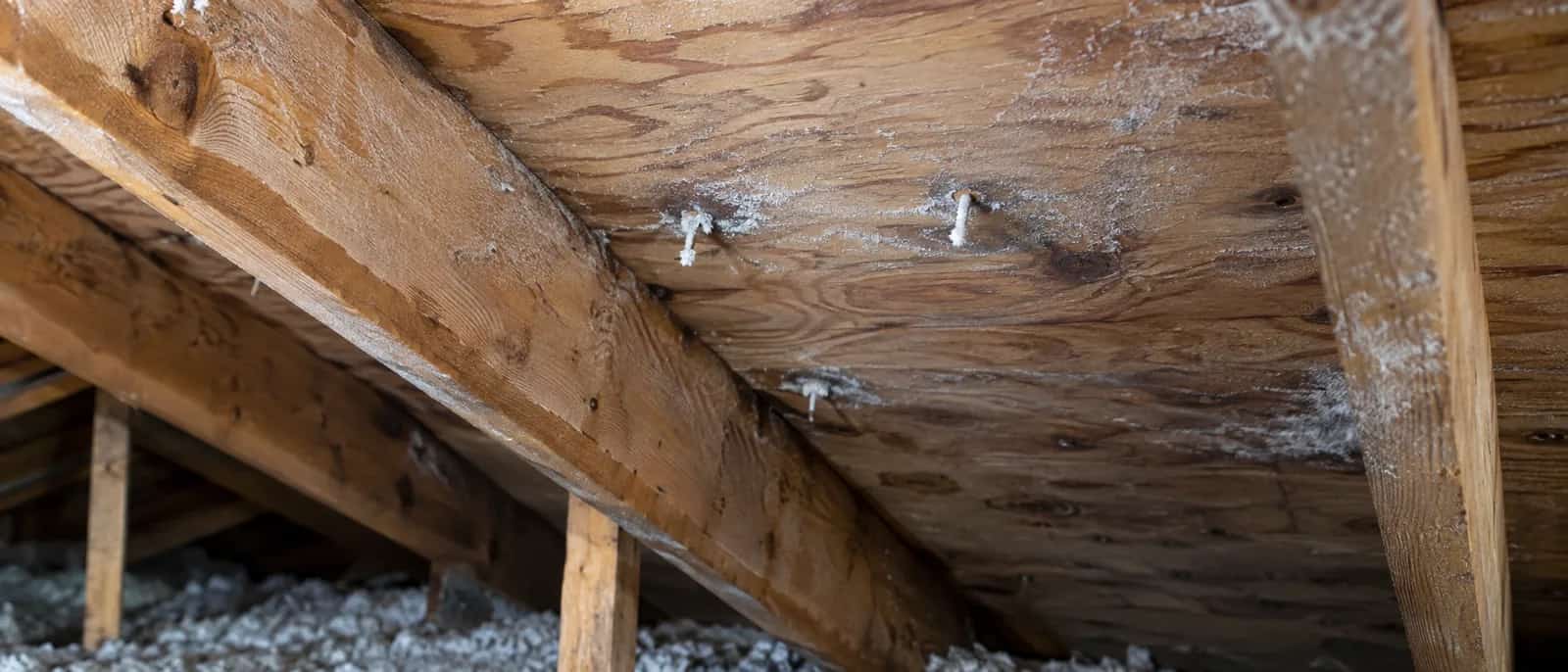
No rain all week. Then a mild afternoon produces a drip on the hallway ceiling, on the patch painted last autumn.
The first guess is a roof leak. Mike asks what the attic looked like during the cold spell. That question changes the inspection: the water may have been inside already, frozen beneath the roof.
A thaw can melt attic frost, send snowmelt through a roof opening or feed an ice dam. The same hallway drip can begin in different places. Find the route before buying a repair designed for only one of them.
The leak that starts inside the house
Warm indoor air can escape through gaps into a cold attic. Moisture condenses on cold surfaces and can freeze. During a thaw, that frost becomes water again. CMHC's attic guidance describes the connection between indoor air leakage, frosty roof sheathing and wet ceilings.
From the room below, melting attic frost can look like an ordinary roof leak. But melting snow can also feed an ice dam at the eaves or enter a roof opening. The timing is useful; it does not settle the diagnosis.
Compare the weather, location and repeat pattern
Use these combinations to organise the inspection, rather than treating one clue as a verdict:
- Cold dry week, then widespread dripping during a thaw: ask whether stored attic frost is melting. Photographs of several roof bays help distinguish a broad pattern from one wet track.
- Rain repeatedly wets the same track below a chimney or vent: ask the roofer to trace flashing and roof entry above the stain. The visible ceiling mark may be downhill from it.
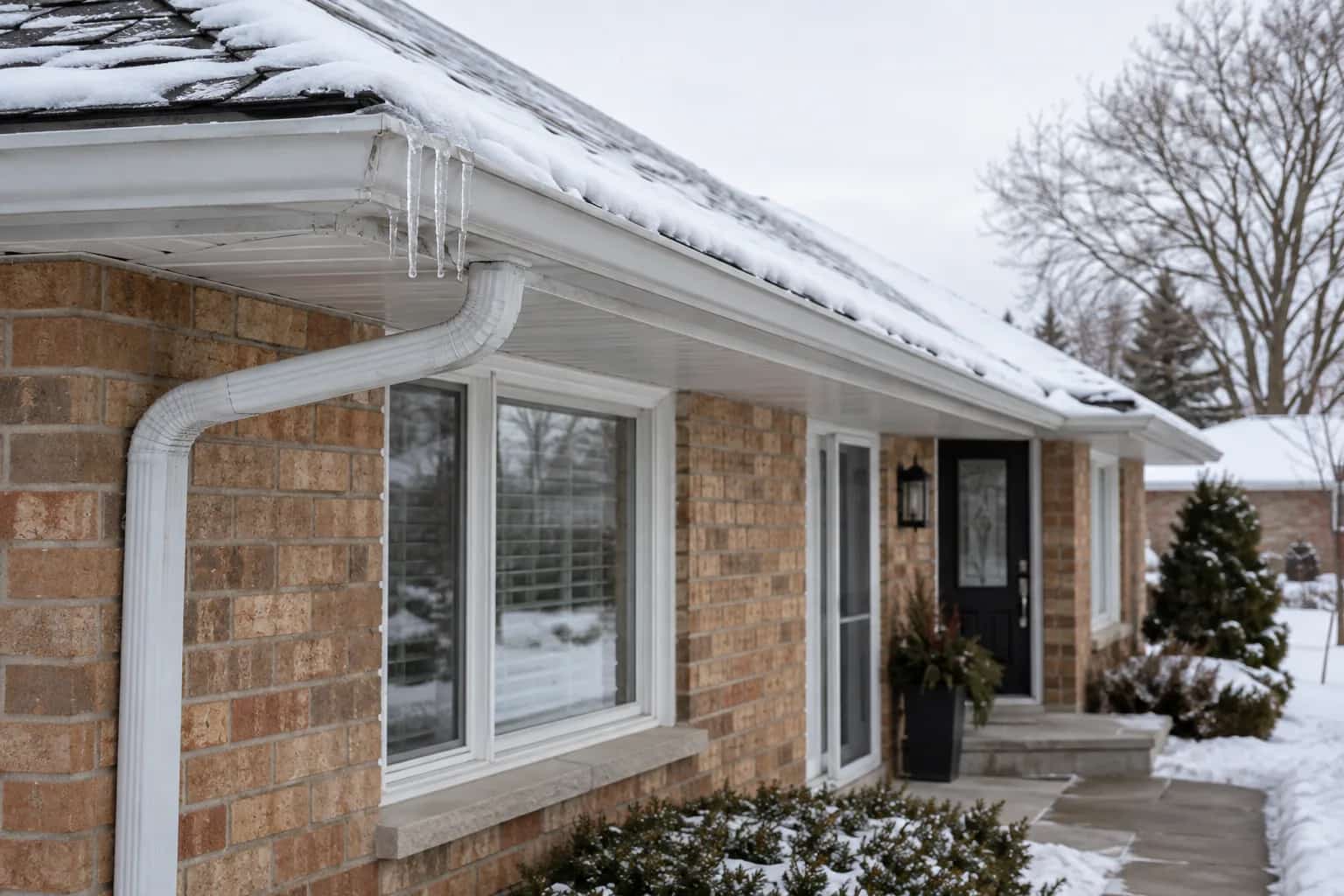
- Snow remains on the roof and water appears near the eaves during melting: inspect for backed-up water and ice at the edge. An attic moisture problem may be present at the same time.
- A bathroom grille drips after showers, even without precipitation: inspect that exhaust duct and its outlet before assuming the roof covering failed.
Keep a short record of the first drip, recent rain or snow, temperature change and shower or humidifier use. If the attic was already dry when inspected, ask what evidence would distinguish the competing explanations during the next event. Do not delay active-leak repairs to complete a weather log.
Save the Thaw Evidence Before It Disappears
From safe ground, record which downspouts are flowing and which appear frozen, along with any overflow beside a valley or wet fascia. Keep away from falling ice. A clear mouth at ground level does not establish that the pipe is open above it.
The obstruction may melt before the contractor arrives. A timed photograph can preserve the sequence, but the inspector still needs to connect that exterior observation to the indoor wet area. Water may travel along framing before it drops; the stain is not necessarily below the opening.
After temporary winter work, arrange a check of the affected eave, valley, penetration or roof plane when access is appropriate. Confirm whether the temporary protection needs a permanent repair. A comparison with ordinary rain can be useful, but do not delay an active-leak response to collect a second weather pattern.
Match current moisture to its trigger
One wet ceiling can have more than one source.
Cold spell then thaw
Look for a broad frost-melt pattern.
Rain then local track
Trace the exterior junction above the wet route.
Snowmelt at eaves
Check edge drainage and ice without assuming it explains all wetting.
Old rusty tips
Separate previous exposure from fresh moisture and wood condition.
More vents are not the first answer
If the inspection finds a local rain-entry defect as well as attic frost, keep both findings. We would rather revise the first guess than make the second problem fit it. One repaired flashing will not close an indoor air leak, and more vents will not repair a broken flashing.
For condensation, find where moist house air gets in: perhaps ceiling gaps or a bathroom exhaust duct. For outside water, trace the roof entry point. Those are different repairs, even when they leave the same stain.
Natural Resources Canada puts air sealing ahead of attic ventilation and says to correct moisture problems before adding insulation. Simply ordering more roof vents or covering wet insulation skips the diagnosis.
Rusty Nail Tips Do Not Date the Moisture
Old corrosion may remain after a moisture problem has been corrected. Ask whether the inspector found fresh droplets, frost or wet wood, rather than only rust. A narrow wet track beside a penetration after rain calls for a different investigation from frost over many nail tips after sustained cold.
The surrounding deck and framing need a condition assessment too. Rust in sound, dry wood is different from corrosion beside active wetting and deterioration. Neither nail colour nor a count of visible roof vents explains the moisture source.
Keep photographs tied to roof locations and the weather that produced the symptom. A dry-day visit has limits; those should appear in the report. If condensation is suspected, distinguish a disconnected exhaust duct, a ceiling air leak and a blocked intake. They are separate defects, and adding vents alone can leave the source in place.
Does a humidity reading settle it?
No. Health Canada recommends indoor humidity control, generally within 30-50% relative humidity. That living-space guidance is not a target for an unheated attic. A single attic reading also cannot identify where the moisture came from.
Record the room temperature with an indoor humidity reading and mention persistent window condensation. Those observations help investigate moisture sources; they do not prove that roof flashing is sound. For a more useful record, see how to log attic humidity and weather together.
Arrange prompt help for active dripping, and keep clear of a bulging ceiling or wet electrical fixture. Once the cause is fixed, ask how drying will be checked before the ceiling repair. Painting is the last job on this list.