
The attic sensor says 80 percent, and the screenshot arrives before breakfast. Mike asks for the temperature and the time. Dave asks whether it rained. Nobody is dismissing the reading; we are trying to give it enough company to mean something.
Relative humidity changes with temperature. One high reading cannot distinguish rain entry, an exhaust leak, condensation or remaining moisture; a short event log makes it more useful.
A short log you will actually keep
Use a dated note or simple spreadsheet with outdoor weather, indoor temperature and relative humidity, any attic sensor readings and visible observations. Record the time, not just the day. Note showers, unusual laundry drying, humidifier changes and the start of a drip.
Photograph an accessible ceiling stain from the same position. Mark whether it is new, growing, dry-looking or actively wet. Avoid touching electrical fixtures or poking a sagging ceiling to obtain better evidence.
For an attic sensor, use a device suited to the expected temperature range and have it placed safely in a representative location. A sensor beside an exhaust leak or directly against cold sheathing measures a local condition. That may be useful, but it should be labelled as such.
Pat keeps the log on one page. Weather, temperature, indoor activity and the time of the symptom are enough to start. A graph with no context is easy to admire and surprisingly difficult to diagnose.

Watch the Pattern Rather Than a Single Peak
Pat's useful entry is deliberately ordinary: "Tuesday, 7 a.m.; cold night; no rain; shower used at 6:30; new drip at bathroom grille." Compare that with "Tuesday, 4 p.m.; rain from the west; no shower; stain beside chimney growing." Those are examples, not diagnoses. Each gives the person inspecting the house a different event to investigate. A folder full of cropped humidity graphs leaves out that story.
These observations guide inspection. They do not replace it. A homeowner log cannot establish hidden wood condition, identify mould or confirm the integrity of flashing.
Health Canada's moisture guide discusses indoor humidity control and moisture-source correction. Its indoor living-space guidance should not be treated as a universal humidity target for a cold, vented attic exposed to outdoor conditions.
Mike compares the shower morning with the rain afternoon rather than treating every peak as the same event. That is where the log earns its keep: it helps decide which route deserves inspection next.
Turn Readings Into a Useful History
Record conditions before interpreting a humidity percentage.
Time and weather
Note rain, cold spells, thawing and wind at the observed time.
Indoor conditions
Record temperature, humidity and unusual moisture-producing activity.
Attic evidence
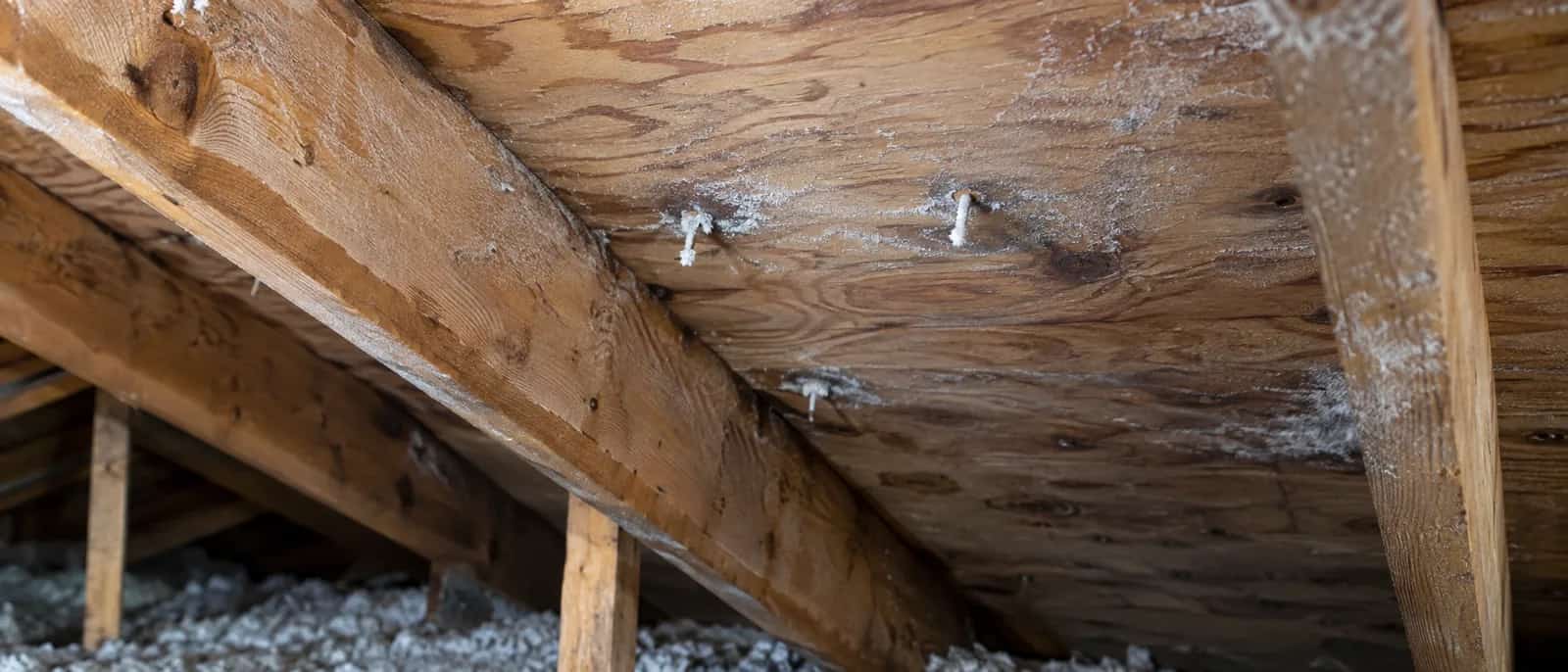
Pair sensor location and temperature with visible wetting or frost.
Repair comparison
Compare recurrence under similar conditions after a dated repair.
Make Follow-Up Comparable
If a contractor repairs a duct or seals ceiling openings, record the completion date and the exact work. Continue observations through similar weather to that associated with the original issue. "Dry the next afternoon" is encouraging but does not reproduce a week of cold nights followed by a thaw.
Ask the assessor whether wood-moisture measurements or targeted investigation are needed. If they use meters, the location, material and measurement method should be recorded so later readings can be compared sensibly.
Our winter condensation or roof leak guide helps organise those possibilities. Keep the log short enough that you will actually use it: a few reliable entries beat a hundred unexplained sensor screenshots.
Active leaks, spreading moisture, electrical contact or a sagging ceiling need prompt attention. Logging is useful evidence, not a reason to delay a necessary inspection.