
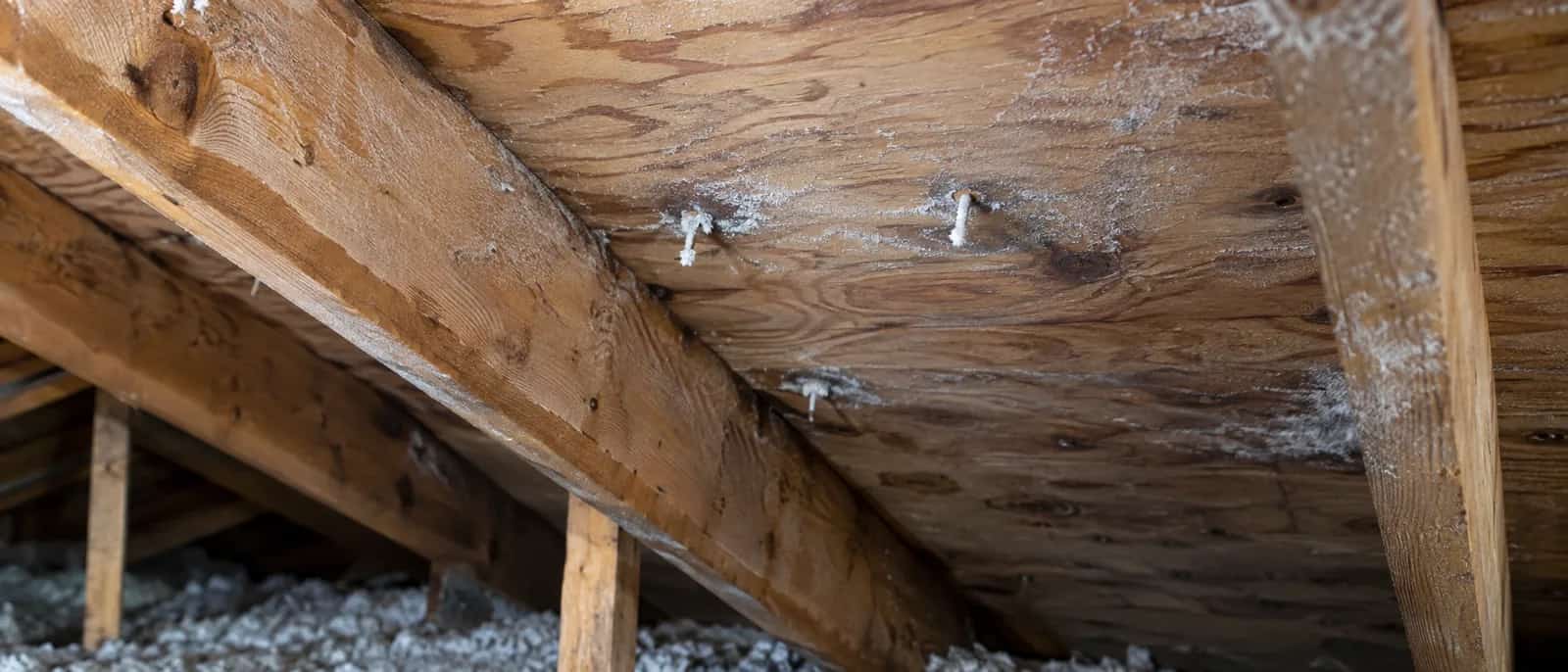
The humidifier dial has been turned up twice this week. Now an attic photograph shows frost. The owner wants to know which appliance to switch off; Mike wants the humidity reading and the ceiling-leakage assessment. Dave writes three words on the inspection note: source, route, surface. They need all three before deciding what the dial has caused.
A furnace humidifier adds moisture to indoor air. If that air escapes through ceiling gaps and reaches a sufficiently cold roof surface, moisture can condense or freeze there. The humidifier can increase the moisture load; the ceiling opening supplies the route. Turning a dial cannot seal that opening.
Think in Three Parts: Source, Route and Cold Surface
Pat spots the hatch on the inspection plan. If its seal is incomplete, more humid indoor air can escape there into the cold roof space. That gives the investigation a route to check, rather than another appliance to blame. The ceiling may look perfectly intact from below while air moves at the hatch edge or another concealed connection.
NRCan's attic guidance treats air sealing, insulation and ventilation as connected work. A bath fan discharging into the attic introduces another direct source that needs correction. The investigation should identify the actual route rather than blame every patch of frost on the humidifier.
This is also why the answer is rarely to replace the roof covering first. Shingles shed outdoor weather; they do not close indoor air leaks through the ceiling below.
From Added Humidity to Attic Frost
Frost needs moisture and a cold surface; this example includes an air-leakage route through the ceiling.
Moisture added indoors
The humidifier and household activities contribute to indoor moisture.
Air crosses the ceiling
Gaps or faulty exhaust routes let moisture reach the attic.
Cold surface receives it
Moisture can condense or freeze where conditions permit.
Two corrections
Control excess moisture and correct the identified transport route.
Is the House Actually Too Humid?
The humidifier control is a setting, not an independent measurement of every room. Compare it with a suitable indoor humidity reading and note the temperature and location. A reading beside a shower or directly beside a supply outlet may not describe the rest of the house. Dave asks where the monitor was sitting. "On the bathroom shelf" explains why the first number deserves some context.
Window condensation, unusual moisture-producing activities and recent humidifier changes are useful context. None is a calibrated measurement of the attic's condition. The humidity-monitoring guide shows how to keep a short useful log without making the attic a daily destination.
There is no single indoor setting that guarantees a dry roof in every outdoor temperature and assembly. A setting tolerated during mild weather may produce a different result during a severe cold spell, especially where the enclosure has a local cold spot or air leak.
Reduce Unneeded Moisture Without Guessing at the Equipment
NRCan advises lowering a furnace humidifier to reduce excessive indoor humidity. Follow the installed equipment's operating instructions. If the controls are unclear or the unit seems to add moisture despite its setting, have the HVAC contractor check its operation.
Include other sources in that conversation: indoor laundry drying, long showers and exhaust fans that are unused or not working as intended. Health Canada identifies source control and effective ventilation as complementary measures. Running extra humidification while trying to exhaust the resulting moisture can work against the aim.
Comfort matters too. The goal is an appropriate indoor environment and a sound enclosure, not driving the house as dry as possible to conceal an air leak. Health-related humidity needs belong with the appropriate healthcare advice; the roof inspection should establish how the building is behaving.

A Thaw Still Needs Follow-Through
Less new frost is encouraging, but existing frost may melt into insulation or ceiling materials. Health Canada's moisture guide supports prompt attention to affected materials and the underlying source. A drier sensor reading does not assess those materials for you.
The final scope may therefore include a humidifier adjustment, ventilation service and specific ceiling air-sealing work. Keep their purposes clear. Mike asks anyone proposing only more roof vents to explain how that work addresses the moisture source and known ceiling route. Pat calls this the part where the arrows on the drawing need to meet. More hardware is not a substitute for a connected explanation.
Review performance through comparable cold weather and a thaw. That gives the repair a fair test without turning one afternoon's improvement into a winter-long promise.