

Two quotes sit on the counter: extra roof vents on one, HRV service on the other. "Both say ventilation," the owner says. Pat draws the ceiling between them. "Both are talking about air. They are not talking about the same room."
An HRV exchanges air in the living space. Roof vents serve the cold attic above the insulated ceiling. A working HRV may reduce the indoor moisture available to escape upward, but it does not seal the ceiling or replace the attic's designed vent route.
Two Air Routes With a Boundary Between Them
The HRV extracts indoor air and supplies outdoor air while recovering some heat between the streams. In winter, that exchange can help remove indoor moisture. Health Canada describes HRVs and ERVs as balanced ventilation systems; an ERV also transfers moisture, so the equipment types should not be treated as identical dehumidifiers.
The attic route is separate. Outside air enters and leaves through the roof assembly's intended openings. Between the room and attic, insulation limits heat flow and the air-control layer limits unintended air movement.
That boundary matters. A large ceiling gap or a disconnected bathroom exhaust duct can deliver moisture to the roof space even while an HRV is running downstairs. Our air-sealing guide explains why insulation alone does not close such a route.
Three Parts That Must Work Together
Identify which space and boundary each proposed repair affects.
Living space: HRV
Exchanges indoor and outdoor air through dedicated equipment and ducts.
Ceiling boundary
Air sealing limits unintended indoor-air movement into the cold attic.
Cold attic: roof vents
The specified intake and exhaust route ventilates the roof space.
Service the Existing System Before Pricing Another One
Downstairs, the HRV hums reassuringly. Mike has heard plenty of reassuring noises from equipment that needs servicing. Controls, filters, exterior terminals and internal components must be in the condition its manual requires; power and fan noise alone do not demonstrate adequate ventilation.
Start with the operating instructions and service history. Homeowner maintenance should stay within the manual and safe access. A technician can investigate airflow, balancing, controls and equipment faults where performance is uncertain.
NRCan's operating guide describes the HRV's indoor and outdoor air paths and condensate drainage. Those paths need inspection as a system. A clean filter is worthwhile, but it does not establish that an outdoor terminal is unobstructed or that both airflows are correct.
What Would Make the HRV Part of the Answer?
Back upstairs, the windows help frame the investigation. Widespread condensation alongside an off or poorly maintained HRV makes restoring operation a sensible part of the work. Modest indoor readings with frost concentrated above an open ceiling chase points toward a local path that still needs correction. Pat keeps those possibilities on separate lines; neither is a diagnosis made from a frosty photograph.
These examples explain why the scope should name a finding. An HRV service should address an operating or airflow issue. An air-sealing job should identify openings. An attic-vent change should explain the existing intake and exhaust arrangement and the correction needed.
"Will the bigger unit close that ceiling gap?" Dave asks. It will not. Adding equipment without identifying the condition can leave you with a much better ventilator and the same wet roof space. The quote needs to name the operating fault, opening or vent-layout defect it intends to correct.
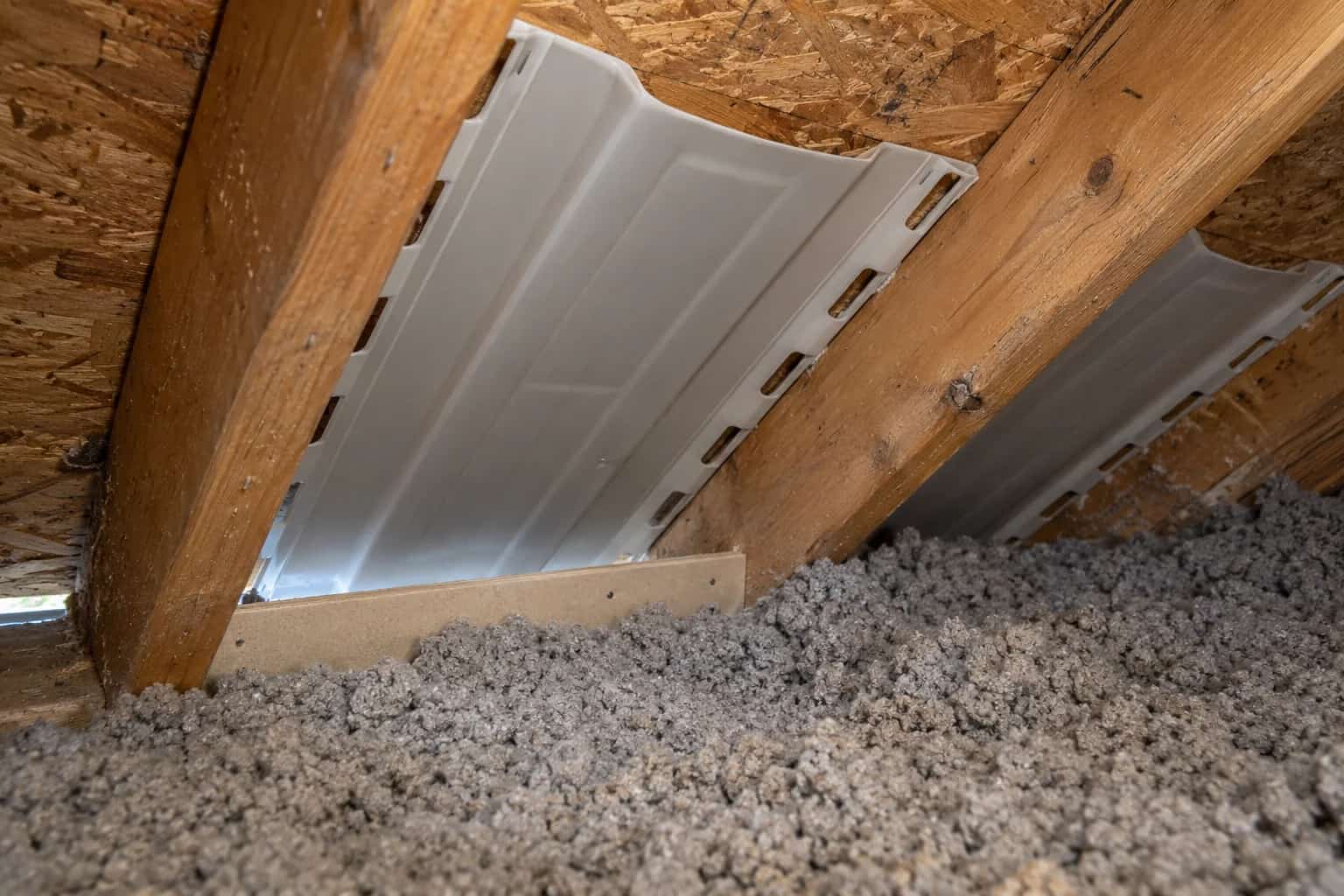
Keep the Attic Plan Intact
NRCan's roof-and-attic guidance puts ventilation alongside moisture-source control and air sealing. Do not cap attic vents because a whole-house unit has been installed, or route HRV exhaust into the attic. The discharge belongs outdoors through its specified arrangement.
For the roof-side calculation, see intake and exhaust balance. For the room-side question, review actual humidity, moisture-producing activities and equipment operation.
At handover, keep three findings: indoor equipment, ceiling boundary and attic route. That gives the next trade something better than "the ventilation was done." Pat's pencil line through the original quotes has become three actual checks, and nobody needs to guess which space the other contractor meant.