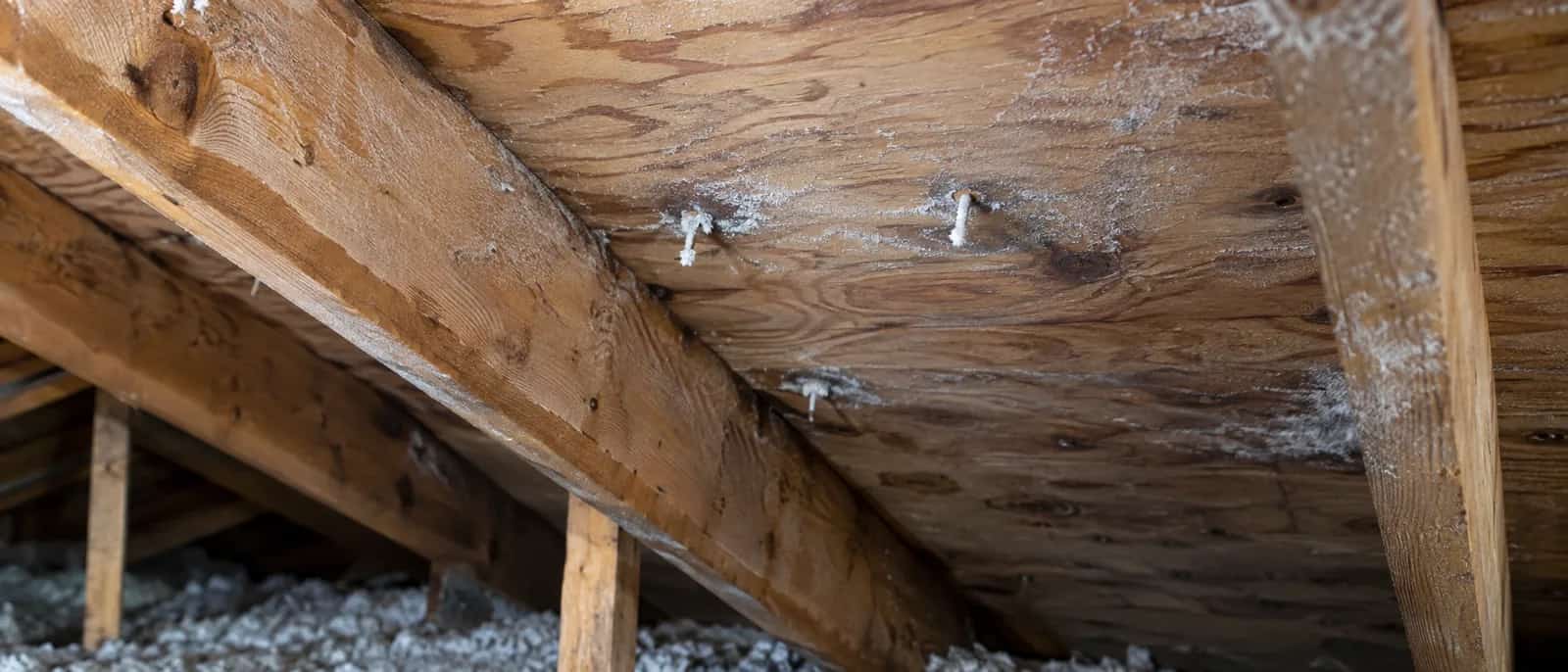
The flashing has been repaired, but the attic still has a dark patch. Pat pulls up the earlier photograph before anyone declares the repair a failure. A stain can remain; current wetting needs to be investigated. The useful argument is about evidence, not which patch looks more alarming on a phone.
A dark mark alone does not establish continuing growth or a failed roof repair. Check current wetting and the affected materials, including moisture routes beyond the original leak.
Colour alone cannot establish activity, species or the condition of the wood. Earlier photographs and evidence of current wetting help separate a remaining mark from a continuing problem.
Reconstruct What Was Repaired
We start with two separate questions: Is the area still getting wet, and what materials remain affected? A roofer may establish that flashing no longer admits rain while a moisture professional identifies insulation or wood that still needs attention. Conversely, a bright cleaned surface does not demonstrate that a hidden leak has stopped. Appearance and source correction are different evidence.
Read the original scope and ask for the repair photographs. Was the work at a plumbing boot, chimney, valley or a broader roof area? Was wet insulation removed or dried? Did anyone check bathroom ducts or ceiling leakage at the time?
If the same area wets after rainfall, the exterior repair and nearby details still need checking. Water can travel along framing, so an interior stain does not precisely mark the entry point.
Mike separates the roof repair from the affected-material assessment. If the agreement dealt with a flashing leak, ask what happened to wet insulation and whether other moisture routes were examined. One word, "fixed," can hide several unfinished jobs.
Follow Other Moisture Routes
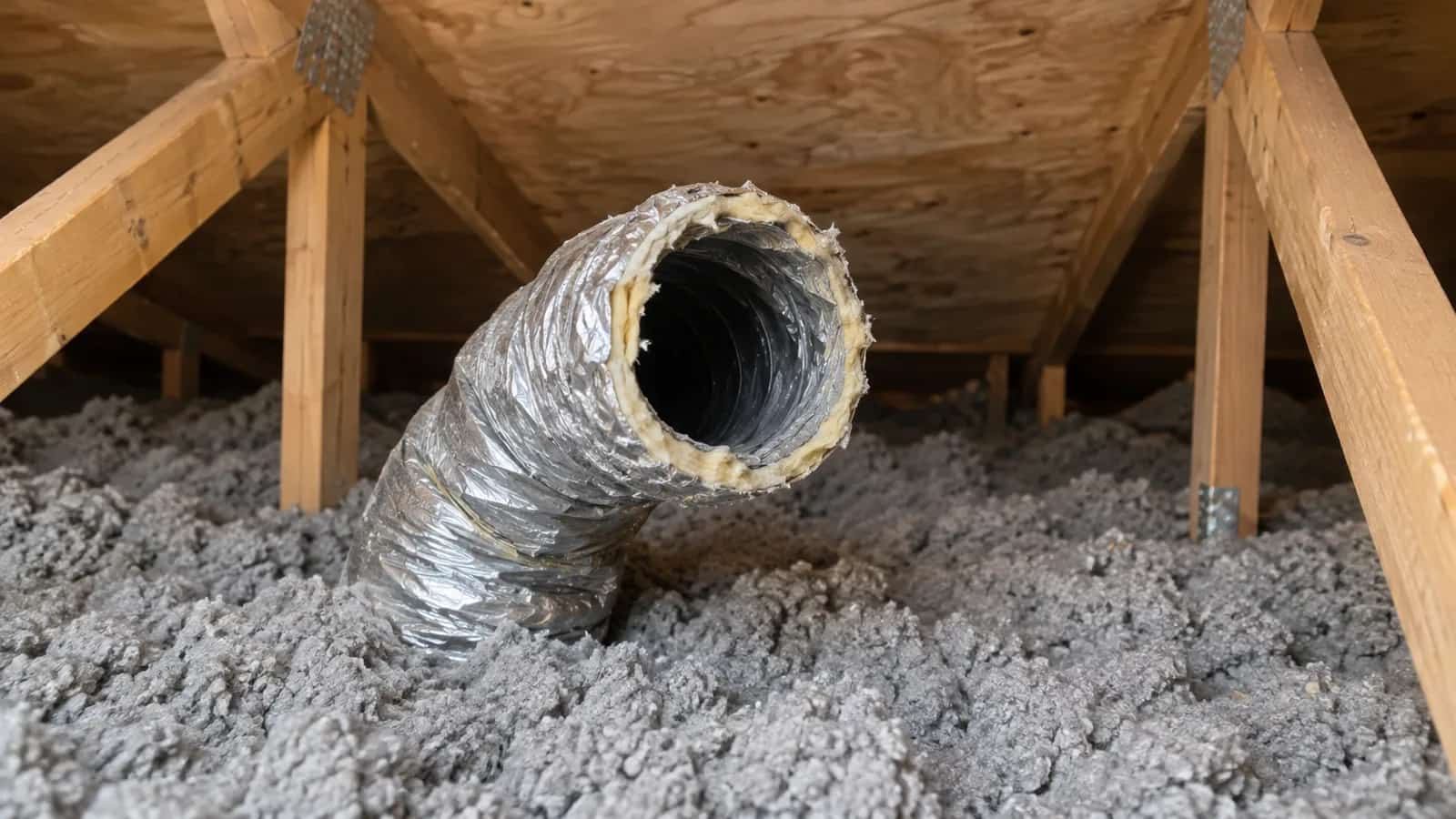
In cold weather, air leaking from the house can carry moisture to cold sheathing. A disconnected exhaust duct can deliver it more directly. Blocked ventilation passages can reduce drying, while previously soaked materials may remain wet after the original leak stops.
Health Canada advises correcting the underlying moisture cause because mould can return when that cause persists. Repeatedly coating or cleaning a surface without resolving wetting leaves the project incomplete.
Ask for the inspection to cover the affected area, exhaust routing, ceiling penetrations and relevant ventilation paths. The assessor should distinguish observations from conclusions and recommend further investigation where access is limited.
Why a Repair May Not End the Moisture
Check the repair boundary before repeating treatment.
Document the first repair
Identify the entry detail corrected and materials affected.
Confirm current wetting
Separate old visible marks from recurring moisture.
Trace all sources
Check rain entry, exhaust ducts and ceiling air leakage.
Close the loop
Correct sources, address affected materials and review comparable weather.
Separate Remediation From Structural Repair
Surface appearance does not establish the remaining strength of sheathing or framing. If wood is deteriorated, a qualified professional should assess repair needs. Likewise, a dry reading at one spot does not prove that all concealed insulation and adjoining surfaces are dry.
Have an experienced moisture or mould professional advise on the extent of remediation and precautions. Health Canada calls for professional involvement when a single patch exceeds 3 square metres, growth returns after cleaning, hidden contamination is suspected, or water has entered cavities that cannot dry by ordinary methods. A small visible patch does not establish the extent behind the surface. Avoid disturbing suspect growth, dusty insulation or contaminated materials to obtain your own close-up sample. Health concerns belong with a healthcare professional.
Dave wants the follow-up to match the original conditions. A dry afternoon cannot answer what happens after repeated cold nights, and a brightened surface cannot certify hidden wood. It is worth asking the less photogenic questions.
What would show the repair is working?
Our attic moisture log can support that follow-up. Keep the repair history, photographs and observations together so the next person sees the sequence instead of making a fresh guess from one dark patch.