
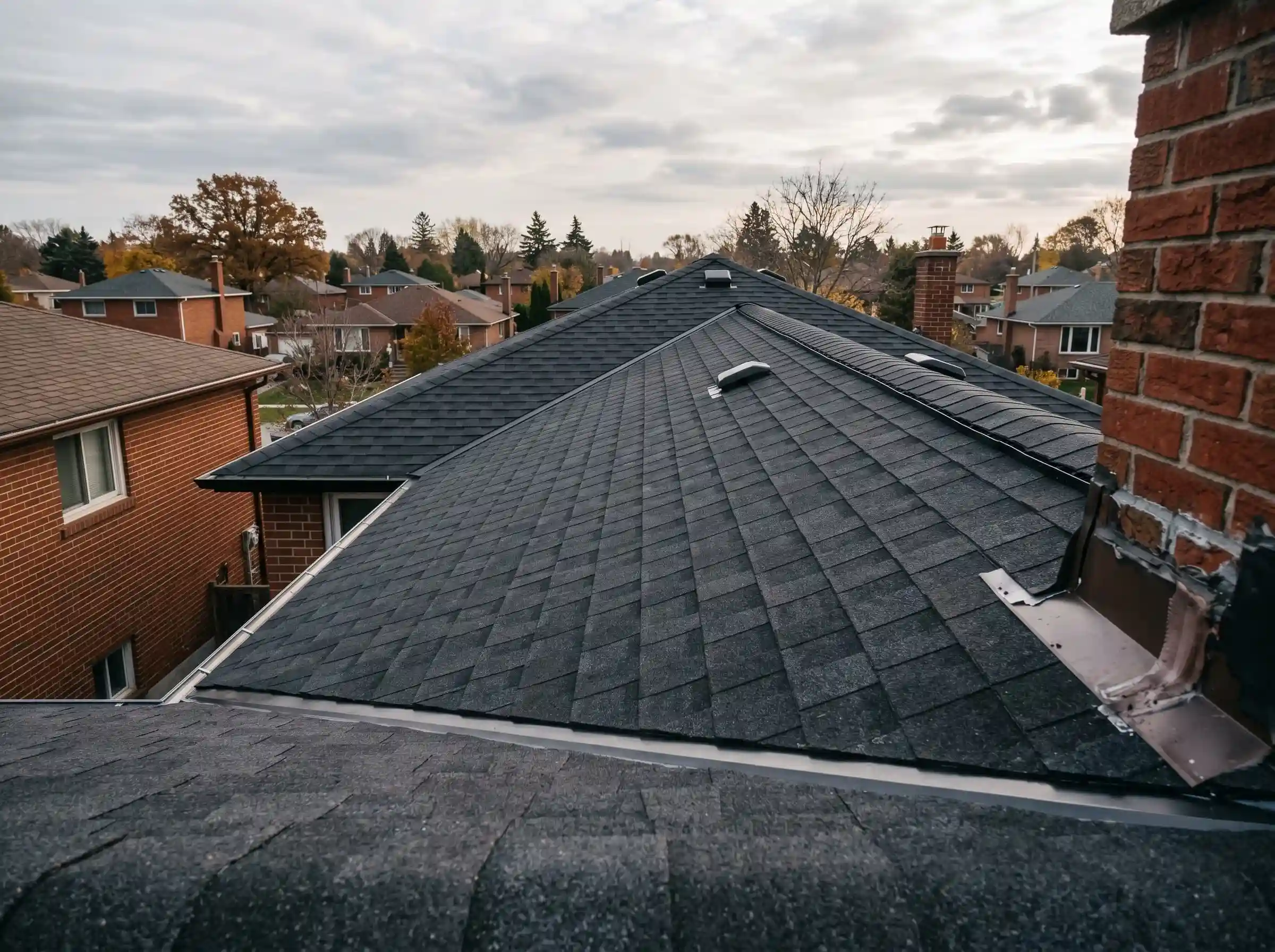
The bathroom fan can be heard downstairs, which the owner has been taking as evidence of effort. Then a January morning brings water through the grille. Pat listens to the description and asks where the duct ends. Mike wants the route traced before anyone orders a quieter or more powerful replacement.
A running fan can send air to the wrong place. If its duct ends in the attic, the shower moisture has only moved upstairs. Before buying a quieter or more powerful fan, find out whether the existing one actually reaches outdoors.
A drip does not automatically mean a roof leak
A wet grille does not prove the fan is exhausting into the attic. Broan-NuTone's Canadian guidance identifies duct condensation and a leaking roof or wall termination as possible causes of drips. Persistent mirror fog can also involve restricted airflow or insufficient replacement air entering the bathroom.
The duct may be disconnected, crushed, poorly insulated or unfinished. Dave marks the exterior cap on the plan, then leaves the connection line blank until it has been traced. A cap directly above the bathroom is a promising clue, not proof that this fan reaches it.
Note whether the drips follow showers, a cold spell or rain. If water reaches the fan's electrical parts, leave it off and arrange an assessment. Keep the observation simple; there is no need to dismantle a wet fan.
Two air routes with different destinations
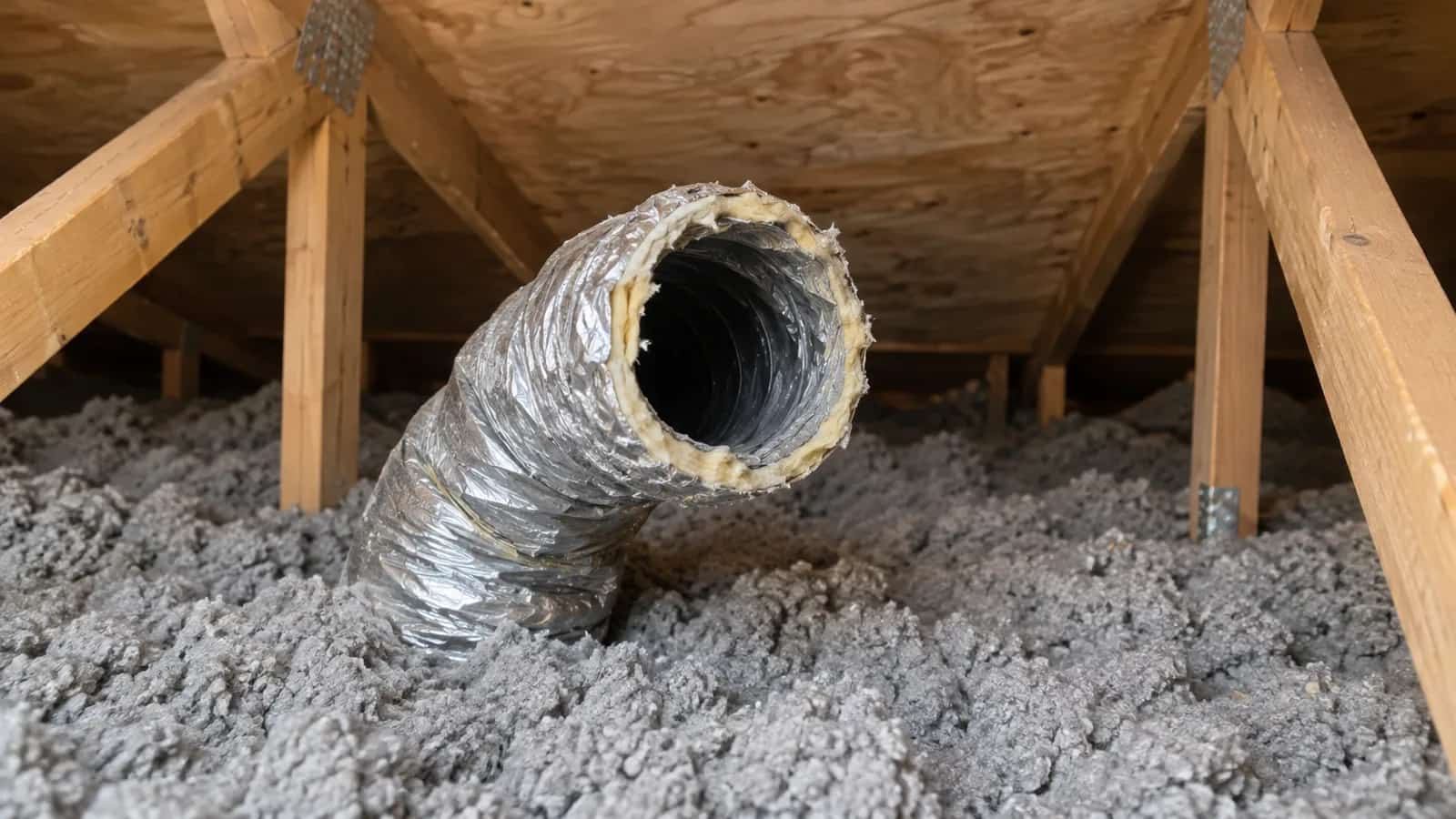
Bathroom exhaust needs a continuous, sealed duct to a suitable outdoor terminal. The duct through cold space needs insulation and support. Soffit-to-roof ventilation serves the attic; it does not turn an open fan duct into an outdoor exhaust. Keep the terminal away from soffit intake as specified for the installation.
Schematic view. Shows relationships, not installation dimensions.
Ask to see where the air comes out
Have the installer trace from the fan housing, through the attic duct, to the exterior connection. Ask for photographs of the route and a check that the outlet operates with the fan running.
"The duct disappears behind the insulation" is where the inspection needs to continue. The job is to confirm the whole connection. Let a qualified installer handle attic access and electrical work.
An opening skylight is a separate ventilation choice; the bathroom still needs a dependable exhaust arrangement when it is closed.
Three different problems can look the same downstairs
- The duct ends in the attic or has come apart: moist air is entering the roof space. Repair the complete exhaust connection; adding attic vents does not complete it.
- The duct reaches outside but collects condensation: inspect insulation, unsupported dips and the route through cold space. See the duct-condensation guide for this particular problem.
- The duct is connected but moves little air: check restrictions, duct diameter, the outlet damper and replacement air entering the bathroom. A louder fan does not establish greater airflow.
Broan-NuTone recommends rigid duct where practical because it offers less airflow resistance, and warns against reducing the specified duct diameter. For a wall outlet, its guidance calls for a slope toward the exterior so condensation does not drain back to the fan. A vertical roof route needs its own appropriate detail; it cannot be treated as a sloping wall duct.
Fix the route before buying a bigger fan
The repair should provide a continuous, sealed exhaust path outside, with appropriate insulation and support through cold space. Keep the route short and direct within the fan's instructions, without narrowing its specified duct size. Check that the exterior damper can open.
Natural Resources Canada advises against discharging directly below soffit intake vents. That location can let exhaust return to the attic. Pointing a loose duct towards a soffit is not a completed connection.
A roof outlet also needs a weatherproof roof detail. A wall outlet needs a suitable location and installation. Have the installer explain the choice for your house rather than assuming one route suits every bungalow or two-storey home.
Once the route works, a timer makes it easier to leave the fan on after a shower. Broan-NuTone cites a 20-minute post-shower recommendation. Pat leaves the timer decision until the route is corrected. Giving a disconnected duct another twenty minutes of operation would be remarkably faithful automation of the original problem.
If extraction improves with the door ajar, investigate the room's replacement-air route as well as the duct.
What to ask for when the repair is finished
Ask for a wide photograph locating the fan and outlet, closer photos of both connections, and a view showing the duct's insulation and support. Have the installer verify the exterior damper opens and check delivered airflow if weak extraction was part of the complaint. Mike asks for the outlet and airflow checks even if a tissue sticks to the grille. That little demonstration can show suction; it cannot establish how much reaches outdoors or where the duct ends.
Keep the fan model and installed duct size with the invoice. If the grille drips again, record whether it followed a shower or rain. That allows the next inspection to test the repair against the original symptom rather than starting again with the fan's noise.
Ask about any frost or wet insulation found during the repair, too. Fixing the exhaust stops that source; it does not establish that the attic has dried. Our winter condensation guide covers what to check next.
Check whether a proposed replacement actually exhausts air: a duct-free fan has a different job.