

The product sounds convenient: fit a fan in the ceiling without running a duct through the attic. For a difficult retrofit, that is an attractive sentence. It does not mean the device removes shower humidity from the house. A recirculating fan and an exhaust fan have different jobs.
Broan-NuTone's Canadian FAQ states that a duct-free fan does not expel air from the room. If the air returns to the same bathroom after passing through a filter, its movement is not evidence of an outdoor moisture route.
The owner points to the words no duct required. Pat points to the question underneath: "Where does the water go?" It is not a trick. It is the part of the purchase the convenient installation description has left unanswered.
Three products that are easy to confuse
An exhaust fan moves room air through a connected duct to an outdoor outlet. Its useful performance depends on the whole installed route.
A recirculating device passes air through a filter and returns it to the room. Any advertised odour or filtration function should be judged on its own terms. It should not be silently promoted into a shower-moisture solution.
A dehumidifier removes moisture from air and collects or drains the water. That is a different process again. It does not automatically replace required ventilation or the need to correct a leak. Check the actual product instructions and suitability for the room before using one.
The labels on a shopping page may put these products next to one another. Look for the described function and connection, not just the presence of a small fan motor. Pat draws three arrows: out of the house, back into the room and into a water container. Now the three boxes on the shopping page have stopped looking like substitutes.
Start by finding what already ventilates the bathroom
A ceiling grille without a visible local fan may connect to a central ventilation system. Conversely, a grille that makes a reassuring noise may connect to no exterior route at all. The visual difference can be less obvious than the functional one.
Ask a qualified installer to identify the existing arrangement and trace its path. Check older renovation records if available. The complete exhaust-route guide explains why a cap on the roof above the room does not prove that this grille is connected to it.
For a bathroom with a shower, show the installer how the room is used and what stays damp. For a small powder room, the use is different, but do not assume that removes every applicable ventilation requirement. Have the actual proposed arrangement checked.
The awkward duct route is a design problem worth solving
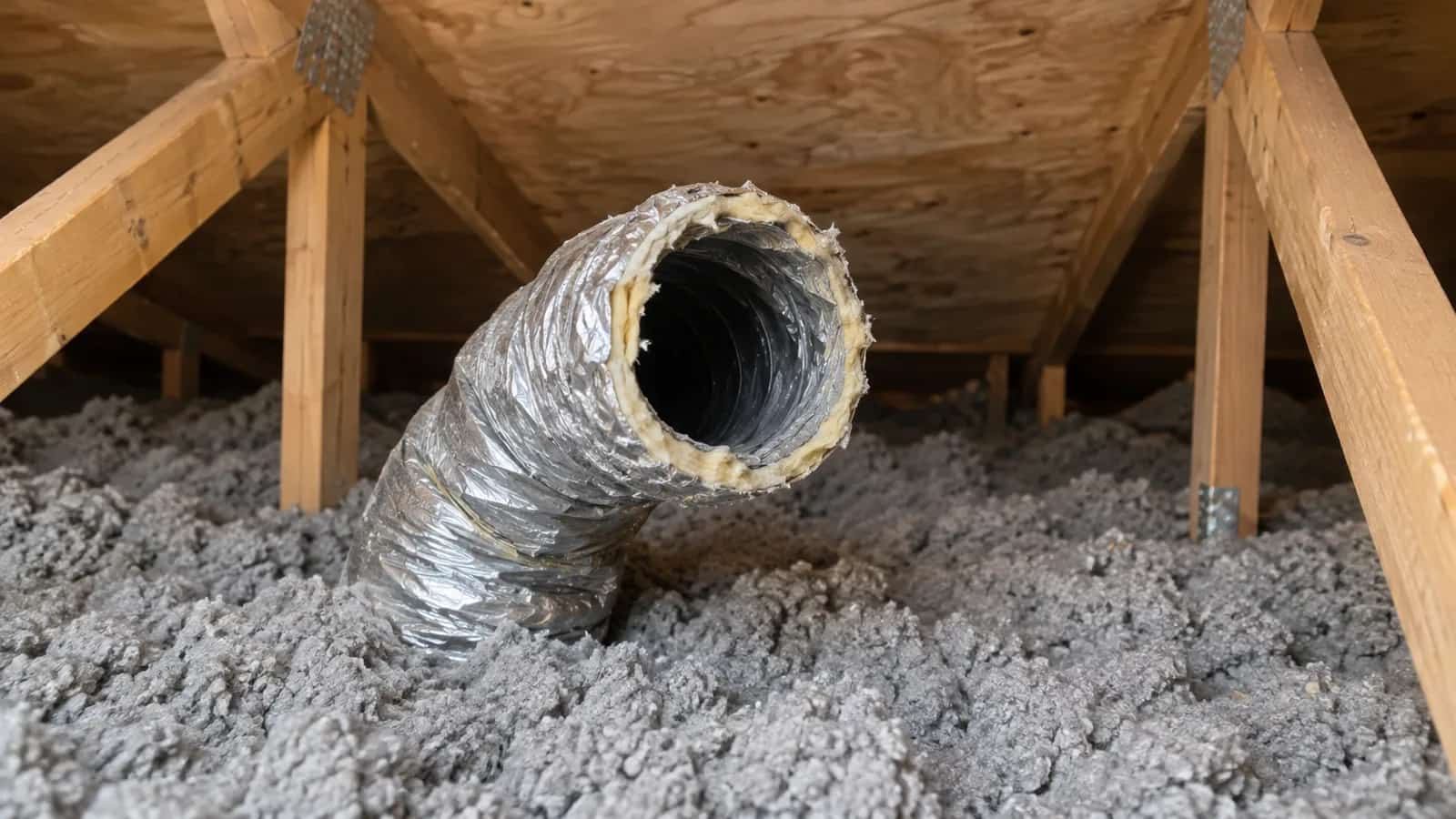
Suppose a second-floor bathroom sits below a crowded roof space. The owner sees a duct-free unit as a way to avoid opening the ceiling. A better first comparison is between possible compliant exhaust routes, access work and restoration, not between a connected system and a product that never removes the moisture.
The route may involve roof or wall termination, depending on the building and equipment. Structural members, other services, outlet location and weatherproofing constrain that choice. A short-looking path is not automatically a suitable path.
HVI's ventilation guidance treats fan capacity and replacement air as parts of the arrangement. Keep controls and everyday use in the scope too. A capable fan that is intolerably noisy may be left off; our sound-versus-airflow guide helps compare replacements.
Where does the moisture go?
A moving-air device needs to be identified by what happens to the air or water.
Recirculation
Air returns to the room; a filter does not establish outdoor exhaust.
Outdoor extraction
A connected system carries room air outside and admits replacement air.
Dehumidification
Water is collected or drained; this is a separate process with separate limits.
What to ask before accepting the cheaper proposal
Request a written explanation of where shower moisture goes. If the answer is "the filter deals with it," ask what moisture-removal mechanism and rated performance the product actually has. Do not let odour reduction stand in for humidity control.
If an existing central extract is adequate and remains in service, an additional device may be an optional accessory. If there is no effective outdoor extraction, describe the proposed correction and any necessary ceiling or roof work separately. That makes the cost difference honest. Avoiding a hole is appealing. Avoiding the job the hole was meant to do is a different saving.
An opening skylight can also be pleasant, but depending on it being open through cold weather is another incomplete routine. Keep the purchasing decision tied to what the room needs on an ordinary wet winter morning, not only what is easiest to fit into the ceiling today.