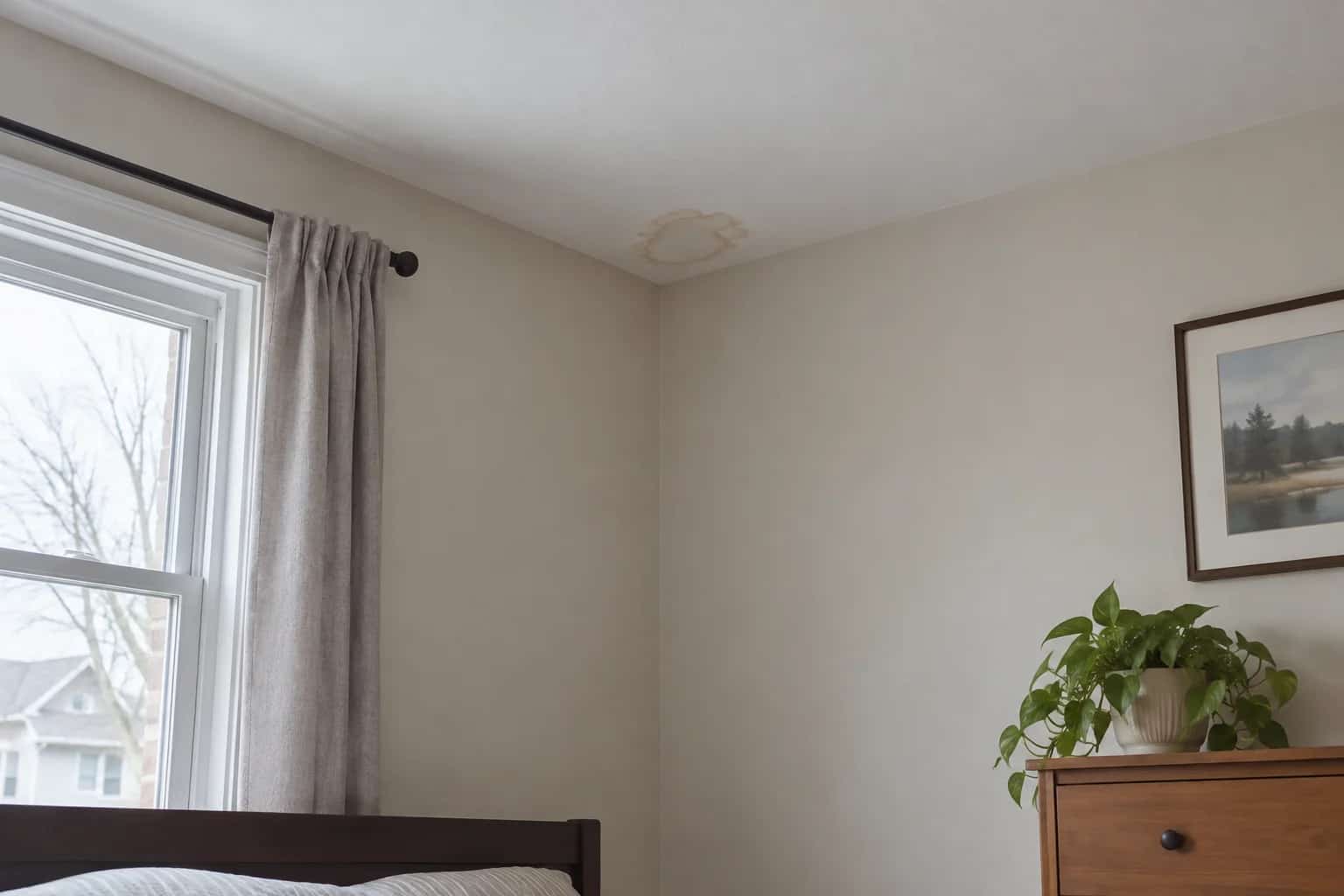
The rain stops at lunchtime. By three o'clock, the hallway bowl is still doing business. Water can travel along framing or drain from concealed wet materials after fresh rain stops entering; the room stain can also sit well away from the roof opening.
Trace the route and timing together. Keep rain start, first drip, last drip and any repair time on the same record. A slower drip does not prove the source is fixed, and a dry room-side surface does not tell you what remains wet above it.
The Delay Is a Clue, Not a Countdown
Suppose rain ends at noon, the drip slows through the afternoon and it stops by evening. Now compare that with a ceiling that dries, then starts dripping afresh during the next shower. The first pattern can fit stored water draining; the second points toward renewed entry. Neither tells you the precise opening without inspection.
IKO's leak-finding guide recognises that the roof opening and visible drip may be separated. This is why the bowl can keep filling after the part of the roof above it has stopped getting wet.
Where Water Can Wait
A ceiling assembly has ledges, joints and absorbent materials. Water may collect on a vapour barrier before finding an opening, or follow a framing member until it reaches a joint. Insulation can be wet beyond the small patch visible from the room.
A widening stain also deserves attention when the drip rate is falling. Less water reaching the bowl does not necessarily mean less water inside the ceiling. Keep people away from a sagging or bulging area and arrange urgent assessment; do not press it to find out how full it is.
If water is near a light or wiring, use the electrical-risk guidance first. An apparently convenient place for a container may be directly below damaged electrical equipment.
The rain has stopped, but Dave can still hear the bowl in the hallway. Pat's first thought is that new water must be entering somewhere. Mike asks for the timeline before agreeing: when did the first drip start, and has its rate changed?
They keep the source investigation and the wet-material investigation together. Water already held above the room can keep moving after rain stops. The bowl records the symptom, not the moment the roof opening became dry. Nobody declares victory because the interval between drops gets longer.
Rain Ends Before Every Water Route Empties
Use rain and drip times alongside the physical route.
Entry
Water enters at a defect that may be uphill of the room stain.
Travel or storage
Framing and concealed layers can delay its arrival.
Room symptom
Record first and last drip; the bowl captures only part of the water.
Repair and drying
Correct the route and assess wet materials before repainting.
The Valley Can Be Farther Away Than the Stain
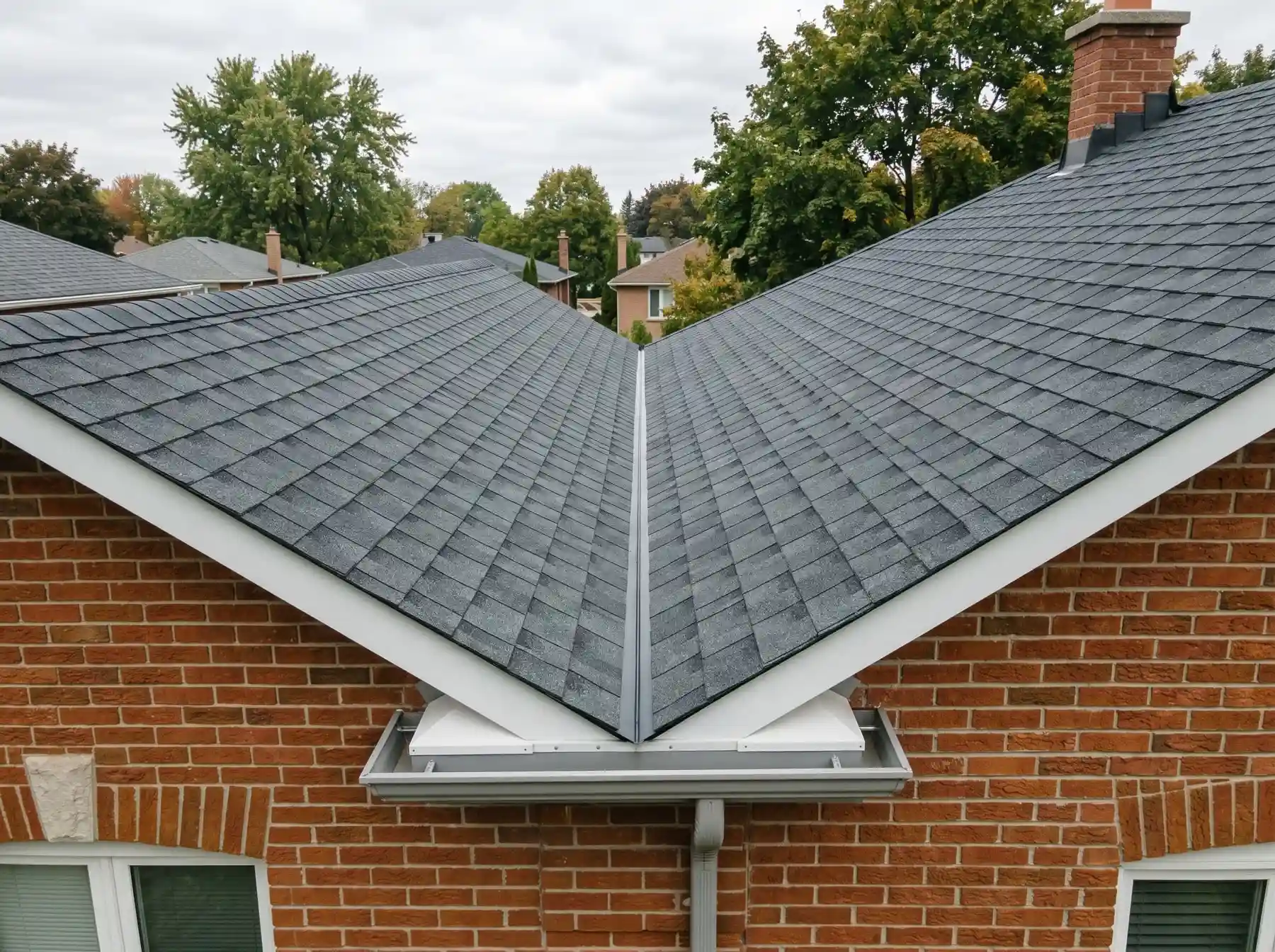
Picture a bedroom stain beside an outside wall. The flashing nearest that wall looks sound, but a small defect in a valley farther uphill admits water. The water follows framing before dropping at the room-side joint. Repairing the roofing directly above the stain could leave the valley opening untouched.
There is no fixed distance that locates a leak from a ceiling stain. The investigator should relate room measurements to the roof geometry, follow visible moisture evidence where access permits and assess plausible uphill junctions. IKO's leak-finding guidance explains why entry and drip locations can differ.
If the confirmed defect is at a valley, the repair needs to restore that valley detail and the surrounding roofing, not simply cover the visible ceiling mark. Keep wide and close photographs of the entry point and completed correction. Then assess the wet insulation, decking and ceiling along the route.
A stain that stops growing does not establish that concealed materials are ready to close or repaint. For uncertain source selection, compare roof, plumbing and cooling patterns; for drips after a cold spell, use winter condensation clues. More than one source can be present.
The Bowl Is Only Catching Some of the Water
Health Canada advises prompt attention to moisture. Waiting for a smell before investigating hidden wet materials is a poor bargain. The exterior repair and the drying work may involve different people, but both need to be completed.
Continued dripping through a long rain-free period also deserves a fresh look at plumbing or condensation rather than an indefinite explanation about yesterday's storm. See wet insulation after a leak for the decisions below the roof.
You can put the bowl away when the situation allows, but keep the timeline. It is the part of the story the next dry-day inspection cannot recreate.