
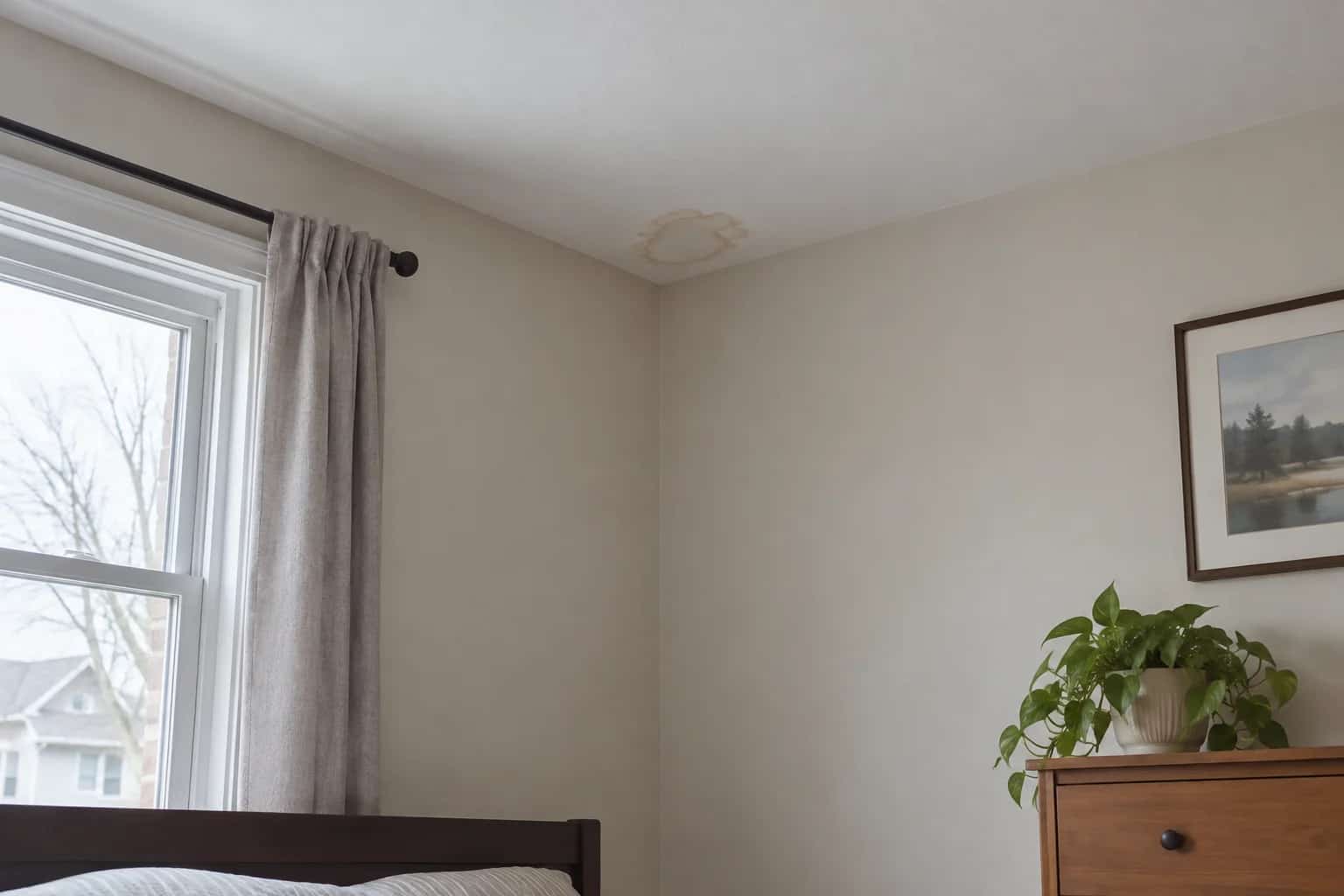
The saucepan is on the kitchen floor, catching water instead of cooking supper. Upstairs, somebody has just showered. Outside, the afternoon thunderstorm has arrived; inside, the air conditioner has been working since lunch. "Three suspects," Dave says. "Let's avoid buying a roof on the evidence of one saucepan."
Rain, plumbing and cooling equipment can produce similar ceiling marks. Timing and the layout above the room help choose the first investigation. They do not prove the source, and there is no need to run a shower or hose deliberately to make an active leak worse.
Start With What Is Above the Room
A bathroom, laundry area or water pipe above the stain makes a plumbing route plausible. An attic air handler or cooling drain above it adds an HVAC route. A top-floor room immediately beneath the roof makes roof entry worth considering, but still leaves condensation and concealed services on the list.
Mike sketches the upstairs bathroom above the kitchen, then asks which end contains the shower. The first answer is "above here somewhere." The second, with the room drawn, puts it beside the wet patch rather than directly over it. That is progress. Mark the wet spot, nearby walls and known equipment; a rough useful sketch beats an immaculate drawing of the wrong room.
Water can travel before appearing. IKO's leak guide explicitly identifies plumbing and condensation as possible non-roof sources. It also explains why the visible drip may be some distance from the opening.
Three Patterns Worth Separating
- Weather-linked: wetting begins during rain, snowmelt or a thaw. The roof and exterior junctions deserve attention, including walls above lower roofs. Delayed dripping can continue after rain ends.
- Use-linked: the mark changes after ordinary showering, laundry or another fixture use, including in dry weather. Give that sequence to a plumber. A supply leak can also continue when fixtures are off, so absence of a neat pattern does not clear the plumbing.
- Cooling-linked: wetting coincides with cooling operation and equipment or drainage lies along a plausible route above. An HVAC technician should assess that equipment and its condensate path.
NRCan includes condensate-drain inspection in heating and cooling maintenance. The important location is the water-producing equipment and its route, not simply the outdoor condenser beside the house.
Back in the kitchen, the thunderstorm has complicated the shower theory rather than disproved it. Give the attending trade both timings. A hot rainy afternoon can fit more than one pattern, and the most confident person beside the saucepan is not necessarily right.
Three Routes to the Same Ceiling
Each observation directs an investigation; none proves the cause by itself.
Rain or thaw
Inspect exterior entry and the path from roof or wall to the ceiling.
Fixture use
A plumber checks supply, waste and fixture connections along the relevant route.
Cooling operation
An HVAC technician checks equipment location and condensate drainage.
Active Damage Changes the Priority
Keep clear of a bulging or sagging ceiling; do not puncture, press or open it. Water at a light fitting or wiring needs electrical-risk attention. Avoid touching the fitting or using switches in the wet area. Suspected structural failure or an immediate electrical emergency calls for emergency assistance, not further observation.
From a safe position, one wider photograph and the time the wetting started are enough to preserve the initial clue. Do not postpone help to collect a perfect weather diary.

A Repair Needs an Observed Cause
"The roof is old" earns another question from Mike: "Where did the water get in?" So does "there is a bathroom upstairs." A useful finding connects an observed defect, a route and the wet area. If the first visit is inconclusive, pass on what was actually checked so the next trade does not spend its visit starting the same conversation.
Once the source is corrected, wet drywall still needs its own assessment. Health Canada recommends correcting moisture sources and drying affected materials promptly. Repairing the pipe, drain or roof does not remove yesterday's water from the ceiling.