

The homeowner has the stain-blocking primer ready. The ceiling ring is brown, unattractive and apparently unchanged. Then someone asks whether the old roof repair actually stopped it getting wet.
The lid goes back on the tin.
Mike wants the repair record and a pair of comparable photographs first. A stain proves that the ceiling was wet at some point. It does not say when, whether the cavity is dry now or whether water is still arriving. Establish that before choosing between an investigation and a decorating job.
Establish a Baseline
A wide photograph keeps the bedroom corner in view; a close one records the edge of the ring. That is enough to make the next comparison useful. The alternative is a freshly painted ceiling and three people disagreeing about where the old mark used to end.
Photograph the whole ceiling area and then the stain. Include an identifiable corner or light in the wide shot so the same patch can be found again. Save the date and use similar lighting for later pictures; a lamp moved across the room can make an unchanged stain look dramatically different.
If you already know when the roof or plumbing was repaired, find the invoice. Look for a description of the actual cause and repair rather than just "fixed leak." Ask whether the inside was checked afterward. A dry exterior repair does not automatically establish the condition of insulation above the ceiling.
Avoid painting first to create a clean slate. You would remove a useful visual baseline and might conceal renewed staining until the problem has grown.
Compare like with like
The useful comparison controls light, location and timing.
Baseline
Photograph the outline with fixed room landmarks.
Repeat
Use similar light and record weather or indoor water use.
Assess moisture
Compare suitable readings across comparable material.
Choose the next job
Resolve the source and wet-material condition before decoration.
Three Patterns That Mean Different Things
- Same outline, suitable dry readings: consistent with an old event, although inaccessible material may still need assessment.
- An expanding edge after rain: stronger evidence of renewed wetting and a reason to trace the exterior route.
- A change after upstairs water use: a reason to include plumbing rather than assume every ceiling mark starts at the roof.
A professional can compare readings at the centre, edge and nearby unaffected ceiling. The numbers need interpretation: metal, thickness and the instrument's mode can affect them. The useful result is a pattern across comparable material and conditions.
IKO's diagnostic guide includes alternatives to exterior roof leakage. A dry day between two checks is part of that record, not proof of a cure.
What Makes the Situation Urgent
A sagging ceiling, new softness, dripping near electrical equipment or rapidly expanding wetness should not enter a leisurely observation period. Keep clear and arrange qualified help. Do not poke, press or cut the area as a moisture test.
Persistent mustiness also deserves investigation rather than a stronger paint primer. Health Canada's moisture guidance emphasises finding and addressing the moisture source. A smell cannot identify the source, but it is a reason to look beyond the visible finish.
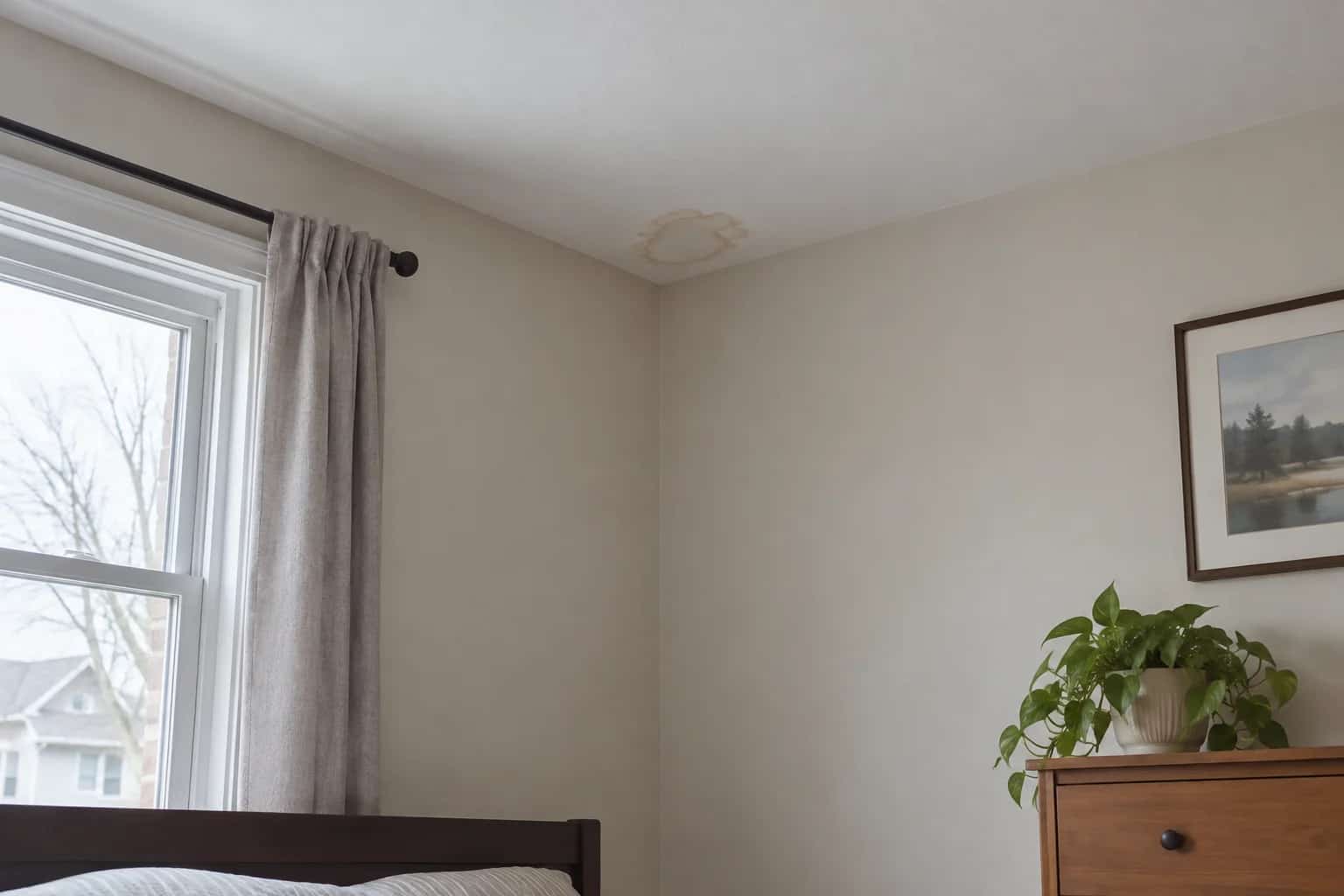
A Comparison That Survives the Camera
For instrument limitations, read how ceiling moisture-meter readings should be compared. If materials have been wetted, the next decision is whether the ceiling can dry in place or needs replacement. A dry surface reading and a sound-looking paint film do not answer every question about the cavity above.
Paint After the Answer, Not Before
Once the cause is resolved and affected materials are ready to finish, repainting makes sense. There is no universal number of dry days that proves every ceiling cavity is ready.
Keep the original photographs. If the mark returns, you can compare its position and edge instead of trying to remember whether it used to be slightly farther left. A stain-blocking primer solves a decorating problem; it is not a moisture test.