

The new guard keeps most leaves out of the gutter. Excellent. Now the outlet underneath is blocked, and reaching it means lifting panels over the addition. That maintenance visit belongs in the buying decision, before the sales sample is put away.
Guards and outlet strainers change where cleaning happens; they do not remove the need for it. Plan access to the surface, hidden trough and outlet. In winter, follow the meltwater too: ice on a guard may alter the route without explaining why water is reaching that cold edge.
Ask for a Demonstration
Have the installer explain how a section is removed and refitted. Does the panel hinge, slide or unscrew? Can the outlet be reached without disturbing several metres of cover? Will removal affect shingles, sealant or a warranty condition?
You do not need to perform the task yourself. You need to know that a future maintenance contractor can do it without improvising. Record the manufacturer, model and fastening arrangement with the invoice so the next person is not guessing.
What Would the Next Service Visit Cost in Effort?
Ask how an outlet blockage or corner leak would be handled, not just how loose leaves would be brushed away. Those less frequent jobs expose whether the system was planned to remain serviceable. Keep a spare-part reference as well; an unfamiliar clip should not be the reason a straightforward repair becomes a search across several suppliers.
The guard sample looks easy to lift at the kitchen table. Dave asks how the same panel will be reached above the addition. Pat puts the sample down. "Excellent access from this chair," he says.
That is why the service plan belongs in the purchase discussion. The outlet, hidden trough and guard surface each need attention, and the awkward real position matters more than the demonstration. Winter adds another question: where meltwater goes when ice changes the route across the edge.
Separate the Cleaning Tasks
Leaves and twigs can remain on the surface. Fine material can affect water entry. Debris can also enter at imperfect joints or accumulate in the gutter below. Clearing the visible cover does not prove the outlet is unobstructed.
Gutterglove's maintenance guidance describes cleaning for its systems. Follow the instructions for the product actually installed, including suitable tools. Do not assume a stiff brush, pressure washer or chemical cleaner is appropriate for every mesh and finish.
A maintenance quote should state what will be inspected and how the result will be verified. A before-and-after surface photograph is useful, but it may not show the hidden trough or upper downspout elbow.
Compare the Places a Guard Needs Service
Plan access to the places where restriction can occur.
Cover surface
Debris or ice can alter entry into the trough.
Trough beneath
A clean-looking surface does not prove clear hidden drainage.
Outlet basket
A strainer can catch leaves and become the restriction itself.
Winter route
Separate melt source, frozen outlet and roof-edge backup before changing guards.
A Strainer Moves the Collection Point
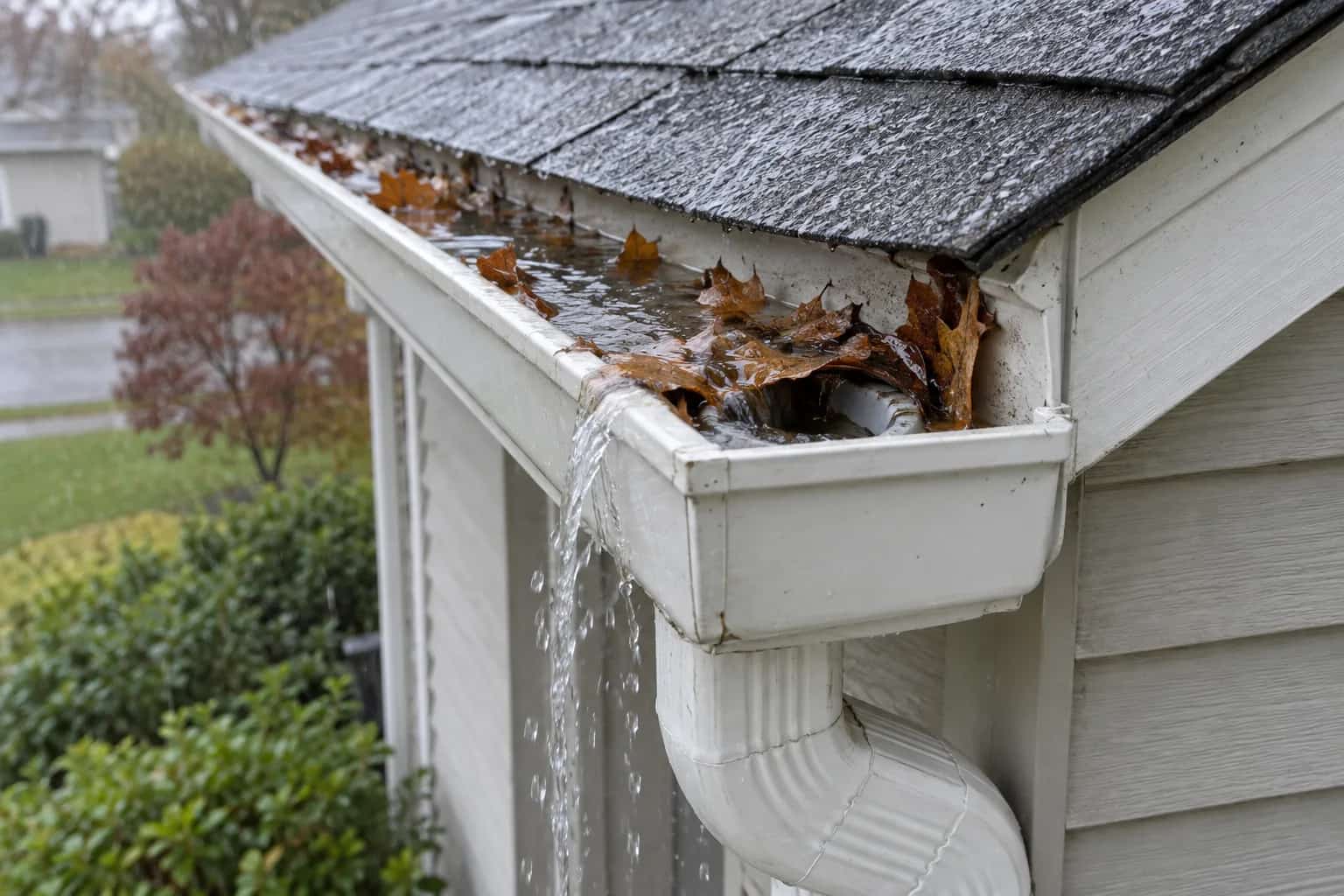
A basket at the downspout can intercept leaves before they enter the pipe. It can also become the blockage while the surrounding trough looks clean. Needles and twigs may bridge the opening differently from broad leaves; inspect the actual debris that reaches this roof.
Berger's drainage reference treats outlet capacity as part of the system. A strainer must fit the outlet and preserve an adequate water path. A large visible pipe does not establish the clear opening through a debris-covered basket.
Compare the work you are choosing: clearing material frequently at an accessible screen, or dealing with less frequent obstructions inside the pipe. For a buried connection, identify its destination and access points too. A roof-level strainer is not proof that the underground system is clear.
Ask whether the basket can be seen with a pole camera, removed without damaging the guard and cleaned by the person who will actually service it. Check accumulation during the main debris drop and after windy weather, then adjust the schedule. If a clean trough begins overflowing, include the strainer in the first inspection rather than ordering bigger gutters.
Can the Guard Come Off Without Damaging the Roof?
A roof replacement, fascia repair or gutter seam repair may require temporary guard removal. Ask who handles that work, whether parts can be reused, and how damaged clips or panels are obtained. A proprietary system is easier to maintain when its identification is preserved.
If the installer offers ongoing cleaning, ask what that service includes and whether difficult access changes the charge. A broad guarantee against clogging should be read alongside its maintenance obligations and exclusions. Keep the exact document rather than relying on a sales summary.
Set a Schedule From the Site
A roof beneath mature trees deserves different observation from an open site. Start with checks around the main debris seasons and after unusual branch fall, then adjust to what actually accumulates. Do not wait for water to spill over the entrance before discovering the surface has become covered.
Ground-based tools may help where the product and sightlines permit. For the awkward corner above the addition, get an equally concrete answer. That is the corner most likely to decide whether the maintenance promise is practical.
Ice on the Guard Is Not the Whole Diagnosis
Ice on the outer lip differs from ice backing water onto the roof. New interior leakage, ice extending upslope or water emerging behind fascia deserves prompt professional attention. Record the pattern, snowfall and thaw from safe ground, and keep people away from falling ice.
IKO's winter-gutter guidance considers drainage and roof-edge icing together. A new guard cannot repair ceiling air leaks or insulation defects. Compare recent weather before concluding the product caused a change: the first heavy snow or a sunnier thaw is not a controlled before-and-after test.
Have the assessment distinguish debris on the guard, distorted panels or unsuitable fitting, a blocked hidden trough and a frozen or obstructed downspout. Ask the supplier for its snow/ice limitations and maintenance instructions in writing; a leaf-exclusion claim is not an icicle-prevention promise.
Do not chip ice, pour boiling water on it or pull frozen panels. If heat tracing is proposed, it needs appropriate electrical and material design after the drainage problem is understood. Once thaw permits safe work, check hangers, seams, fascia and guard attachments for damage or changed alignment. Decide whether to alter the guards from those findings, not the size of one icicle.
Buy the guard with its next service visit in mind. The person reaching the awkward outlet later will appreciate a design that was thought through on that easy dry day.