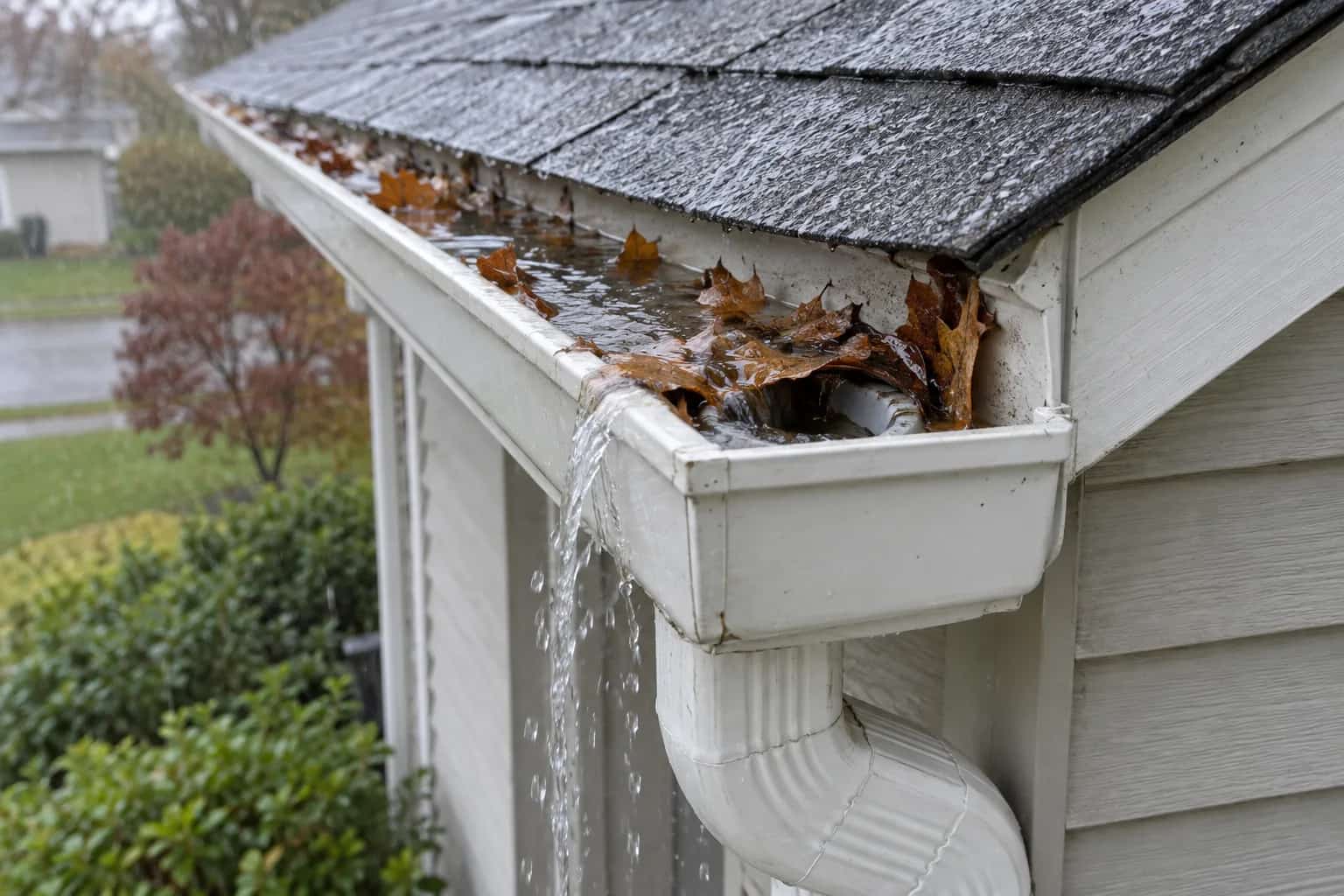
Dave's first instinct was to lower the outlet end. The camera showed a puddle halfway along the gutter, and that seemed a tidy explanation. Pat replayed the view more slowly. Between the pool and the outlet sat a raised section. "Water still has to get past that bit."
Where water remains matters more than whether the gutter looks level. A local pocket points us toward the trough profile; water along the whole run makes us check the exit first.
A thin wet film immediately after rain is different from a distinct pool that remains when the rest of the run has drained. Photograph the location and note how long it persists. You do not need to climb a ladder to establish a timeline; a contractor's pole camera can show what the street view misses.
Start at the Exit
A clear-looking trough does not prove the downspout works. Leaves may bridge the opening, or a compact plug may sit inside the first elbow. If the whole run fills while little water emerges below, investigate the discharge path before resetting hangers. Our guide to hidden elbow blockages explains that pattern.
Ask the contractor to check whether the outlet lip stands above the surrounding gutter bottom. A raised fitting can retain water even where the metal has adequate fall. Conversely, an outlet at the high end of a sagging section cannot empty its low point.
Follow the bottom, not the front edge
We followed the bottom all the way to the right-hand outlet instead of treating the puddle as an isolated spot. Lowering that outlet alone would not necessarily remove a pocket behind the raised section. Dave's original close-up had shown plenty of water and very little explanation. The wider view was less dramatic and much more useful.
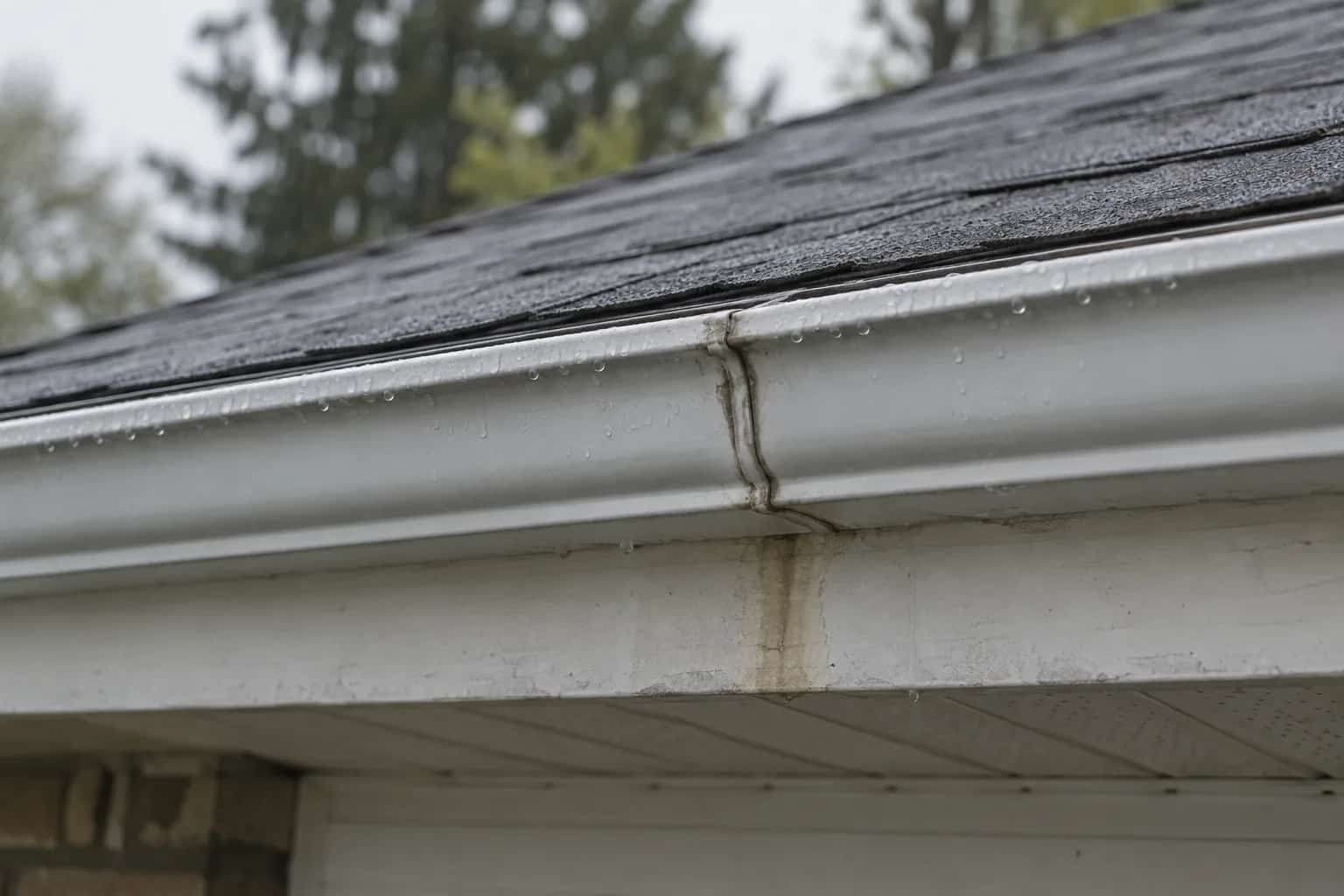
There is also a difference between a gutter that has always drained poorly and one that suddenly changed. A new low spot after an ice-heavy winter directs attention to support or distortion. A longstanding pocket at a fitting directs attention to how the connection was formed.
Roof edges and fascia boards are not always level. Matching their appearance can produce a gutter that drains backwards. A useful assessment records the bottom elevation along the run, the outlet elevation and the condition of the hangers. The front edge alone is a poor measuring reference when the gutter has twisted.
Berger's drainage guide treats gutter and outlet selection as a connected design question. Its older American rainfall tables are not an Ontario design shortcut. The installer should use the actual gutter profile and appropriate local design conditions when choosing fall and outlet positions.
Water needs a continuous route to the outlet
The route runs along the gutter before it turns down. A sag creates a low pocket, while a raised outlet can leave water stranded even in a clear gutter.
Schematic view. Shows relationships, not installation dimensions.
Match the Repair to the Shape
Another outlet went onto the options list, as did splitting the run to drain in opposite directions. Then we looked down. Any extra downspout still needed a suitable destination at ground level. Pat was not going to fix the trough by delivering the puddle to the side passage.
After the adjustment, look at the same low point once water has drained. A neat front edge is a cosmetic result; an emptied trough is the drainage result. The contractor should be able to demonstrate both without asking you to climb up.