
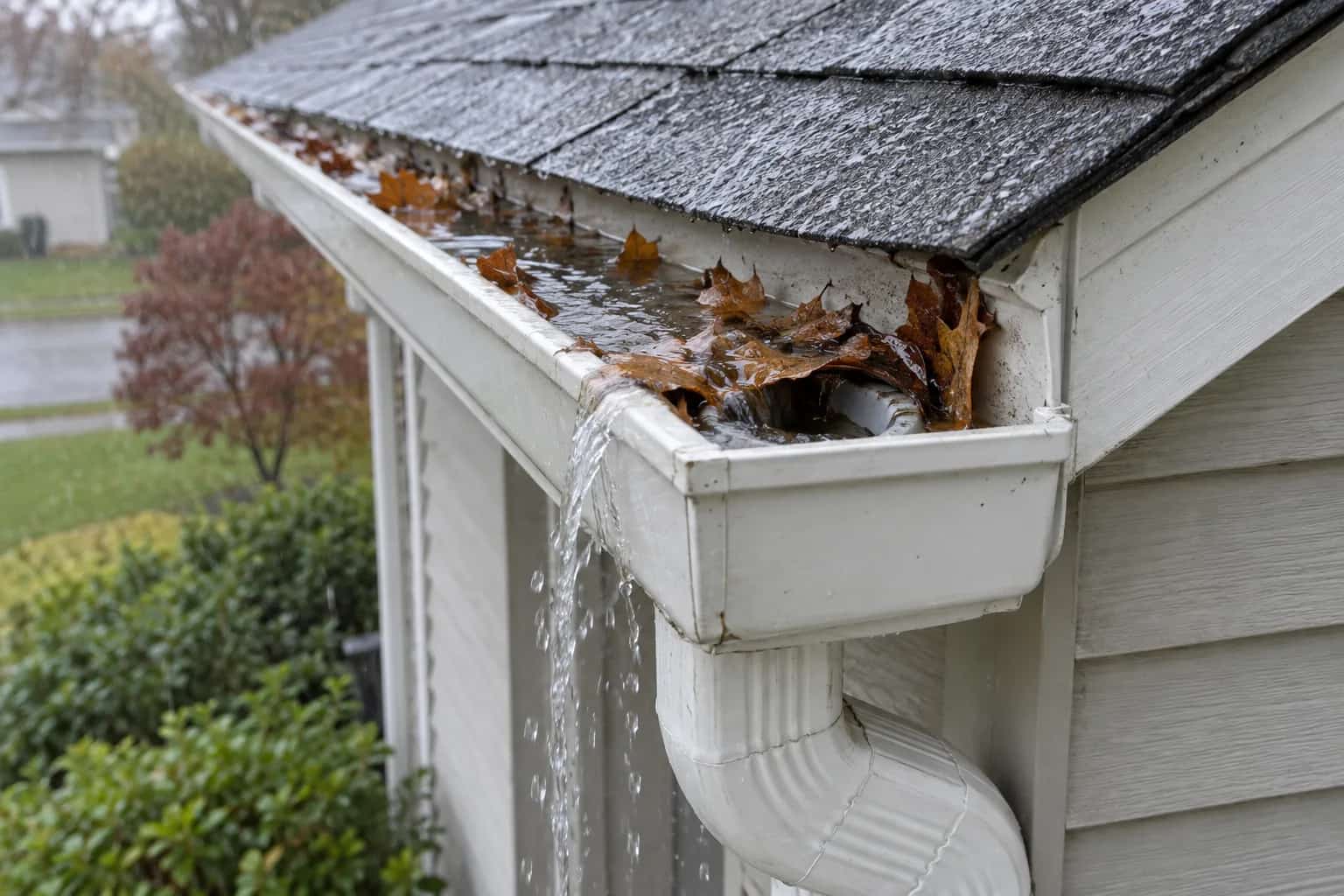
The gutter has just been cleaned. From the lawn, it looks excellent. During the next shower, water pours over the front while the downspout produces an unimpressive trickle.
"They sent a photo," the owner says.
"Of the gutter or the elbow?" Dave asks.
An empty trough proves that somebody cleared the trough. It does not show whether a wad of leaves remains in the first bend. Trace the outlet, offset elbows, lower transition and receiving drain before paying to clean the same open channel again.
Start Where the Pipe Changes Direction
Start with the outlet at the gutter bottom, the upper offset that takes the pipe toward the wall, and any reducer or transition. The lower elbow deserves attention too, particularly where its mouth meets soil, leaves or a flattened extension.
A buried connection adds another possibility. Water backing up where the downspout enters the ground may originate farther downstream. See how to trace an underground connection before assuming the vertical pipe is responsible.
Toronto's downspout maintenance guidance specifically includes elbows and outlets. Ask that those checks appear in the work description; a photograph of an empty trough does not establish that they happened.
A clear gutter can still feed a blocked pipe
The route continues through bends and the lower discharge. Debris at either end of the downspout can hold water upstream of an otherwise clear gutter.
Schematic view. Shows relationships, not installation dimensions.
A Brief Rush Does Not Prove the Pipe Is Clear
A partly blocked elbow may release water in fits rather than remain completely dry. That makes the symptom confusing: there is discharge, but there is also backup above. Describe both. The contractor needs to know whether the water route is consistently open at the tested flow, not merely whether any water emerged.
Where the pipe can be separated safely, locating the debris in a particular bend is a much stronger explanation than washing until the noise changes. It also gives you a useful choice: retain a sound fitting and improve cleaning, or correct a damaged transition that repeatedly catches material.
Two reports to give the cleaner
The upper gutter fills, but the extension barely runs. Ask for the outlet and offset elbows to be checked before treating the whole run as undersized. If a removed upper elbow contains the plug, the finding explains why sweeping the open trough did not help.
The downspout flows, then water rises at the ground connection. That points the next investigation downstream. A clear vertical pipe does not clear a buried drain. The inspector may need to separate an accessible connection and establish which side is backing up, while managing the discharge safely.
In either case, describe the order of events. "It overflows" leaves out the part that helps locate the restriction. Record whether the extension was attached and where water emerged; a test with it removed can miss the restriction that returns when the system is reassembled.
What a Useful Inspection Shows
The contractor should identify which part is restricted and how they confirmed it. Depending on access and assembly, that may involve viewing the opening, temporarily separating a removable section or using suitable inspection equipment. The aim is to locate and remove the obstruction without pushing it into a less accessible drain.
A hose forced into the top is not a diagnosis. If the exit is blocked, added water can spill at joints or overflow the gutter. Likewise, driving a rigid object down the pipe can damage a bend without clearing the plug. Leave elevated dismantling to someone with appropriate access equipment.
A recurring blockage at the same location deserves a look at the fitting itself. Is the pipe dented? Is an unnecessary reducer present? Does the outlet collect debris because the surrounding gutter retains water? Has a small strainer turned the opening into a leaf basket?
Confirm the Water Reaches Its Destination
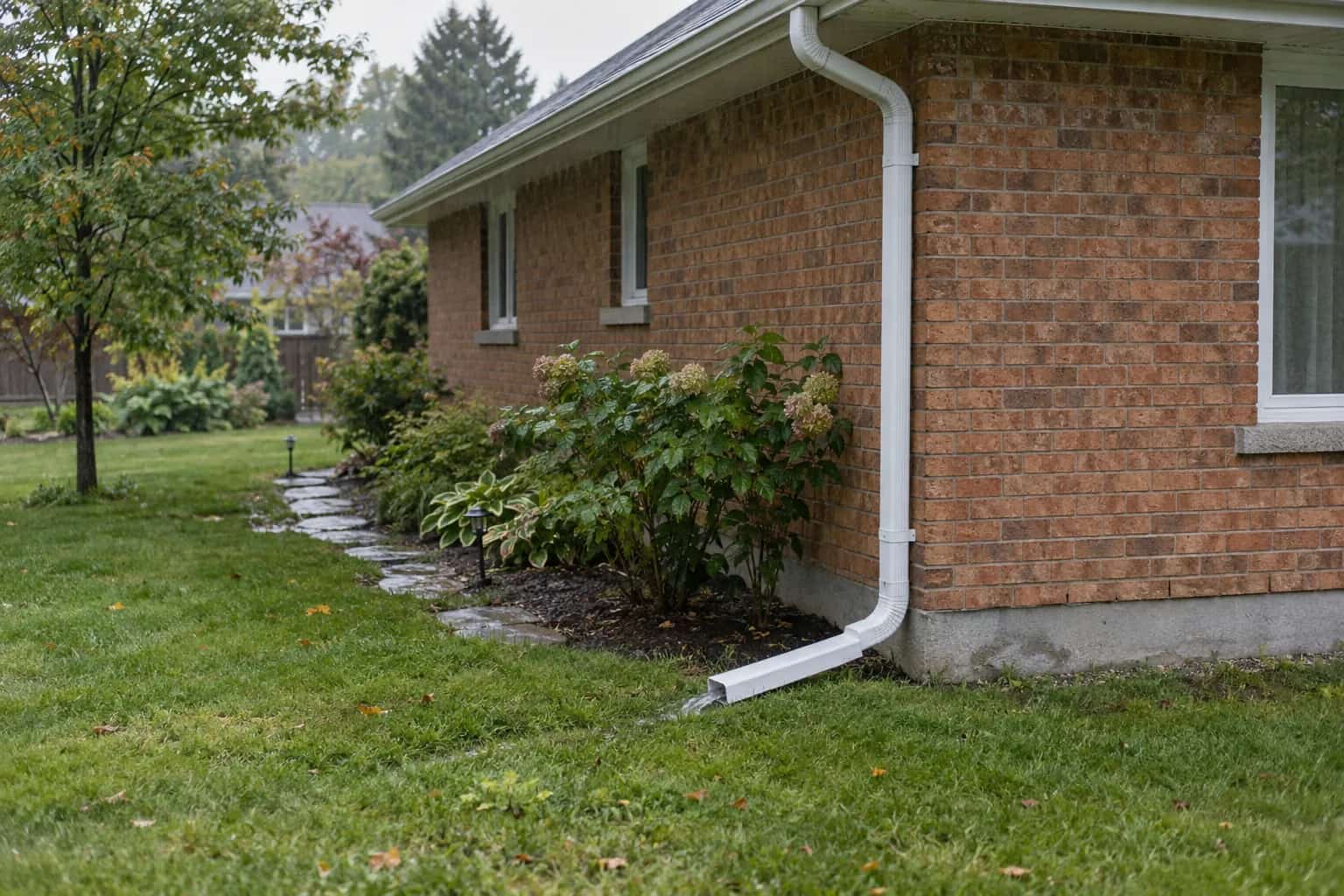
The final check includes the extension in its usual position. Taking it off can make the pipe run beautifully while removing the very restriction that returns every time the homeowner reconnects it. Dave wants the whole route working, not just its most cooperative section.
After reassembly, the connections should be secure and the discharge visible where practical. Ask for a controlled flow check, then observe the next rain from ground level. A strong stream at the bottom with water still spilling above suggests another issue, such as overshoot or insufficient capacity.
What came out matters. A damaged fitting that catches twigs repeatedly calls for a different prevention plan from a one-off foreign object. Keep the cause specific; "cleaned again" is a poor answer to a blockage that keeps returning.
If the pipe empties into a yard inlet, include the private catch basin, downstream route and maintenance responsibility in the blockage investigation.