
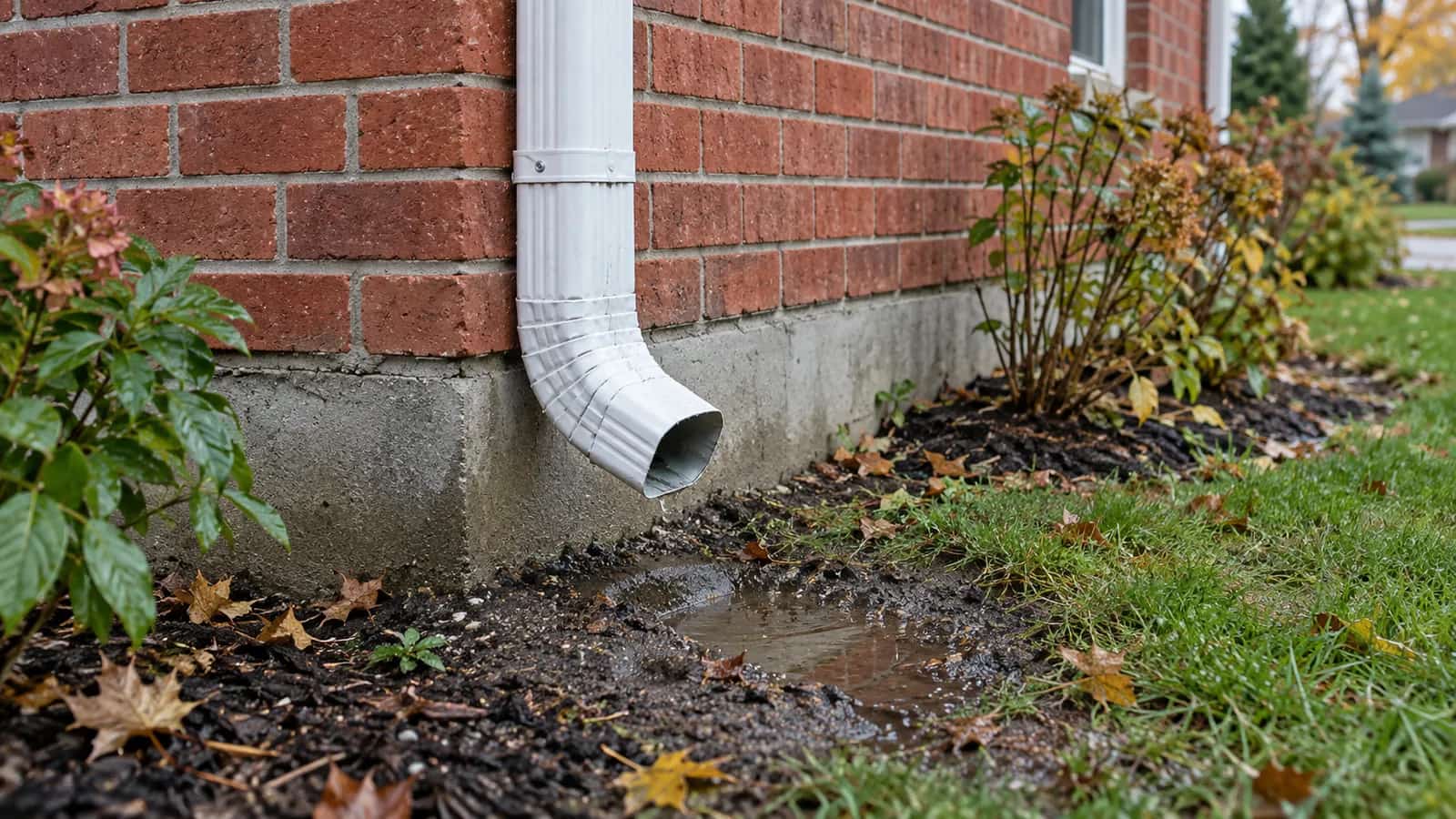
The downspout ends neatly at ground level. During rain, water bubbles back up around it. Pat looks at the gutter, then Mike asks where the buried pipe ends. Nobody knows. Before pricing excavation, establish the route and receiving point. A clear pipe and a suitable destination are two separate things.
This matters when water bubbles up around the connection. The vertical downspout and its elbows may be perfectly clear while the buried route is blocked, damaged or unable to accept more water. Replacing the gutter would leave that problem underground.
Find the Other End Before Choosing a Repair
Look for drainage drawings, previous invoices and any visible outlet lower on the property. Record which downspouts share the route, if known. Do not assume two adjacent pipes are independent just because they enter the ground separately.
Walk the accessible property after rain. Note water emerging from joints, unusually wet ground and whether a visible outlet is flowing. Keep observations on your own property and avoid opening unknown pits or covers. Sewer and drainage investigation belongs with an appropriately equipped professional.
A drainage contractor can advise whether a camera inspection, locating equipment or other testing is suitable for the pipe's size and access. The useful report identifies the route, observed defects and limitations. Dave reads the inspection limit aloud: the camera stopped at a bend. "Then the report stops there too." It has not established the condition of the unseen pipe beyond it.
Clearing and Replacing Solve Different Problems
The owner asks whether a flush would settle it. Mike separates the possibilities: a compact debris blockage in an otherwise serviceable pipe with a known outlet may call for clearing and retesting. If it finds a displaced joint with soil entering the line, a flush may produce temporary flow without repairing the opening.
There is a third possibility: the pipe is open, but its receiving area cannot accept the flow under the observed conditions. Replacing the same pipe along the same route would not necessarily change that. Ask the proposed work to name which of these problems it is intended to solve before agreeing to dig up the path.
Find where the water stops leaving
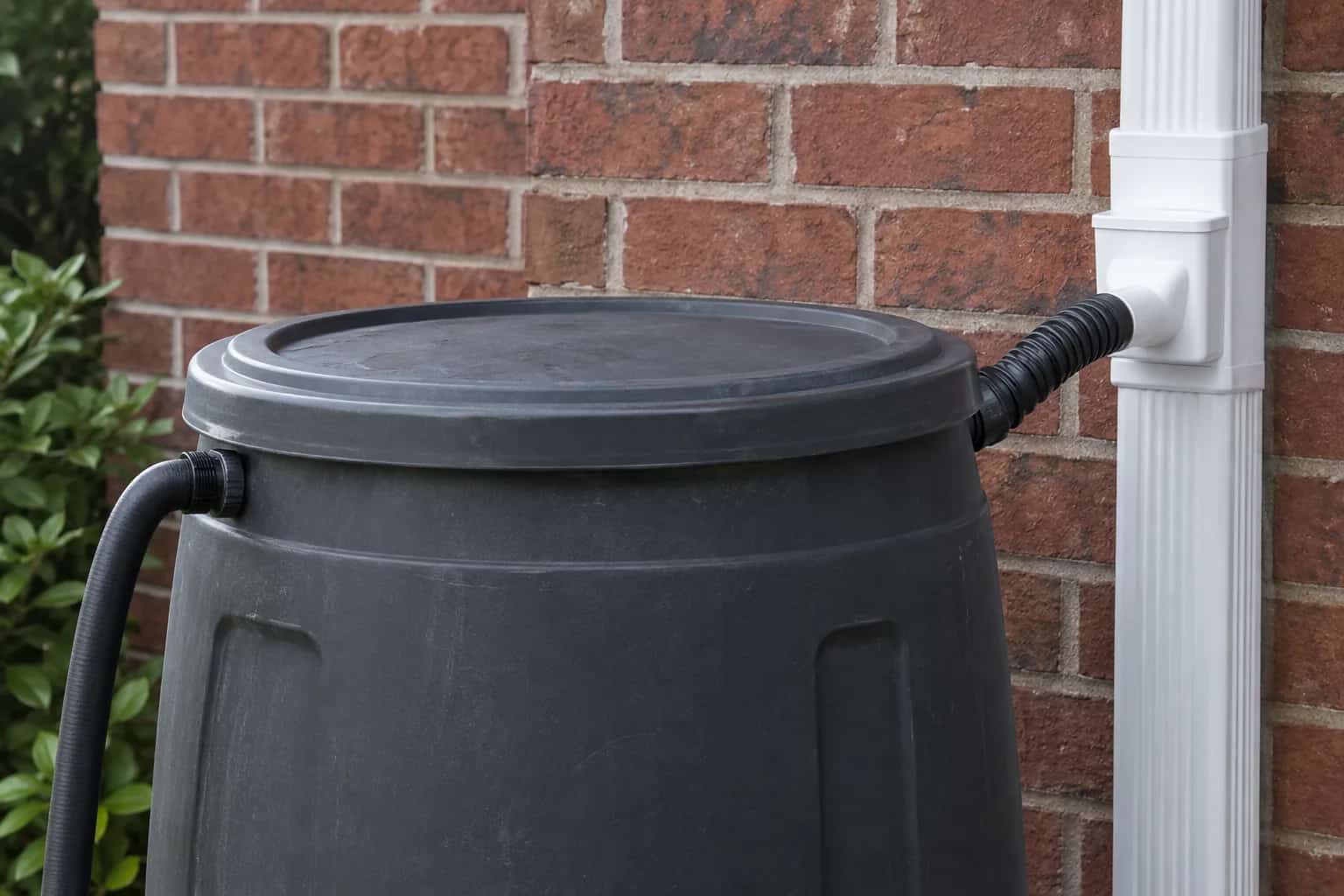
This above-ground route shows the intended destination: away from the house. An underground connection adds a concealed section whose condition needs separate investigation.
Schematic view. Shows relationships, not installation dimensions.
Check Whether Reconnection Is Appropriate
In Toronto, the City's disconnection programme addresses downspouts connected to the sewer system. Confirm the connection type and applicable City process before restoring an old arrangement. Durham municipalities have their own rules; Toronto's programme is not a province-wide instruction.
If surface discharge is being considered, the whole route needs review. Water must have somewhere suitable to go without being directed toward a foundation, an entrance or neighbouring property. A constrained lot may need professional grading advice and a municipal discussion, rather than an improvised extension.
If the roof leader appears to join foundation drainage, identify that connection and its consequences before altering the pipe.
Ask for a Record You Can Keep
Request a simple route sketch, inspection images, the repair location and the final discharge arrangement. If a former connection is abandoned, its treatment should be documented too.
Once the work is complete, check both the connection and the receiving area during rain. Pat wants the final sketch to include the outlet, not end with an arrow into the lawn. Water disappearing underground is reassuring only when its destination is understood and suitable.