
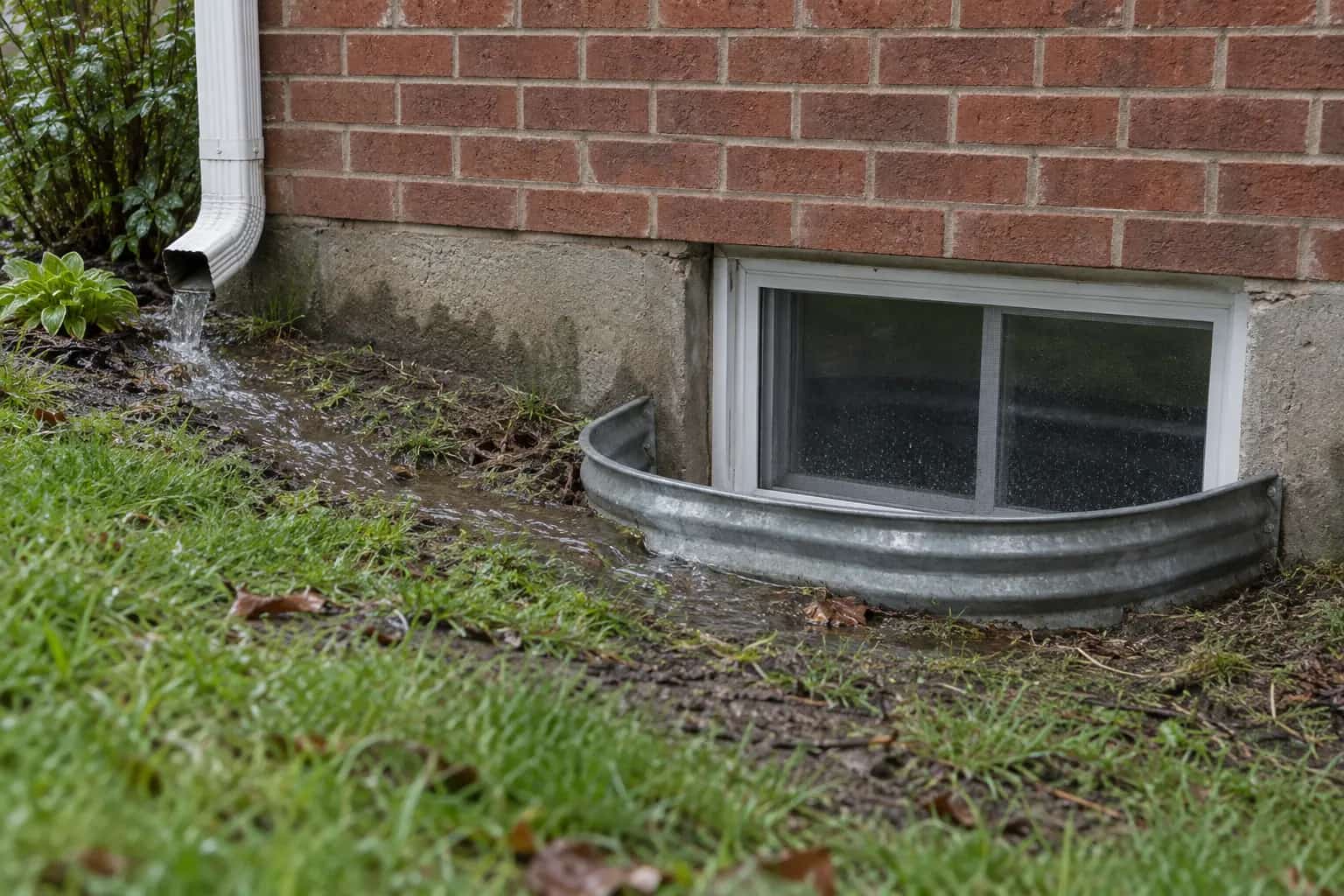
Do not add roof water to a foundation-drain connection on the strength of its name. Establish what is connected and where it goes. The pipe collecting water beside the footing has a different job from the pipe carrying a roof's concentrated runoff.
The old drainage sketch had three lines meeting under the side path. One was labelled roof. One was labelled drain. The third had no label, which made it the most popular candidate for every explanation.
"All goes to the same place," Pat read from the margin.
"That is a conclusion," Dave said. "We are missing the middle."
Before discussing disconnection, we separated the known route from the confident guesses. There was no useful reason to cap a pipe until we knew what else depended on it.
Four Routes Worth Drawing Separately
A roof leader carries water from the roof. A foundation drain, often called weeping tile, collects water around the building below ground. A sump receives drainage water and uses a pump to move it to a discharge location. A municipal storm sewer serves a wider drainage network. An old house may connect some of these routes, but their existence does not make every connection suitable today.
Pickering's homeowner guidance acknowledges that downspouts may connect to weeping tile and says properties with sump pumps should consider disconnection. That is a reason to investigate an existing arrangement. It is not an instruction to cap an unidentified pipe or a blanket statement about every Ontario property.
Ask the plumber to draw the confirmed route in plain terms. Use solid lines for known connections and dotted lines for those still uncertain. "Probably joins the other one" should remain a dotted line until evidence resolves it.
If a sump discharge is also involved, compare the shared-pipe and separate-outlet arrangements before combining the routes.
Four Routes With Different Jobs
Establish what each pipe serves before changing a connection.
Roof leader
Carries concentrated runoff from the roof.
Foundation drain
Collects water around the below-ground foundation.
Sump and pump
Receive drainage and lift it to a specified destination where present.
Final discharge
Must be confirmed rather than inferred from a pipe disappearing underground.
The Basement Clue That Can Mislead
Suppose a sump starts cycling soon after the rear downspout runs. That timing makes a connection worth investigating, but it does not prove a direct pipe link. Rain can also reach the ground around the foundation and arrive through the foundation drainage system.
Likewise, a quiet sump does not prove the roof connection is absent. The arrangement may discharge elsewhere, the storm may have been small or the equipment may need attention. Record the timing without testing the theory by pouring extra water into an unknown opening.
Existing plans, drainage invoices and previous camera reports can save time. A qualified investigation may use suitable tracing or camera inspection, with the method chosen for the system. Ask what the evidence actually established: pipe direction, connection, condition or outlet. Those are separate findings.
For the broader unknown-pipe problem, see a downspout that goes underground. Here the important issue is whether roof runoff is loading the drainage intended to protect the foundation.
Disconnection Still Needs a Destination
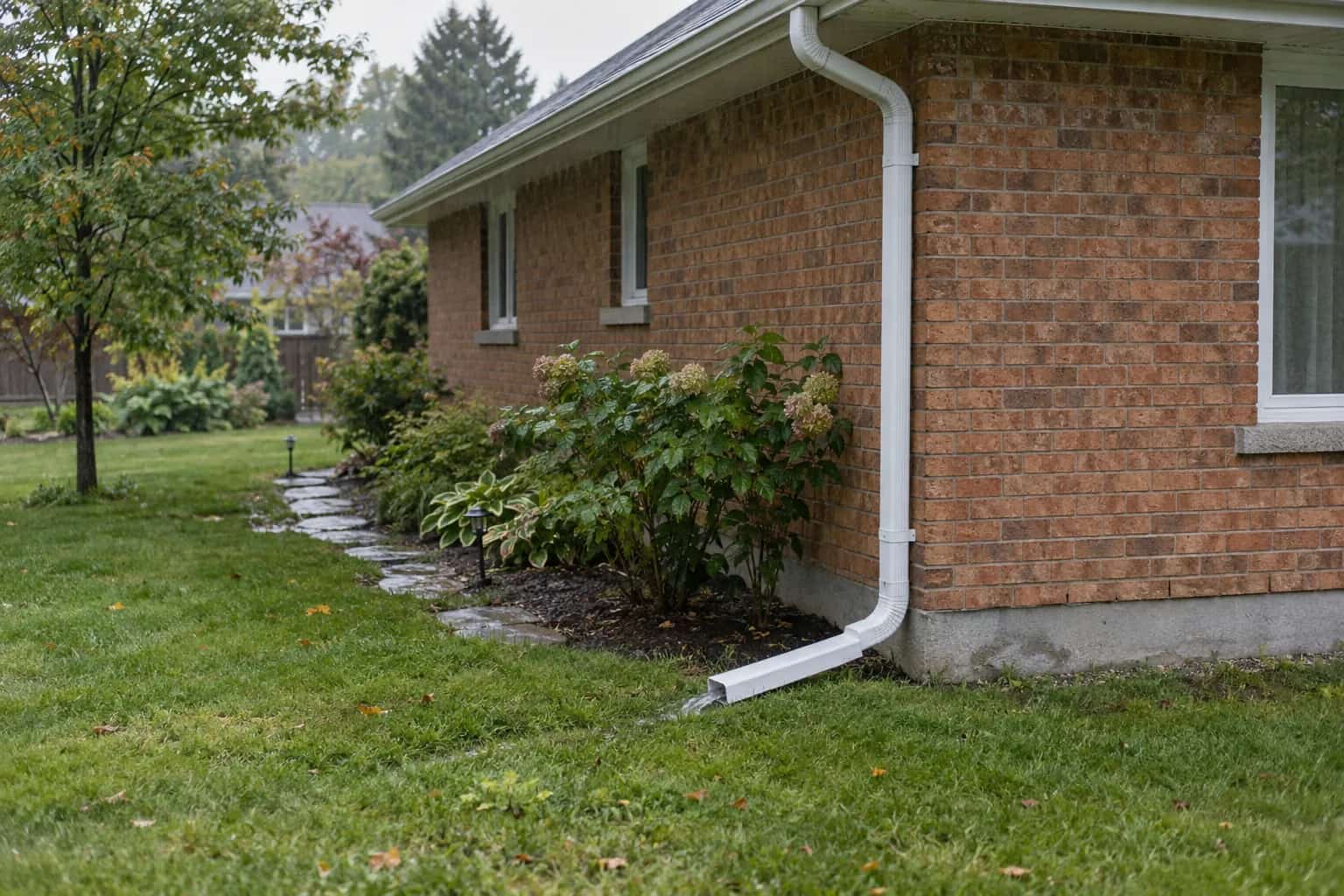
A proposed change should show where the roof water will go afterward. Cutting the downspout above grade and leaving it beside the same basement wall does not complete the work.
In Toronto, mandatory downspout disconnection guidance includes safe discharge conditions and an exemption process where appropriate. Those Toronto rules should not be copied onto a Pickering or Whitby address. Ask the municipality which requirements and approved servicing arrangement apply to this property.
The abandoned connection also needs an appropriate closure, while any drainage serving other parts of the house remains functional. Identify that boundary before work begins. A cap that stops roof water may also stop another route if the piping has been misunderstood.
A note about the sump starting during rain nearly settled the argument too early. It was a useful clue, but the rain was wetting the ground as well as filling the gutter. We kept both possible routes on the page. Drawing a dotted line felt less satisfying than declaring the answer; it was also considerably more honest.
Keep the Roof and Plumbing Scopes Together
A useful proposal names who alters the leader, who changes the underground connection and who verifies the remaining foundation drainage. If a sump is involved, include the condition and destination of its discharge rather than treating the pump as a magic final step.
Toronto's flood-prevention guidance treats foundation drainage, grading and plumbing protection as related measures. That makes sense for the inspection record too: one improvement should not obscure a remaining defect elsewhere.
Before closing the work, keep photographs of the exposed connections and a corrected route drawing. Mark any pipe that was deliberately left in service. Save the reason for the chosen destination and any local approval with the invoice.
Finally, compare the same basement location and exterior outlet during later suitable rain. A change in sump cycling may be useful information, but the completion question is broader: does each route now perform its intended job without moving roof water toward another vulnerable opening?