
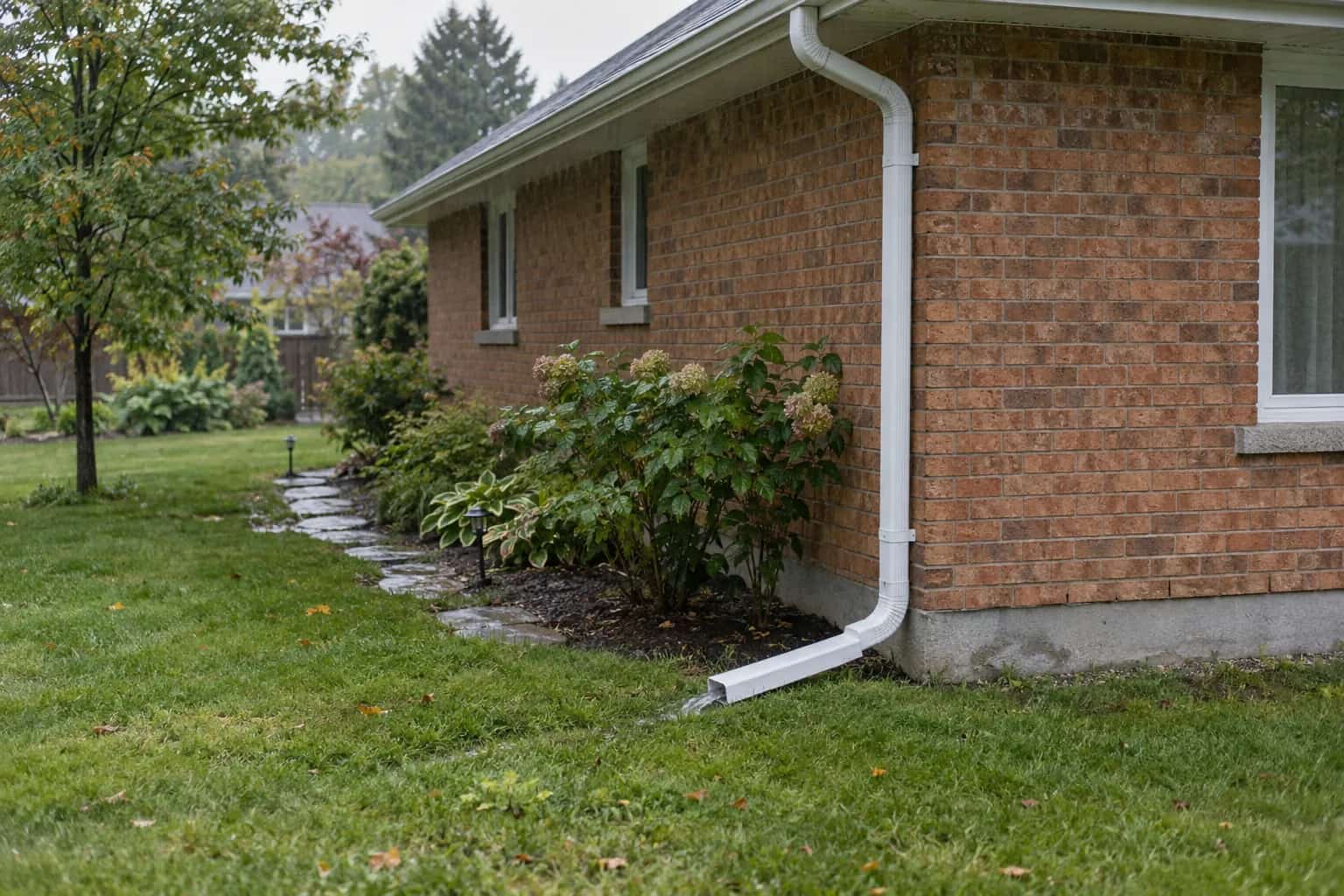
Pat held the two pipe ends near each other, without connecting them. "One route, less mowing."
Dave looked toward the basement window. "And two jobs depending on the same outlet."
The attraction was obvious. The sump discharge and downspout made an awkward pair across the side yard. But the proposed junction needed more thought than whether a fitting existed in the van. We put the tidy-yard idea beside the pump information and worked backwards from the destination.
A shared outlet is a system-design question, not a fitting choice. Before combining the routes, establish whether the arrangement is permitted and how it behaves when both sources are flowing or the outlet is obstructed. Keeping separate, well-planned routes may be the simpler answer.
One Flow Is Pumped, the Other Arrives With Rain
Roof water usually travels down the leader by gravity. The sump pump moves water under pressure through its discharge piping. Joining those routes changes the conditions at their connection and downstream.
Imagine a long wet afternoon. The gutter is already delivering runoff when the sump begins a pumping cycle. The shared section has to accept both flows, with its actual diameter, slope, bends and outlet condition. A pipe that handles either source alone has not demonstrated that it can handle the combination.
This is an explanation of what must be assessed, not a suggestion to run a hose into the gutter and test the pump yourself. An improvised test can add water to precisely the system whose capacity is uncertain.
Ask for the Drawing Before the Parts List
The proposal should identify the pump, discharge route, roof area feeding the leader and final destination. It should show how backflow, access and the required pump discharge arrangement are addressed. The pump manufacturer's instructions and local plumbing requirements belong in that review.
A check valve associated with the pump is not a universal answer to every unwanted flow path. Ask what happens at the junction under different conditions rather than accepting "there is a valve" as the whole explanation. The designer should be able to describe the water route without pointing at a mystery fitting.
If the destination is an underground pipe, establish its condition and connection before adding another source. Our buried-downspout guide explains why a pipe disappearing below grade does not identify where water ends up.
Check the Shared Route Under Three Conditions
The shared section needs a plan for simultaneous flow, obstruction and servicing.
Both sources flow
Assess the receiving pipe with roof runoff and the pump operating together.
The outlet freezes
Establish how the design avoids losing both drainage routes at once.
Service is needed
Keep the junction and outlet identifiable and accessible.
Local Rules Can Change the Answer
Pickering states that downspouts and sump pumps must discharge onto their originating property, with an explanation of consequential flow resulting from grade. That is Pickering's published guidance. It does not grant general permission to combine piping, connect to a sanitary sewer or redirect discharge toward the neighbour.
Ask the municipality and plumbing designer to confirm the accepted destination for the particular address. Existing approvals, servicing arrangements and retrofit requirements can matter. An old connection that has never been questioned is not evidence that a proposed alteration is allowed.
If the real complaint is clutter, compare a coordinated pair of routes, a revised outlet location and the proposed combined system. The cheapest-looking installation may need the most complicated maintenance.
The first sketch explained a summer afternoon nicely. It did not explain a blocked outlet in February. Pat drew a snowbank at the end of the line. "Budget landscaping," he said. That small addition changed the discussion: if the common route stopped working, which water source could still leave safely? We needed that answered before admiring the reduced pipe count.
Give Winter Its Own Failure Case
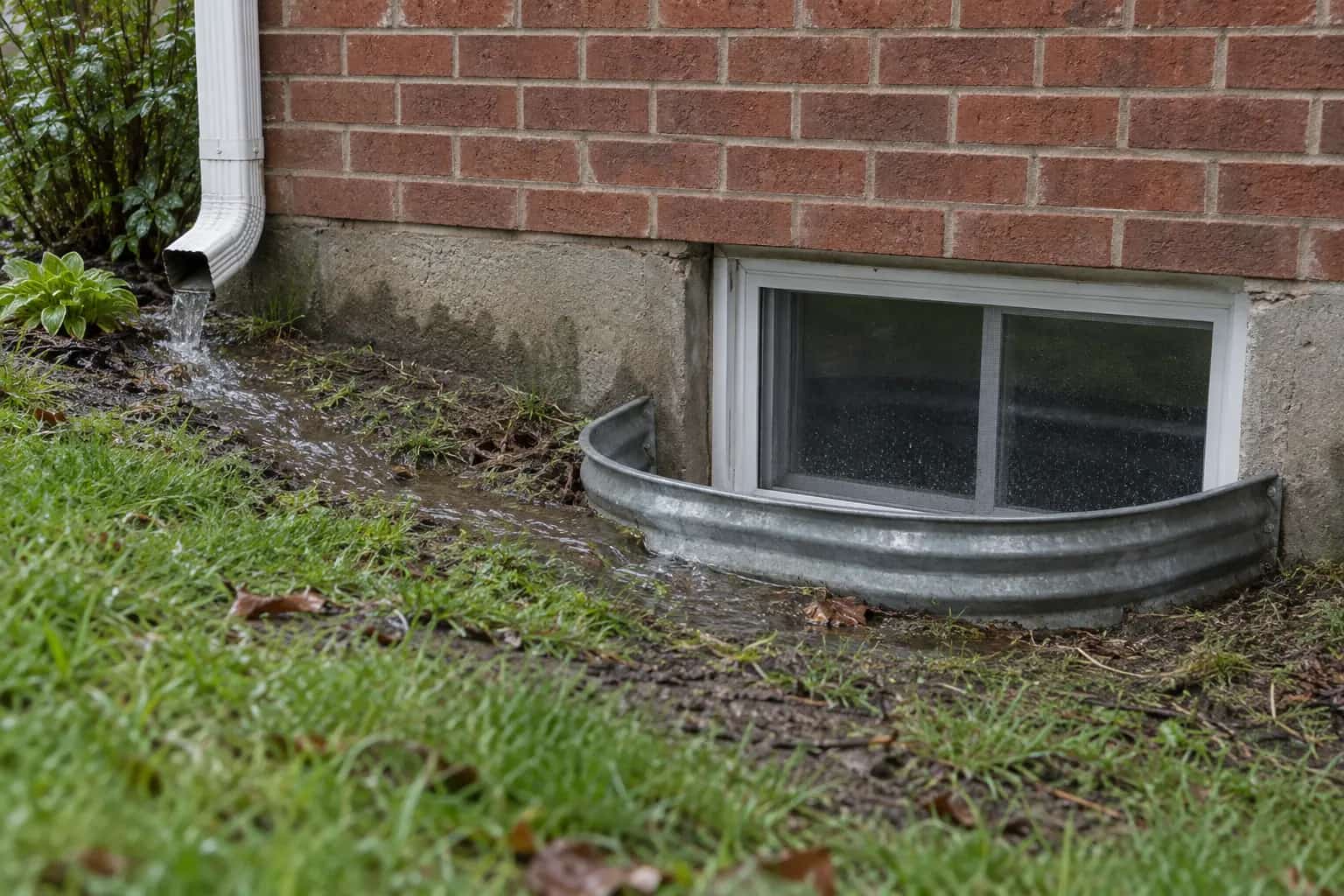
A shallow outlet that works in October may be obstructed by snow or ice later. A shared route can then affect two water sources at once. Identify which portions retain water, how the design deals with freezing and how the outlet remains observable and serviceable.
Do not disconnect a functioning sump discharge during cold weather merely to tidy the yard. Obtain a suitable temporary arrangement if work cannot be completed immediately. See snow blocking the outlet for the separate problem of a clear pipe buried by ploughed snow.
Toronto's flood-prevention page includes checking sump-pump operation and drainage as part of protection. For a modified installation, the handover should explain how the owner checks the approved arrangement and who services it. That includes any alarm or backup equipment already protecting the basement.
Judge the Proposal by Its Worst Ordinary Day
Ask the installer to explain three conditions: both sources flowing, a freezing period and a blocked final outlet. If the answer only describes a dry summer demonstration, the design discussion is unfinished.
Keep the drawing and product information after the work. The next person looking at the tidy pipe should know it serves a pump as well as a roof. A label and a clear record are much easier to preserve than that fact is to rediscover during a storm.
A tidy installation remained a reasonable goal. We just wanted the basement to share the enthusiasm, including on the wet day when both pipes had work to do.