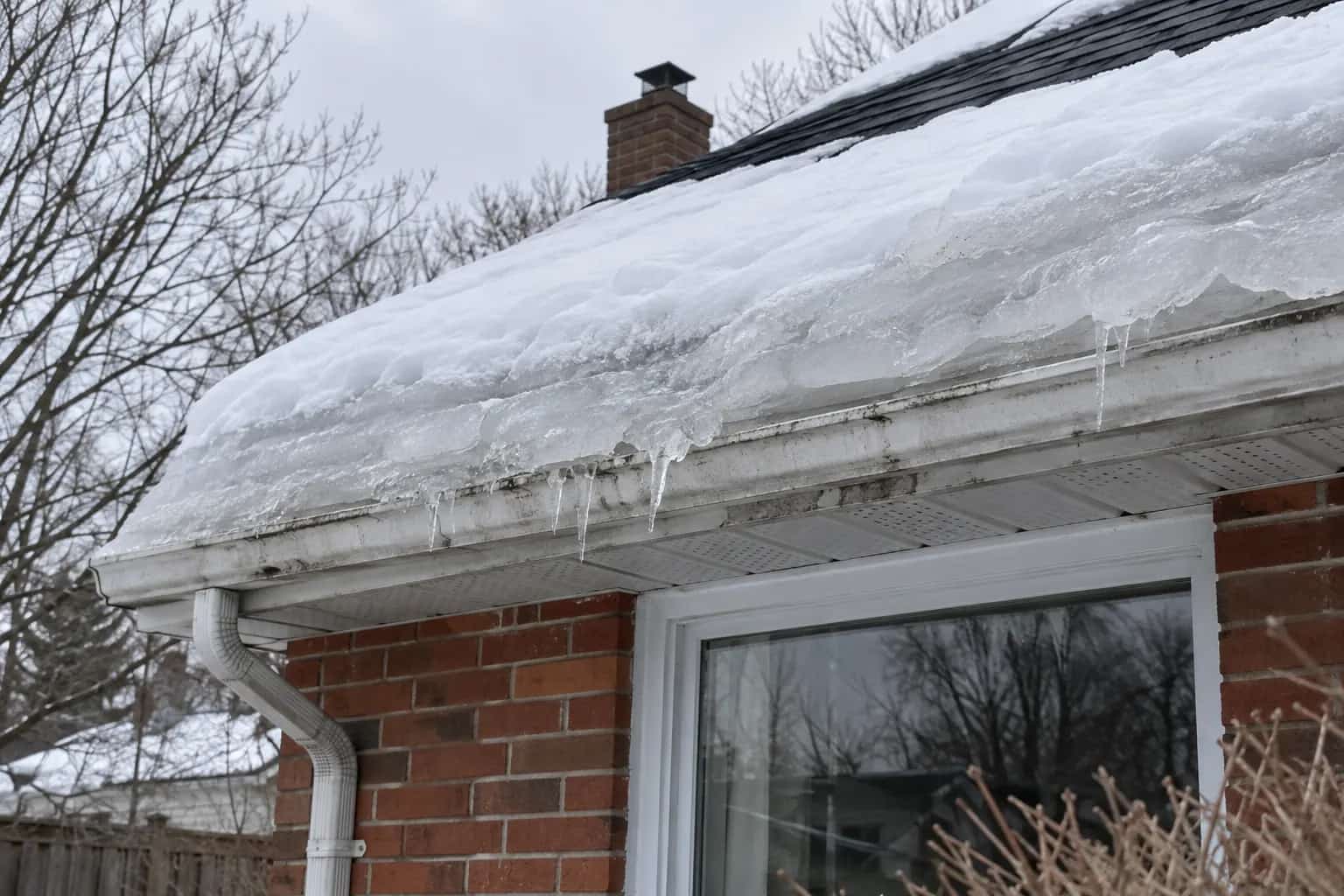
One downspout is still encased in ice while the sunny roof above it melts. The owner photographs its open end and asks whether that proves it is clear. Mike asks for the whole route from a safe viewing position. The restriction can be inside the pipe, at an elbow or farther along the discharge route. Keep clear of falling ice and overflow; an open end does not settle the question.
Do not use a torch, boiling water or an improvised electrical heater. Do not climb an icy ladder to dismantle the pipe. A frozen downspout combines uncertain blockage, overhead ice and poor footing, which is plenty for one small corner of the house.
Describe what is actually happening
A sunny roof and a shaded downspout can behave differently during the same thaw. The observation that matters is where water stops following its intended route. Is it spilling at the gutter, emerging from a joint, or reaching an extension buried in ice? Describe that sequence from a safe position instead of trying to prove the blockage with heat or a tool.
Look at the receiving route too. Is the extension buried in ice or snow? Does the pipe connect to an underground drain whose condition is unknown? A visible open end does not prove there is no restriction farther along.
Dave saves the thaw photograph with its time. By the visit, the ice may have disappeared and taken the obvious symptom with it. Include the whole downspout route and the gutter above it where visible.
Trace the visible water route
Observe from safe ground and let a professional investigate concealed restrictions.
Roof melt
Snow or ice begins releasing water as conditions change.
Gutter response
Overflow or standing water suggests drainage is not keeping pace.
Downspout behaviour
A frozen section or elbow may restrict flow out of the gutter.
Discharge area
Ice or a blocked receiving route can affect the final outlet too.
The pipe may not be the only problem
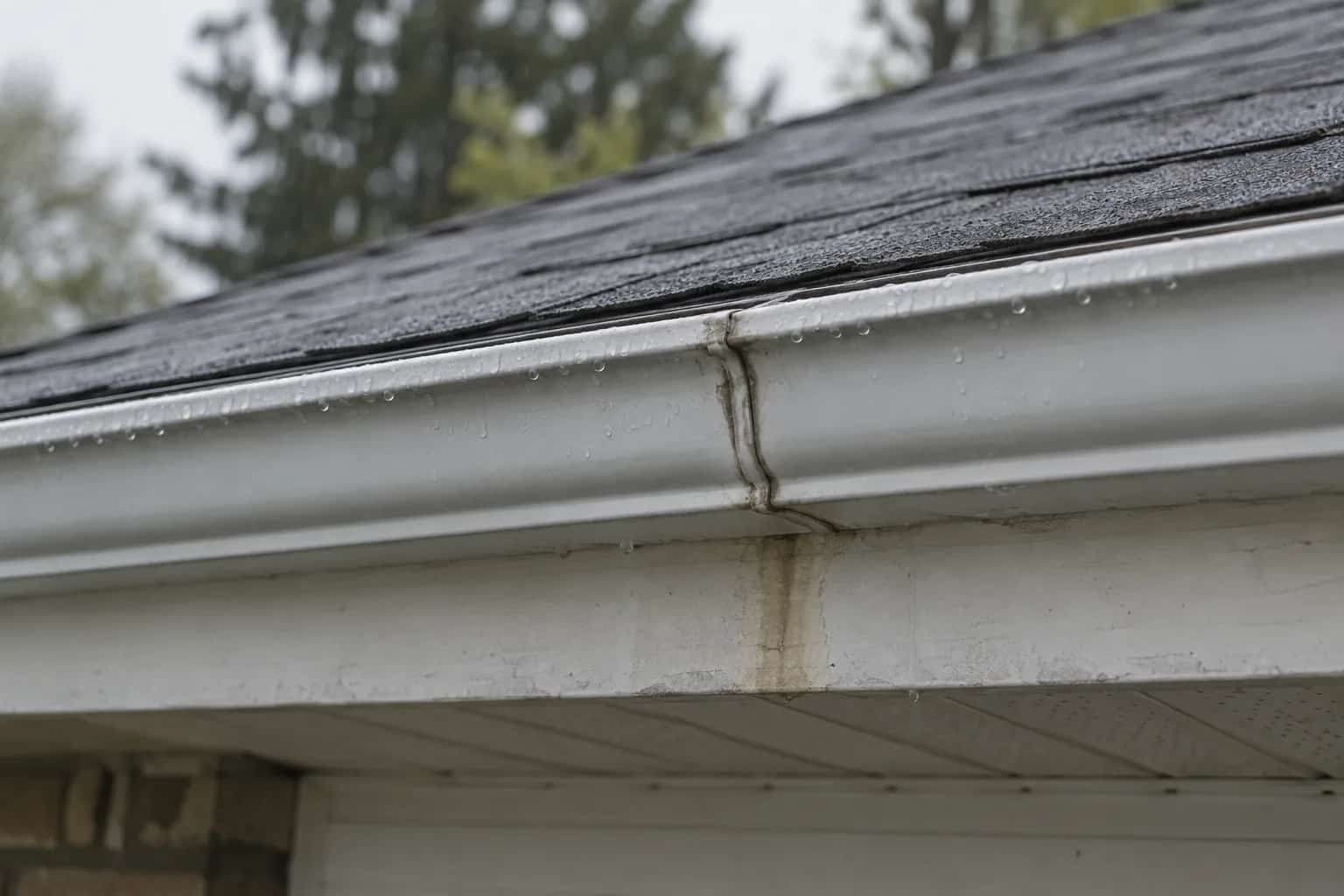
A gutter can also retain water because of debris, alignment or an outlet issue. Ice can conceal these conditions. Once the ice is gone, a physical inspection can reveal the condition it concealed. Pat keeps a second inspection on the list for when the material is visible. Warm weather removes ice; it does not straighten a damaged gutter. A quiet corner in April can still need work.
GAF's ice-dam guidance describes how ice and backed-up water can affect roof edges and drainage components. Your house may need both the immediate obstruction addressed and the reason it recurs investigated.
If the gutter has pulled away, sagged or opened at a joint, keep clear below it. The attachment and supporting fascia need assessment before it is simply refastened.
A new ceiling drip or wet wall should be reported with the exterior symptoms. Do not assume a frozen downspout is the proven cause; water may enter at another detail.
Stay away from bulging ceilings and water near electrical fixtures. Qualified electrical help may be needed as well as roofing work. Record the room, timing and whether the water increases during melt.
After the exterior source is corrected, wet insulation or finishes may still need investigation and drying. A stopped drip is good news, but it does not finish that part of the job.
A clear pipe can still discharge into a wall of ploughed snow; check the outlet beyond the snowbank from a safe ground position.
Why does this outlet keep freezing?
Where the problem repeats, discuss the complete route from roof to discharge. A properly designed heating system may be an option in some circumstances, but heating-cable planning needs electrical and material compatibility review.
Keep gutters and outlets maintained before winter, and record whether the same location freezes after particular weather. If an underground connection is involved, its inspection belongs in the plan too. Mike asks the final proposal to explain why this particular route keeps freezing. That is more useful than giving the owner a new gadget and another winter of guessing.