
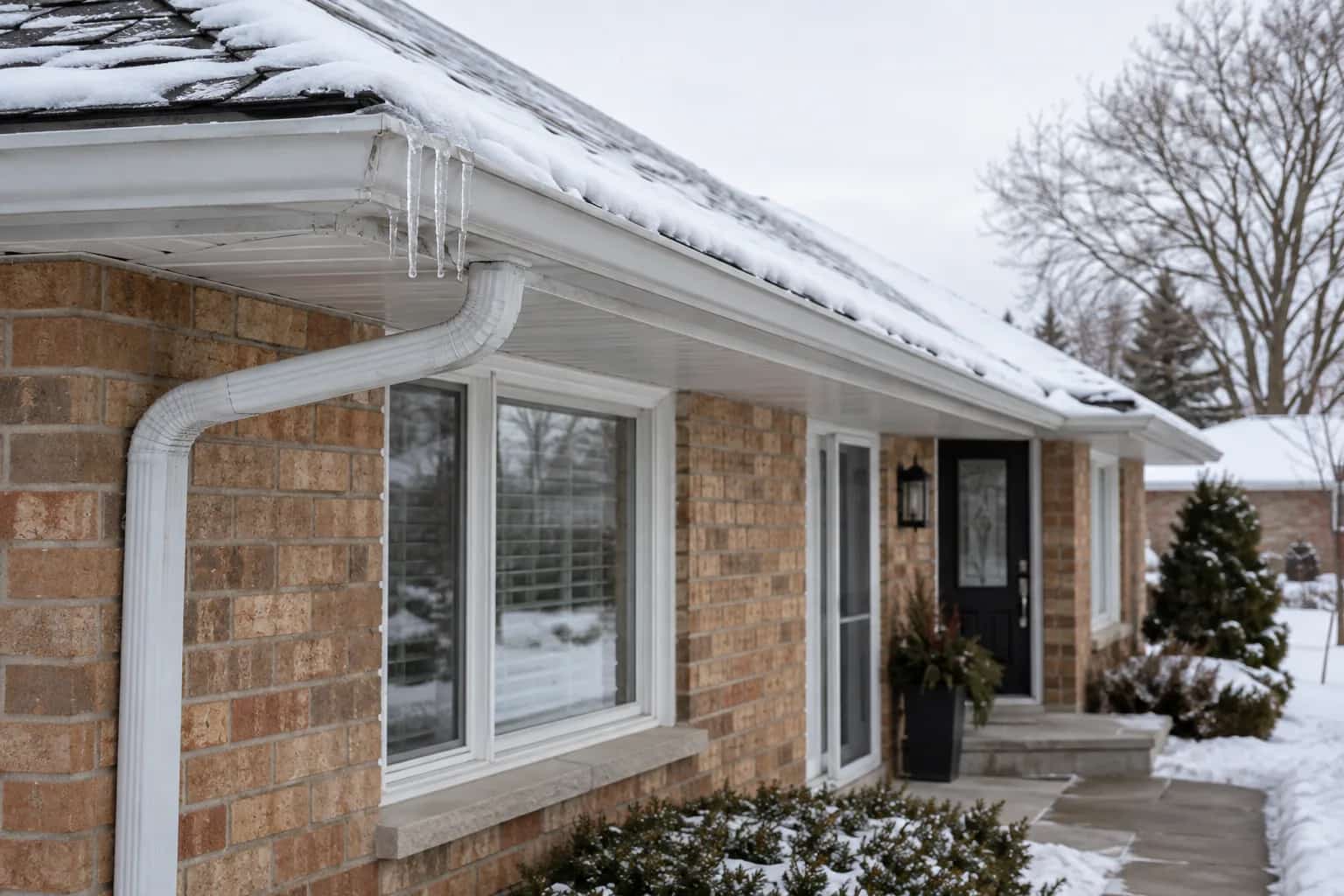
Check the space beyond the pipe as well as the pipe itself. An open downspout cannot drain usefully into an obstructed receiving area. The correction starts with a safe ground-level route and a better snow-storage plan, not automatically with heating cables on the roof.
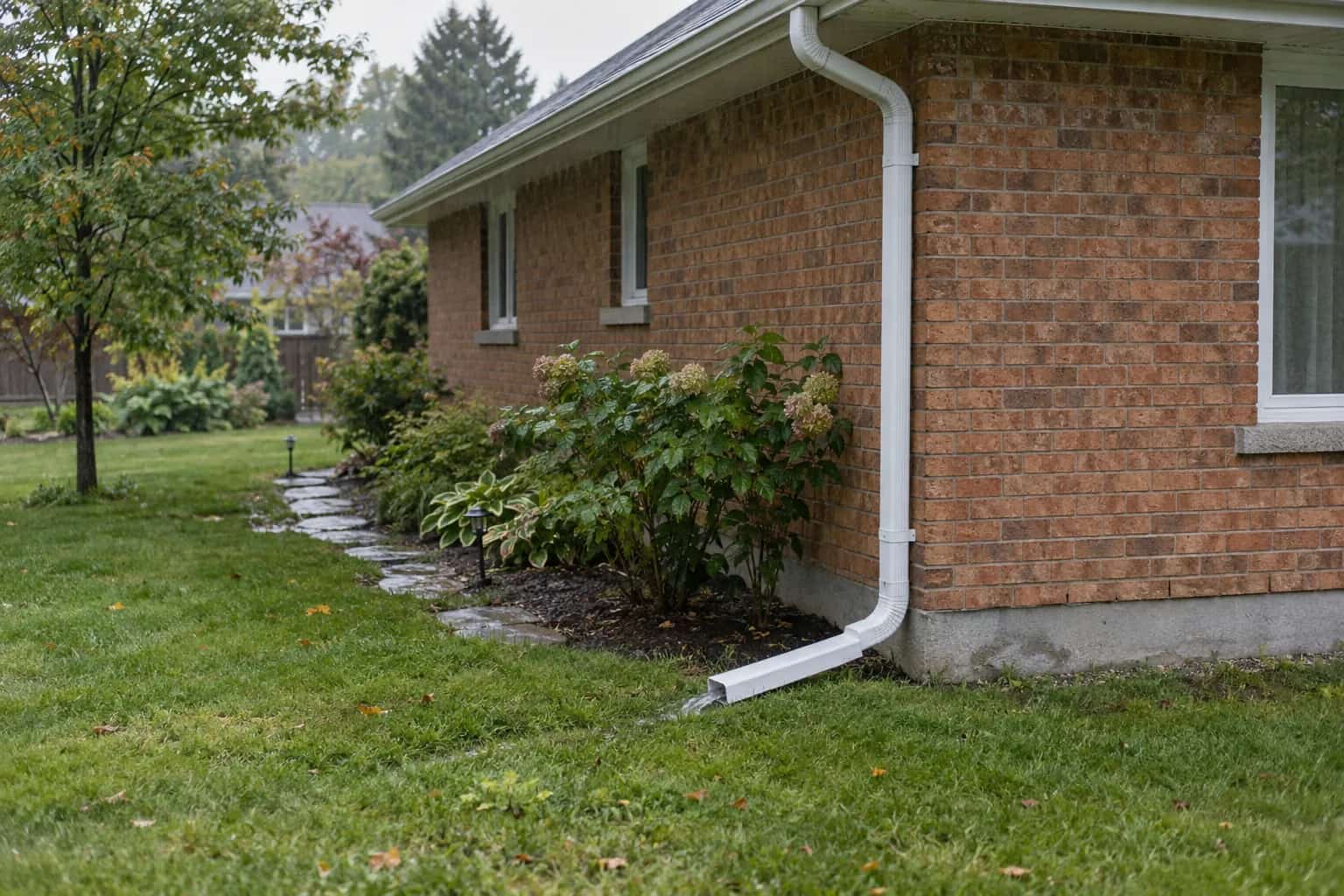
The driveway was clear enough to park two cars. The snow pile beside it had swallowed the downspout extension. Pat found the outlet in an autumn photograph before we could find it in the garden.
"Excellent parking," he said.
Dave looked at the pile. "We have parked the snow in the drain."
The pipe itself was not the only thing to assess. The receiving ground and the next route out had disappeared under the tidy result of the snow-clearing job.
Two Winter Blockages That Look Similar
Ice inside the downspout can restrict flow before water reaches the end. A snowbank outside can obstruct or redirect water after it emerges. Both may occur together, but the location changes the investigation.
From a safe position, note whether water is visibly leaving the outlet, backing up at a joint or spilling from the gutter above. Do not stand beneath icicles to obtain a closer view. If the upper route is affected, use the frozen-downspout guide and arrange suitable help.
For an outlet buried by ground snow, the practical question is where released water can continue. Clearing a small hollow around the pipe can leave it draining into a basin surrounded by snow. The opening looks improved; the destination has not changed.
Plan the Pile Before the First Large Storm
Mark the outlet location while it is visible. Share a simple photograph with anyone shovelling or ploughing the property, showing the space needed for drainage and the route to keep usable. Include the neighbour's boundary and the household's walking route.
Public Safety Canada's snow guidance recommends keeping snow and ice away from foundations, downspouts and other vulnerable areas. Use that as a planning principle, not as permission to move snow onto a road, neighbouring land or another drainage inlet.
Picture a narrow driveway where the usual pile belongs beside the back gate. Moving it two steps sideways might uncover the downspout but bury the yard's drainage channel. The snow plan needs to include both. On a tight property, a snow contractor may need a different storage arrangement or removal service.
Make Ground Clearing a Safe Task
Work only where footing and access are safe, away from falling roof snow, overhead ice and traffic. Avoid striking the pipe or buried services with tools. Do not pour boiling water into the outlet or use a flame to force a route open.
If the obstruction is hard ice, the pipe is damaged or access lies beneath a dangerous eave, arrange appropriate professional help. The immediate task may be to keep people away from a slippery route while the drainage is assessed.
Do not casually remove the extension and leave the pipe draining at the foundation. That can exchange an obvious ice problem for a less visible wet-basement problem. Any temporary route should have a suitable destination and remain clear of doorways and walking surfaces.
A little opening at the pipe mouth looked promising until we considered the mound around it. We did not want a small pond with a downspout in the middle. The clearing plan needed a continuous route, safe access and somewhere suitable for the displaced snow. Moving the same obstruction three feet sideways was not much of a victory.
From Clear Pipe to Usable Outlet
The ground beyond the mouth is part of the outlet.
Water reaches the pipe end
Confirm the observation without entering an ice-fall area.
Snow blocks the receiving ground
A pile can redirect water even when the pipe is open.
A continuous route is restored
Clearing only a hollow at the mouth can leave a temporary pond.
The temperature falls again
Check whether the discharge creates ice on an access route.
Watch the Next Freeze, Not Only the Thaw
A route can pass water during the afternoon and leave a dangerous ice strip after dark. Note where the water spreads and whether the planned path crosses an entrance. The solution may need a revised discharge arrangement, rather than repeated scraping at the same spot.
The ground can also behave differently from summer. Frozen-soil drainage explains why a lawn may accept less water during a thaw even after the snowbank is cleared. Keep that separate from a pipe obstruction; neither is proved solely by ice on the surface.
A Short Winter Handover
Keep three items together: the outlet photograph, the intended snow-storage area and the contact for a drainage problem. Tell the household what change warrants a call, such as water moving toward a basement opening, a displaced pipe or repeated gutter backup.
Check after ploughing as well as snowfall. Snow can be moved onto the outlet on a dry day when nobody is thinking about roof runoff. The best time to notice is before the next mild spell sends water through it.
If clearing keeps becoming necessary at the same location, record the pattern for a permanent warm-weather correction. A winter workaround is useful; it should not become the only drainage plan the house ever gets.