
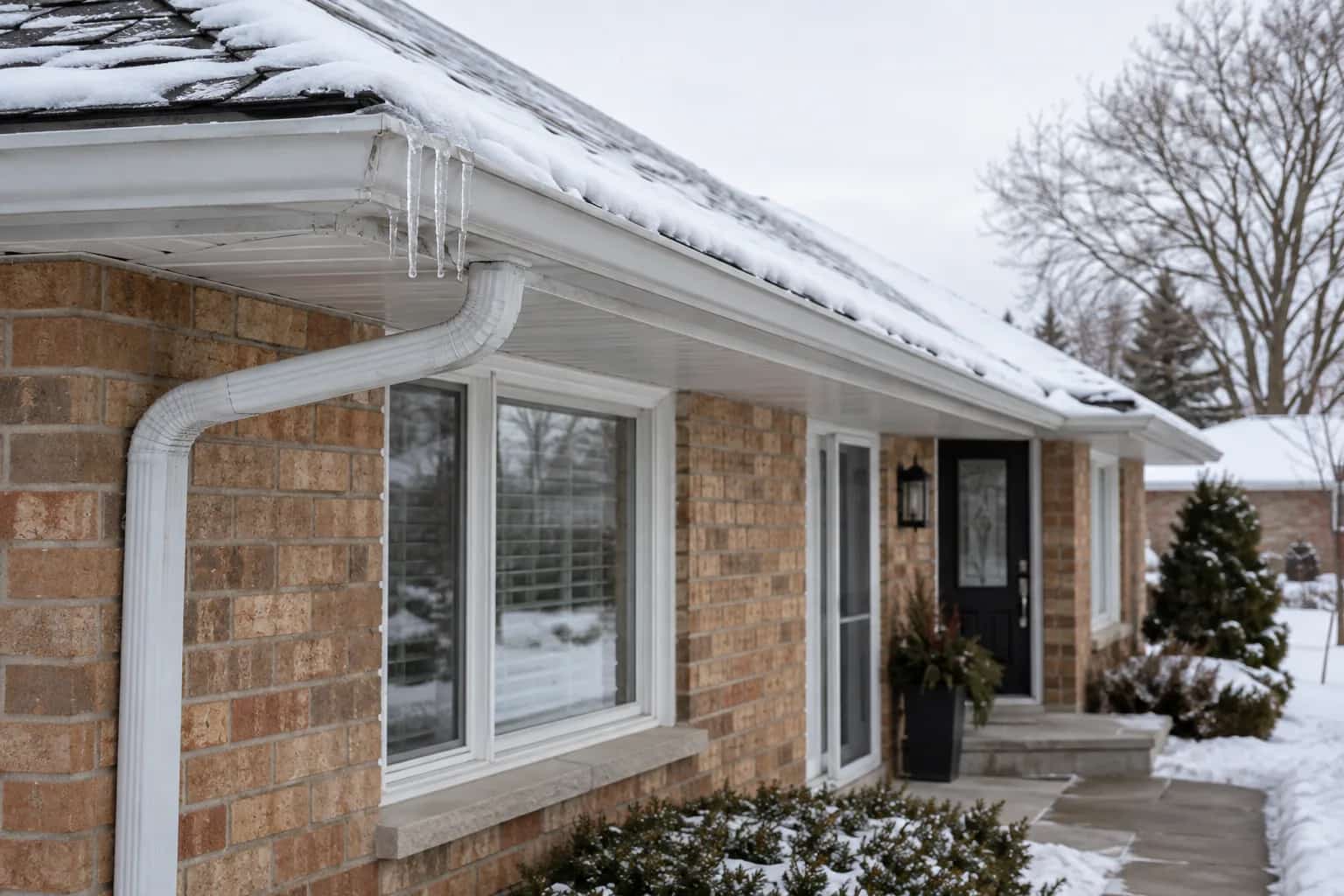
Sun reached the roof while the side lawn stayed in shade. Meltwater left the downspout and travelled across the grass toward the path. In summer, nobody would have given that outlet a second look.
"The roof thinks it is spring," Pat said.
Dave kept his eyes on the shaded ground. "The lawn has not agreed."
We followed the surface route instead of assuming the pipe had suddenly failed. The timing between the warming roof and receiving yard was part of the explanation.
Frozen or already wet soil may accept water differently during a thaw. Melting roof snow can therefore need a surface route even where summer rainfall normally soaks in. That does not mean every frozen lawn behaves like concrete, or that the only solution is a longer downspout.
Warm Air Does Not Thaw the Whole Yard
A sunny roof can release meltwater while shaded ground remains cold. Snow cover, soil moisture, soil structure and the depth of freezing all influence what happens below the surface. The air temperature on your phone cannot tell you how much the receiving soil will absorb.
Environment and Climate Change Canada's cryosphere review explains that seasonal ground freezing affects infiltration and runoff. It is a mechanism to understand, not a property-specific drainage test. A strip beneath a tree and a sunny patch beside paving may behave differently during the same afternoon.
Imagine an extension that finishes just beyond a garden bed. The meltwater reaches a frozen low spot, spreads sideways and finds the paved path. Moving the pipe another short distance may simply deliver it to the same low spot from a different angle.
Why the Same Outlet Behaves Differently
A warming roof and still-cold ground can behave differently on the same afternoon.
Summer reception
The receiving soil may accept runoff under favourable conditions.
Winter release
A warming roof can send water toward still-cold ground.
Surface accumulation
Restricted absorption or an obstruction can create a pool.
Overflow route
The next-lowest path determines where excess water travels.
Trace the Surface Route First
From a safe place, identify where water leaves the outlet, where it first pools and where it spills next. Include snow ridges, paving edges and the side-yard depression. These small changes can matter more than the straight-line distance from the wall.
A photograph taken before snow can help interpret what is hidden. Do not break through ice or dig test pits during a thaw to discover the route. Apart from unsafe footing, that can create a temporary opening that says little about the underlying drainage arrangement.
If the pipe mouth is buried, clear-outlet planning is the first question. If the water leaves freely and the yard still ponds, keep investigating the receiving ground rather than calling every winter puddle a frozen downspout.
Separate Three Conditions
An obstructed surface route may have snow, stored objects or a raised border across its path. The ground beyond could drain acceptably once the intended route is restored.
A temporarily limited receiving area may accept less water during a cold or very wet period. It needs an appropriate overflow route for those conditions, even if it performs well at other times.
A persistent grading or soil problem remains after the thaw. If the same area is still wet in ordinary spring rain, do not explain it indefinitely as winter. See a lawn that stays wet after the downspout is extended.
These can overlap. Removing a snow obstruction may expose a low spot that also needs permanent attention later.
The first extension idea ended in the same shallow hollow, only from the other side. We crossed it off. More pipe was not a change of destination. On the sketch, the important arrow started where the water left the plastic, which is inconveniently where most quick fixes stop drawing arrows.
Avoid a Temporary Fix That Moves the Hazard
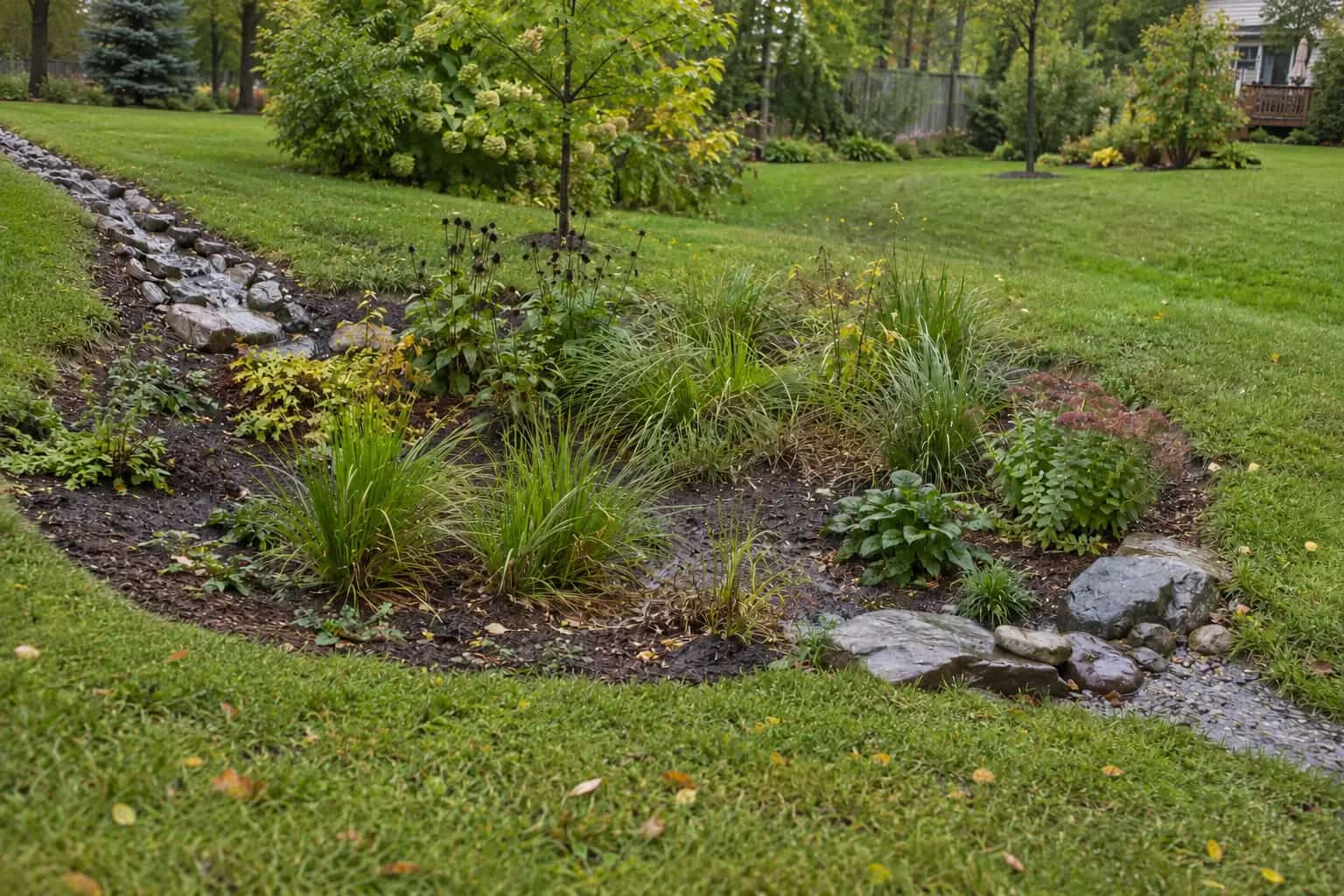
An improvised pipe across a path can become an ice maker where people enter the house. Sending water toward a neighbour, window well or roadside inlet without checking local requirements creates another problem. A temporary route still needs a suitable destination.
Public Safety Canada's snow guidance identifies meltwater near foundations and basement openings as a concern, particularly when rain joins an existing snowpack. Keep those openings and safe access in view while arranging help. Water approaching the building deserves prompt action; a tidy observation log is secondary.
Do not use roof de-icer or heating cables as a substitute for understanding this ground-level route. They address different conditions and can change when water arrives without improving where it goes.
Use the Thaw to Improve the Permanent Plan
Keep two comparisons: the winter flow path and the same area after the soil has thawed. Note recent landscaping, snow-storage locations and whether the pond drains between events. These observations help a drainage designer distinguish temporary seasonality from a persistent low route.
A permanent proposal should explain the normal route and the overflow route under less favourable conditions. It may involve grading, a different outlet location or another designed measure; the observations determine which deserves consideration.
The useful aim is not a promise that the lawn will absorb every drop in every season. It is a water route that remains understandable when the roof thaws before the yard does.
We saved the winter view for comparison after the thaw. If the same hollow stayed wet in spring, winter would no longer get all the blame.