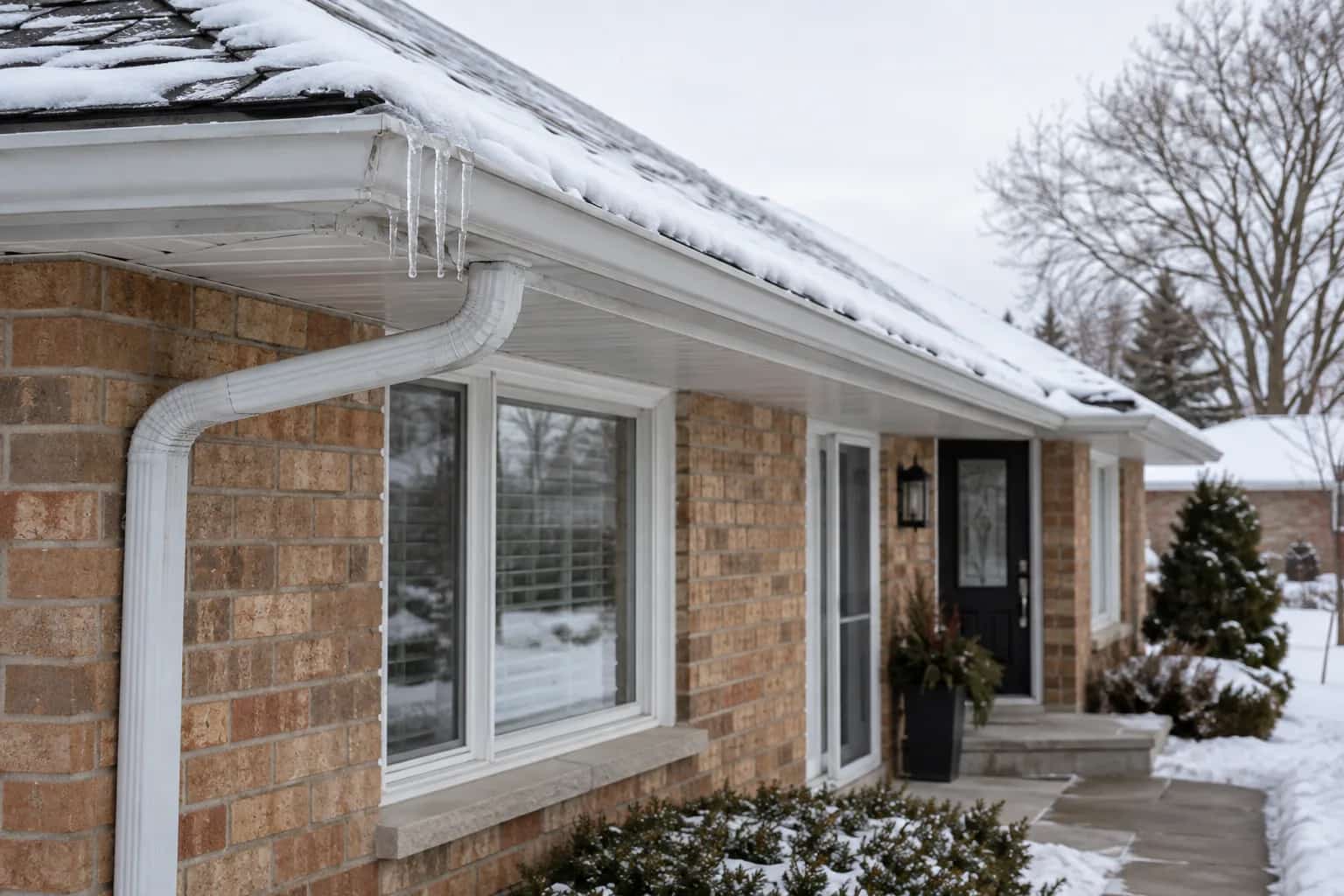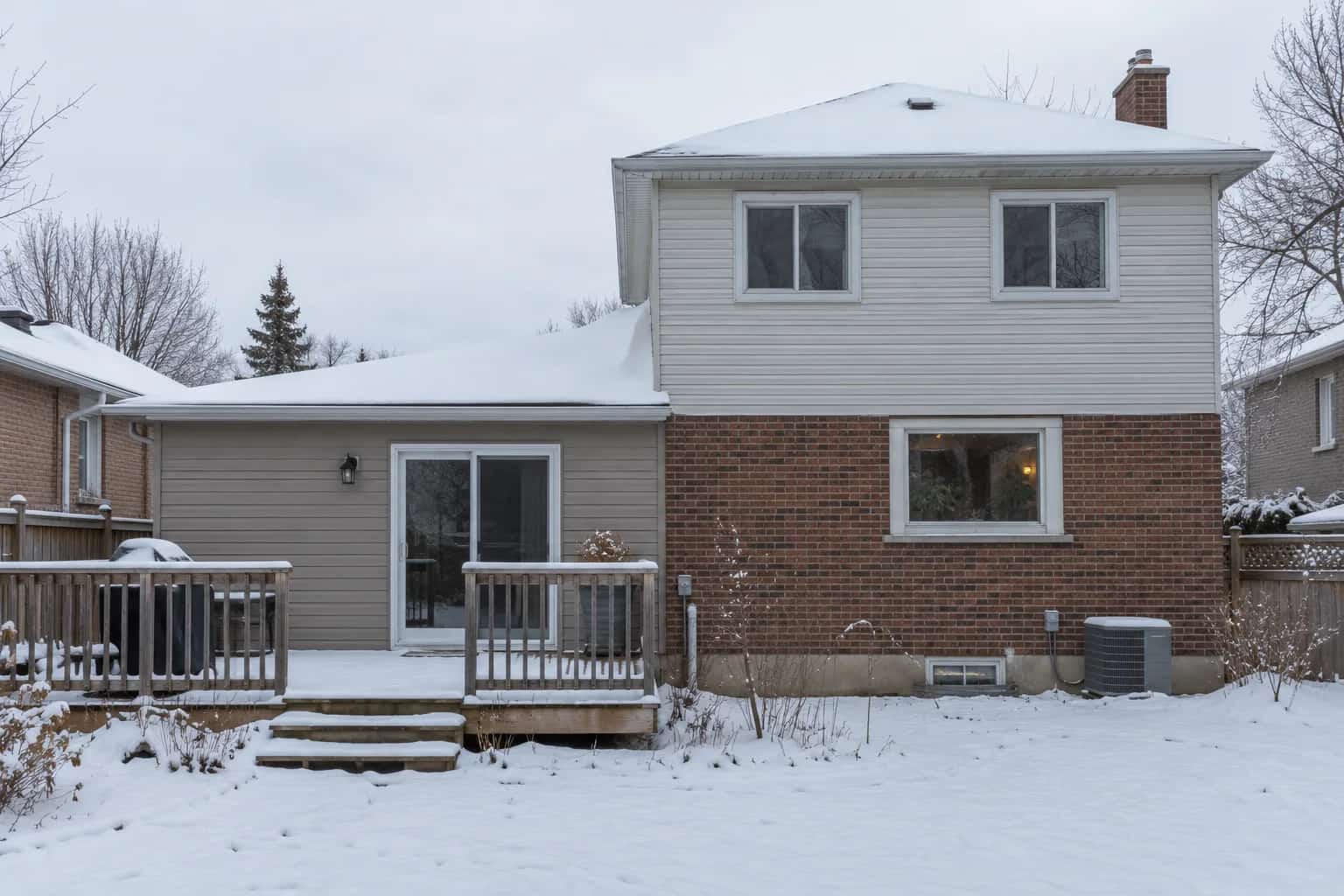
By lunchtime the addition roof looks less snowy than it did at breakfast. From the kitchen, that feels like progress. Dave asks whether the outlet is running. The snow is lower, the gutter is still iced over, and nobody can see what is happening beneath the white surface. That is the uncertainty to resolve.
Rain can make a snowy roof look lower and tidier without proving that it has become lighter. Snow settles and melts, while rain may remain in the accumulation or behind restricted drainage. Less visible depth does not necessarily mean less roof load.
This is a reason for a local assessment when conditions are concerning, not a claim that every rainy thaw is an emergency. The building, existing accumulation, drainage and signs of distress determine the response.
Count What Arrives and What Leaves
Think of the roof accumulation as a water balance. Rain adds water. Melting changes snow into liquid, but does not by itself remove that water from the roof. Drainage takes water away. Refreezing changes its form again without making its mass vanish.
Here is deliberately simple arithmetic, not a safe-load calculation: 10 mm of rain retained over 1 square metre adds 10 litres, approximately 10 kg. If some runs off, less remains; if more rain arrives, more may be retained. You cannot determine the retained amount from the depth of the snow or one dripping downspout.
The addition outside the kitchen has another complication: a taller wall can concentrate a drift while the drain remains concealed. The important questions are whether water is leaving, whether a drift remains concentrated at the wall and what the actual structure can support. A lower white profile is not enough evidence to answer any of them.
NRC's roof-load guidance treats snow and rain together and recommends local expert assessment. Record the sequence from safe ground: snowfall, drifting, rain, visible discharge and any new symptoms. Do not collect roof samples or try to turn the example above into a household removal threshold.
Ontario's snow-loading alert also warns that rain adds weight to accumulated snow. Keep the breakfast and lunchtime photographs with the weather sequence for the person assessing the actual building.
Rain adds water to the winter drainage route
Rain can add runoff even without heat-driven snowmelt. If an icy eave blocks the exit, water can collect above it, while the added load needs a separate assessment.
Schematic view. Shows relationships, not installation dimensions.
Look for changing symptoms safely
From occupied rooms, note new ceiling distortion, unusual cracking sounds or sudden changes in how doors operate. If structural failure may be developing, leave the building immediately, keep clear of it outside and call 911. Do not enter the attic to investigate.
From a safe ground position, you may be able to see gutter overflow or an outlet encased in ice. Keep clear of hanging ice and sliding snow. A thaw can create hazards at entrances even when there is no structural concern.
An active leak requires prompt roofing attention, and water near electrical components needs qualified electrical help. The presence of a leak does not by itself establish structural overload, but it must still be addressed.
The breakfast and lunchtime photographs belong together. Their value is the sequence, not a home-made depth limit. Let the local assessor interpret that sequence against the actual building.
Drainage belongs in the assessment
On a low-slope roof, outlets may be concealed by snow. On a sloped roof, the roof edge or downspout may remain frozen while upper areas melt. Tell the contractor about known recurring restrictions.
Do not try to create a drain path using a flame, hot-water hose or improvised electrical heat. The access and material risks can exceed the apparent simplicity of the blockage.
For a repeating outlet problem, read frozen downspouts. If a taller wall concentrates accumulation, the addition-drift guide explains why the local area needs separate attention.
Follow visible discharge onto the ground too: meltwater can reach the lawn before the soil thaws and take a different route than summer rain.