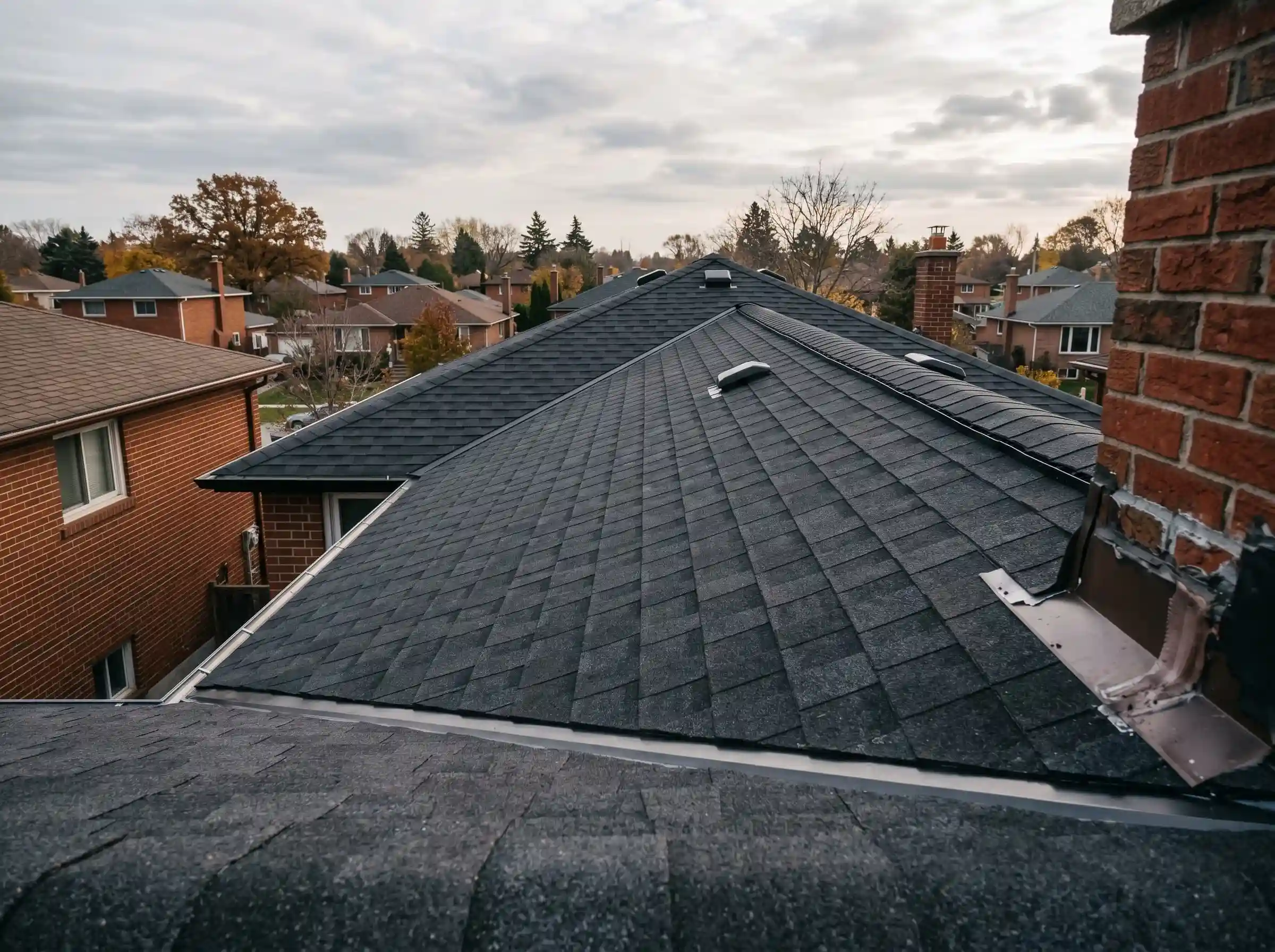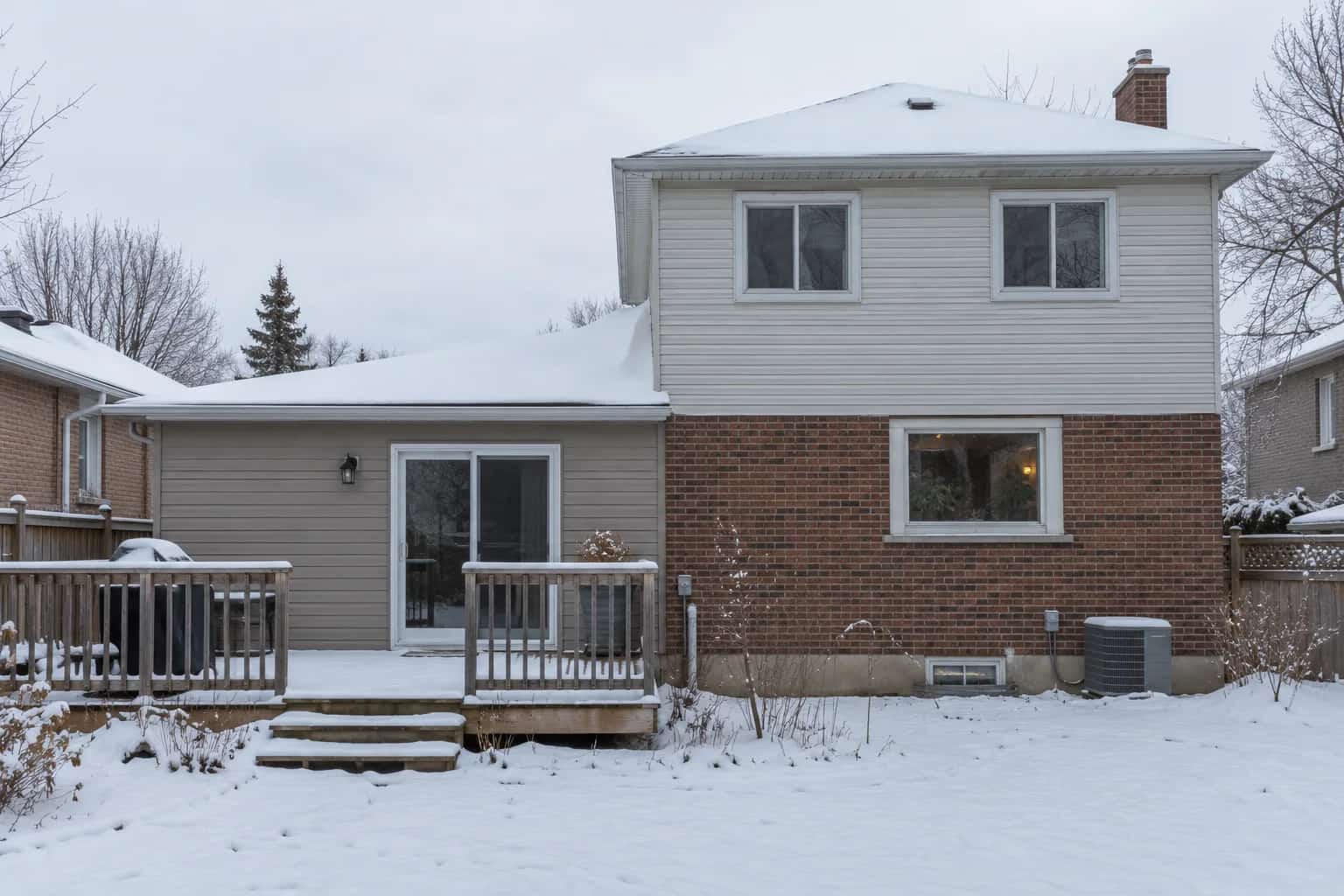
From the driveway, the main roof looks fairly clear. Around the side, snow has collected beside the taller wall above the addition. Mike keeps the discussion on that lower roof. The reassuring view from the front does not tell us what the addition is carrying.
A lower roof beside a taller wall can carry a concentrated drift even when the main roof looks clear. Assess that area and its structure independently; do not climb up to measure it.
Do not climb up to measure the drift. If there is new sagging, cracking, distortion or other possible structural distress, leave the building immediately, keep clear of it outside and call 911. Do not re-enter until emergency responders say it is safe.
Why the lower section deserves its own attention
This is why an average depth is unhelpful. Spread the same accumulation across a whole roof in your mind, then concentrate much of it beside one wall: the support beneath the concentrated patch sees a different situation. That comparison explains the concern; it is not a way to calculate a safe load at home.
Wind moves snow around buildings rather than distributing it like icing on a cake. A height change can create a place where snow deposits. Snow or ice may also slide from an upper roof onto a lower one, which is a separate contribution to consider.
An addition, porch, garage or sunroom may have a different structure from the original house. Its age, span and previous alterations can also differ. Being attached to a substantial-looking main roof does not establish its capacity.
The National Research Council's roof snow-load information is a starting point for understanding local design conditions. That lower addition needs assessment using its own geometry and construction. Ontario's snow-loading alert specifically identifies drift concentrations at walls between roof levels.
Dave asks for the addition drawings rather than a guess at snow depth. The span, construction and roof geometry belong to the assessment. A substantial-looking main house cannot lend its capacity to the roof beside it by association.
A lower roof can receive a concentrated load
A building's shape changes where accumulation needs assessment.
Upper roof or wall
A height change alters how wind carries and deposits snow.
Drift zone
A deeper accumulation can develop beside the taller portion.
Lower roof structure
The local framing must be assessed for the applicable loading.
Occupied space
If distress suggests failure, leave the building, keep clear outside and call 911.
Gather records before the next major storm
Keep the addition's drawings, permits, engineering details and any repair records where they can be found. If those records are missing, say so. A professional can then decide what investigation is needed rather than work from a guessed construction date.
Photographs showing the roof without snow can be especially useful. They reveal the height change, drainage outlets, parapets and any equipment that winter images conceal.
Record whether a drift forms in the same location each year, and whether the roof has changed since the last assessment. New solar panels, a higher addition or altered adjacent surfaces may deserve review.
Pat stops the suggestion to push upper-roof snow onto the lower section. Moving a load is not the same as removing it. Any necessary removal needs a suitable professional plan, including where the material goes. Do not shift the drift into a pile on the next bay either; that can concentrate the load elsewhere.
Do not shovel the load onto the next roof
Where removal is needed, the assessor and qualified crew should establish a method suited to the roof and the people below. The plan should address access, loading and where removed material will go.
Our guide to snow-load warning signs explains why online depth limits cannot replace that decision. A photo can document a drift; it cannot rate the structure beneath it.
If you are planning a new addition or changing a roof height, have snow accumulation and drainage considered during design. It is easier to address these relationships on drawings than after the first winter exposes a concern.
For an existing lower roof, the assessment may recommend monitoring, repairs, structural work or a specific snow-management plan. Keep that advice with the building records and share it with anyone hired for winter removal.