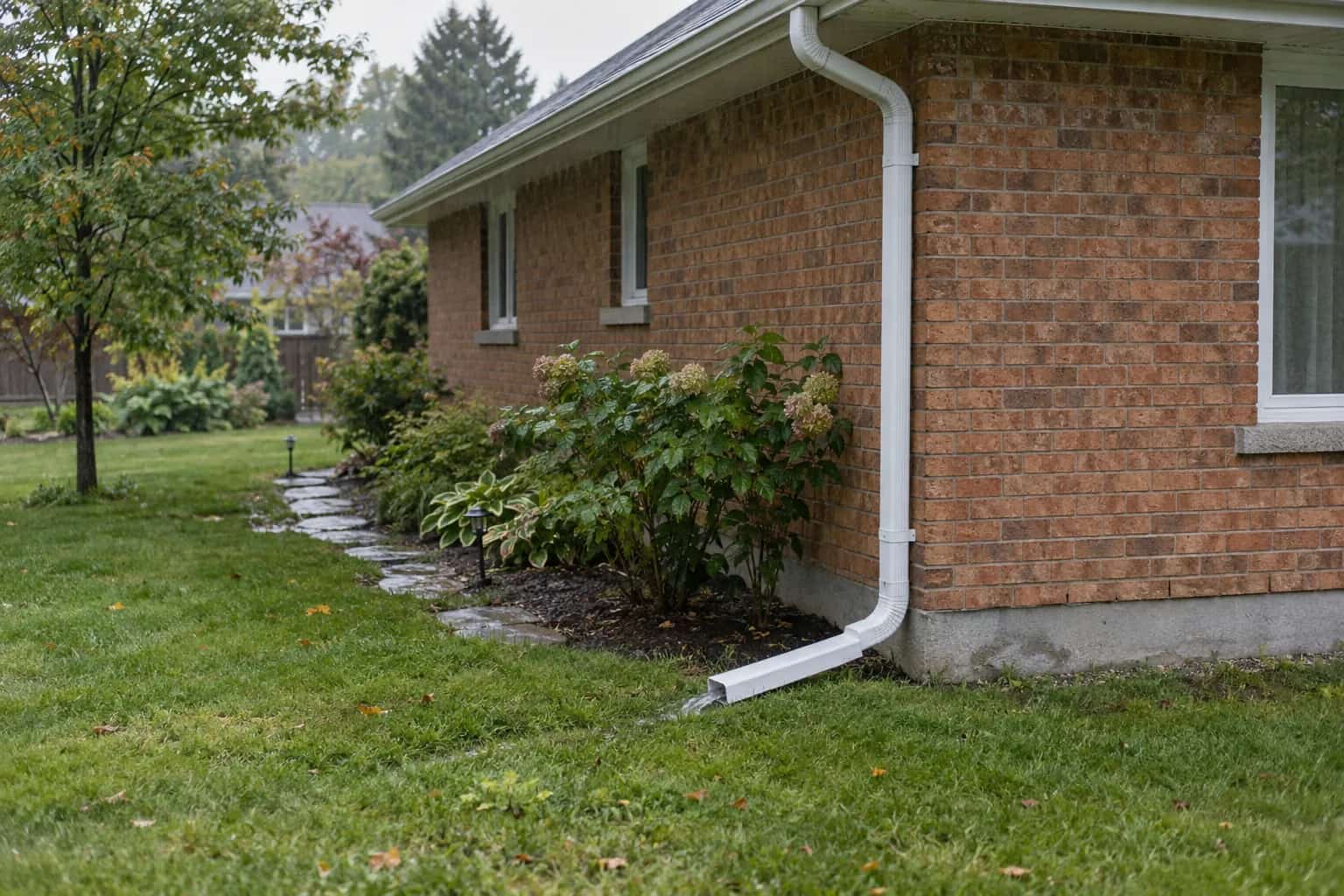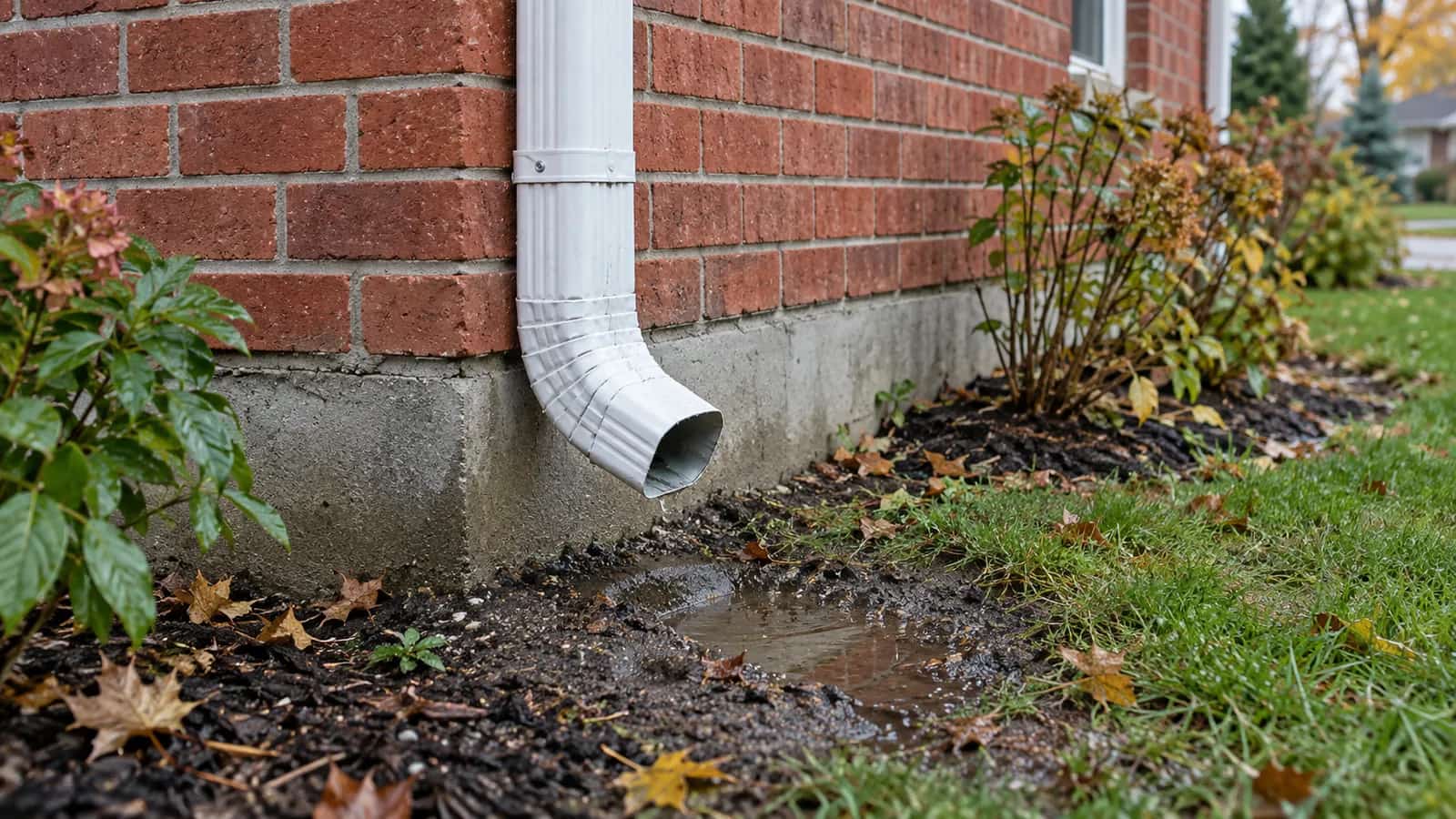
The new extension fits beautifully until Nora opens the gate. Then the gate catches the pipe and the bin catches the gate. Dave moves the bin back to its usual Tuesday position. The tidy installation photograph has just become a useful site test.
If every visitor has to step over the downspout, the drainage layout needs another look. Raising the extension out of the way leaves the house unprotected whenever it rains in that position. Letting the water cross the path instead can create ice during a thaw. A workable route must suit both the water and the people using the entrance.
Watch Where Water Crosses
Note whether the problem starts at the lower elbow, at an overflowing gutter above, or at a puddle that spreads across the path. These require different repairs. If water falls from the roof edge over the door, moving the bottom extension will not stop it.
Take a photograph from a sheltered position showing the flow and the entrance. Include the gate swing, steps and any accessibility route in your sketch. A pipe that clears the front door may still block the side gate or interfere with a mobility aid.
Where the problem followed patio work, compare the new paving levels and roof-water route; the pipe may be unchanged while its receiving surface is not.
Plan the discharge and the walking route
Moving water away from the foundation is only part of the layout. The final route also needs to avoid creating an obstruction or an icy crossing.
Schematic view. Shows relationships, not installation dimensions.
Three Layouts to Sketch Before Buying Pipe
Same-side discharge: where there is usable lawn on the downspout side of the path, turn and extend the outlet toward that receiving area. Draw the gate's full swing and the width needed for bins or mobility equipment. The water route and walking route should stay separate.
Relocated downspout: if the only lawn is beyond the doorway, ask whether the gutter can drain toward a different corner. The roof-level fall and outlet arrangement must change with it. A new pipe at the convenient corner is no help if water still sits at the old low point.
Designed buried route: where a surface route genuinely cannot work, a contractor can investigate a suitable underground route and lawful outlet. This needs known levels, maintenance access, utility checks and an answer for freezing or blockage. A disappearing pipe is not proof that water has somewhere to go.
Nora's gate test belongs on the installer's final check, with the bin in its ordinary position. Add a snowbank to the sketch as well; winter often borrows the exact patch of lawn chosen for discharge.
Toronto's disconnection guidance says to avoid directing discharge onto walkways, neighbouring property or surfaces that drain toward the foundation. Its requirements and exemptions are local. Confirm the destination for your municipality and property rather than treating any extension length as universal permission.
A hinged extension can help with occasional access, but someone has to return it to the working position. Nora's normal bin routine is the honest test; a pipe repeatedly folded against the wall has stopped doing its drainage job.
Will the Same Route Work During a Thaw?
A route that looks harmless over summer paving may create a thin sheet of ice during a thaw. Snowbanks can also block an otherwise adequate outlet and turn the water back toward the house. Keep the terminal area observable and include it in winter ground checks.
Do not shorten the extension until it empties beside the foundation just to clear the path. That exchanges an obvious nuisance for a potentially less visible moisture problem. Where neither side of a narrow passage offers a suitable route, get drainage advice before choosing a permanent layout.
Watch the finished route in rain. Both the pipe and the water need to stay clear of the path; passing only one of those tests leaves the original conflict half solved.