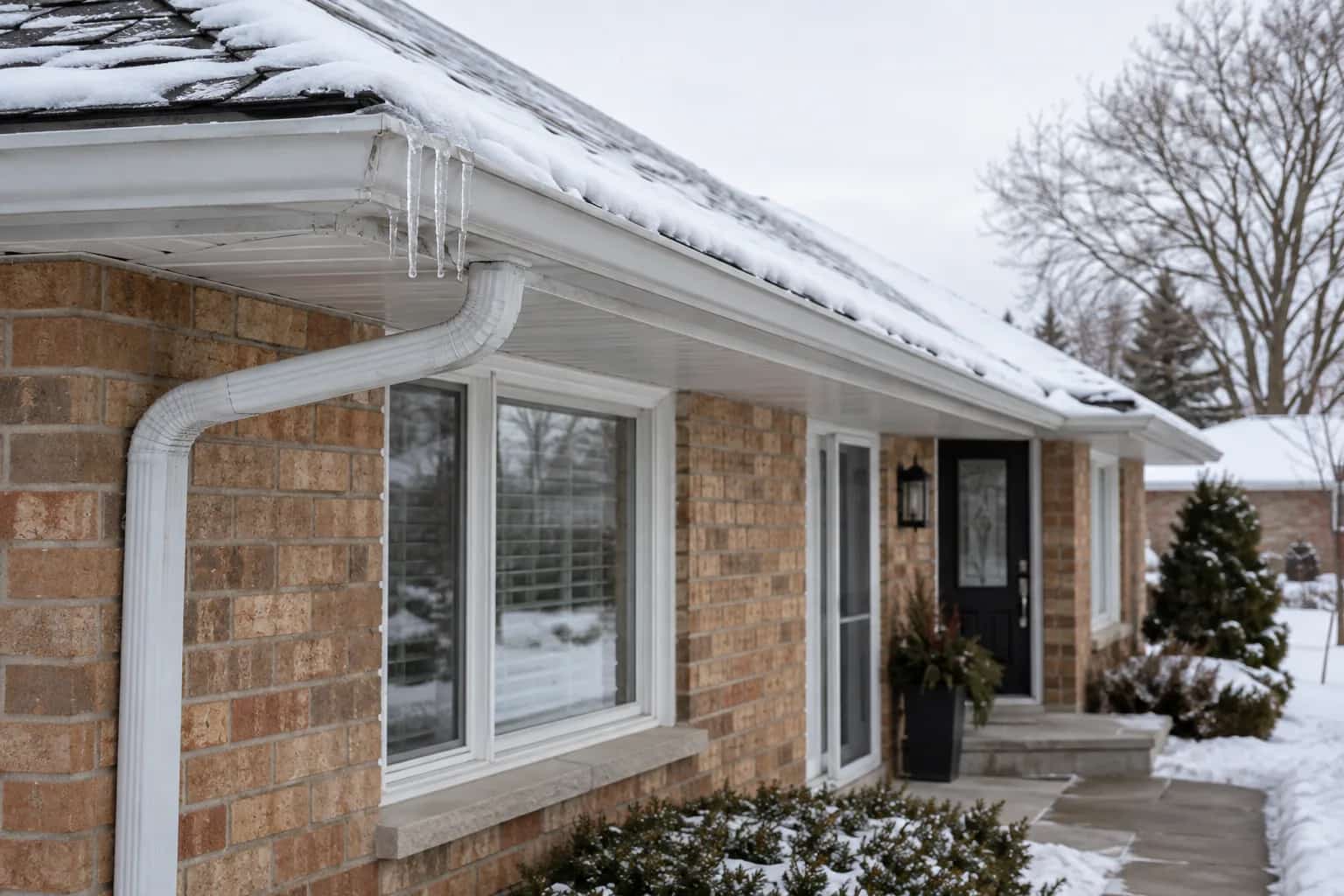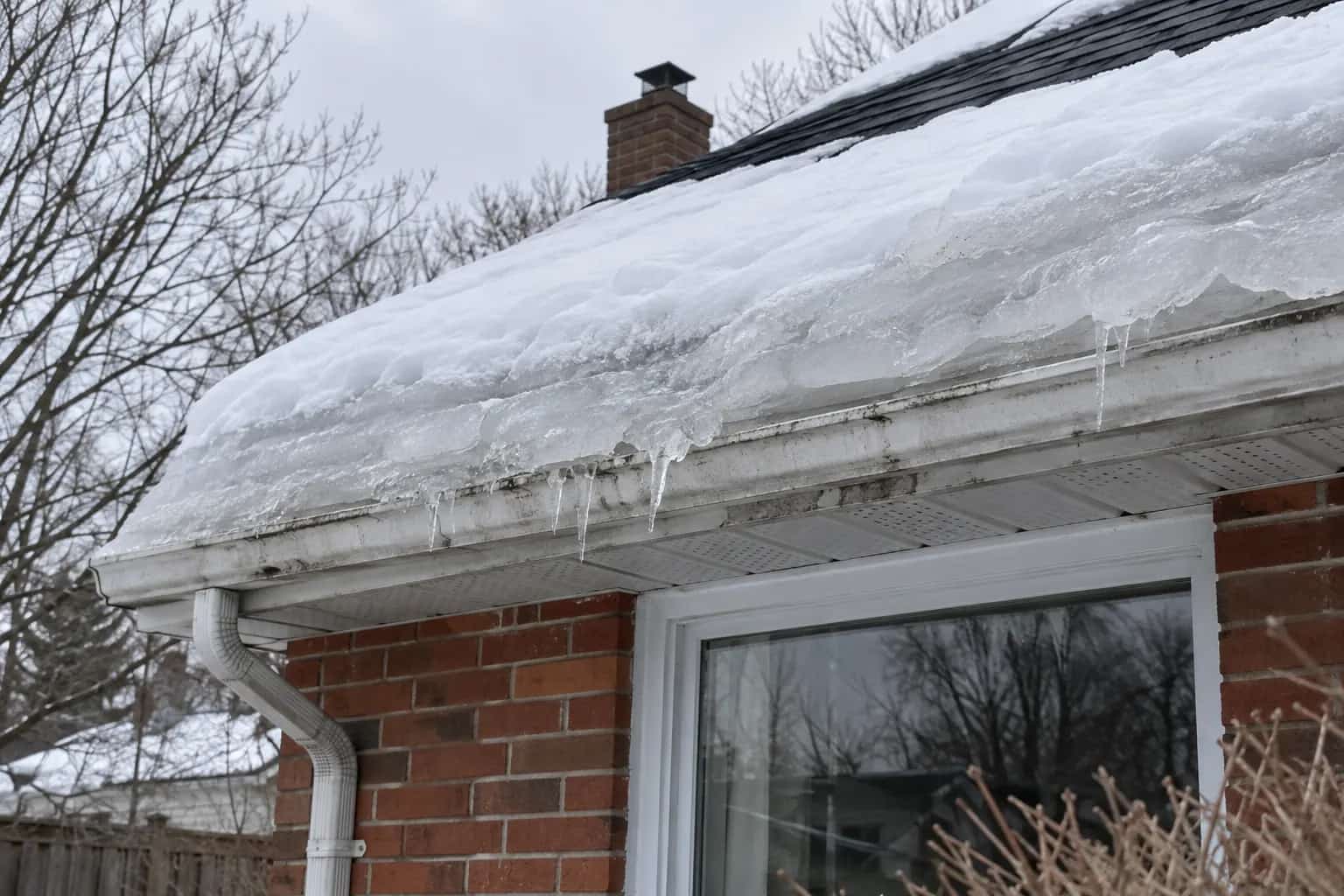
The back door is offered as the easy solution to ice above the front entrance. Then the homeowner points out the frozen side gate. Her father uses a walker. The back step is high even in July.
"Right," Mike says. "We need an actual route, not just another door."
Icicles above an entrance are an access problem first. Keep people away from falling ice and arrange safe removal where necessary. If there is no safe usable exit, describe that clearly when seeking urgent assistance. Do not stand below the icicle to knock the point off and hope the rest stays put.
Make the alternate route genuinely usable
On the route sketch, the gate is now marked along with the rear step and the light switch. Those ordinary details decide whether the plan works for this household. A courier arriving after dark also needs directions before reaching the affected eave, not a note waiting on the hazardous door.
Check the route for ordinary winter hazards: steps, poor lighting, an icy side path or another overhanging roof. Consider anyone who uses a mobility aid or cannot manage a high rear step.
Do not lock or obstruct required exits while trying to keep people away from the problem. If safe access cannot be maintained, seek local emergency or building-safety guidance.
Tell delivery services where to leave items. Move bins or other routine destinations away from the fall zone when that can be done safely. The household may remember the ice; a courier arriving for the first time will not.
Plan the trip from the street
Have the removal contractor establish the affected area; do not choose a universal safe distance from the length of the icicle. Put any directions where a visitor encounters them before entering that area. Keep a telephone contact available for someone who cannot use the alternative. If there is no safe usable route, describe that clearly when arranging urgent assistance.
Avoid a small-removal experiment
Icicles may be attached to a larger ice mass at the gutter or roof edge. Breaking one can release more material than expected or damage a drainage component. A warm afternoon can also change the attachment without warning.
CNESST's snow-removal guidance emphasises controlling the area below work and accounting for sudden release. Use a contractor with a plan for safe access, falling material and protection of the roof.
Tell the crew about electrical wires, gas or heat-pump equipment, basement stairwells and neighbouring paths. These details affect how removal can be managed.
Meltwater meets the colder overhang
House heat can contribute to melting higher on the roof while the projecting eave stays cold. Refreezing there can produce ice and backup; an icicle alone does not identify the heat source.
Schematic view. Shows relationships, not installation dimensions.
Icicles do not diagnose the attic by themselves
Icicles show that water reached a freezing edge. They do not, on their own, prove a particular insulation defect or establish the size of an ice dam behind them.
The cause may involve weather, sun, drainage, roof geometry and heat reaching the roof. GAF's ice-dam discussion explains why accumulated ice can affect gutters and roof materials.
Removal is the first appointment
Once conditions permit, have the gutter, outlet, roof edge and relevant attic details assessed. Damaged attachments, disturbed flashing and wetted interior materials need attention even after access is safe again.
If the problem returns above the same doorway, discuss a lasting access and drainage solution rather than repeat emergency removal indefinitely. On a metal roof, snow-retention design may also be relevant.