
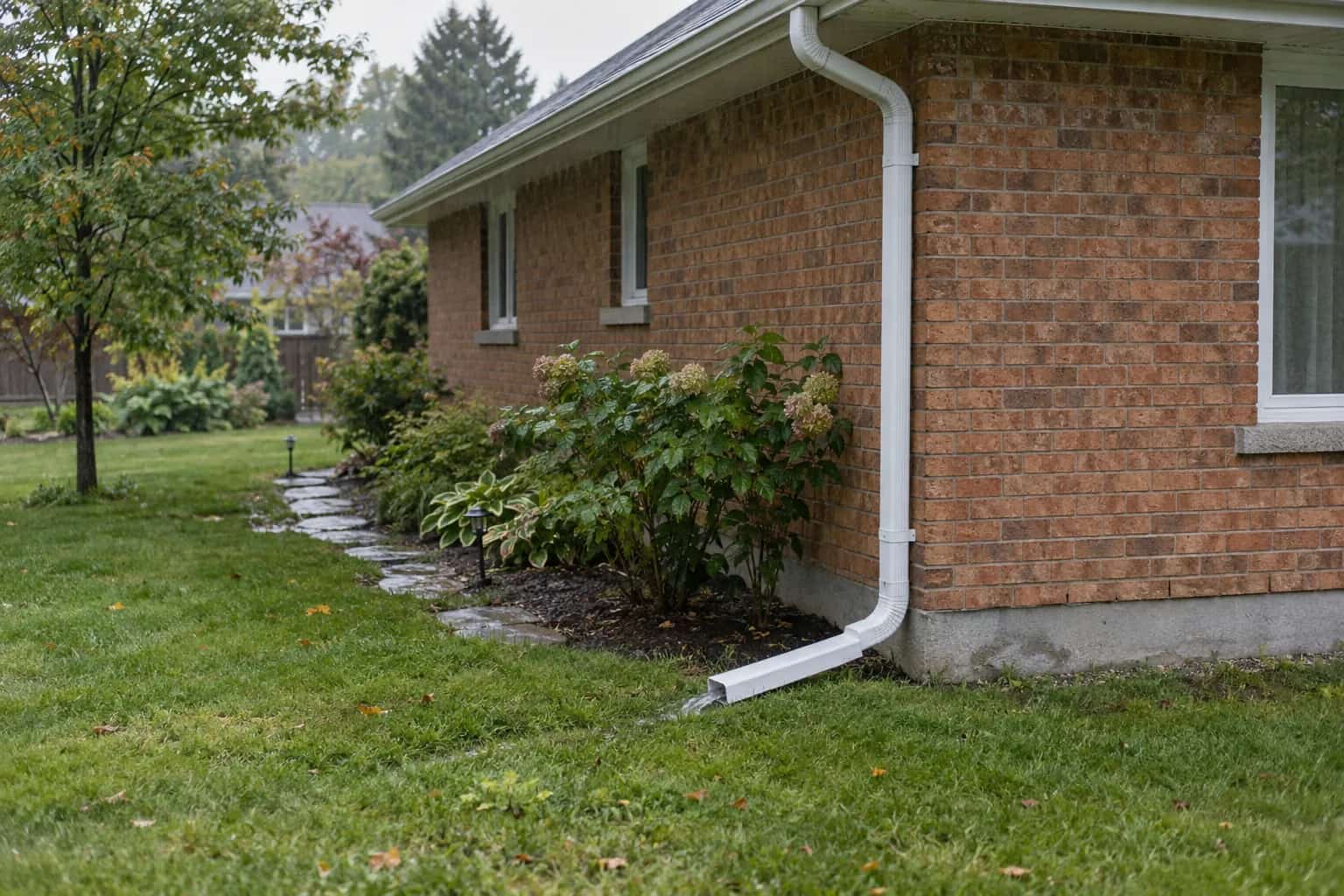
The gutter-cleaning receipt was perfectly clear. The yard grate was not. Leaves sat over one side while water spread around the other.
"Roof done," Pat said.
Dave followed the stream across the paving. "Water has another appointment."
We started at the receiving inlet instead of sending someone back up to clean the same gutter again. The next question was who owned the little grate and what lay beneath it.
Treat a catch basin as a maintained part of the drainage system, not a hole that looks after itself. Establish ownership and outlet information before arranging service. A private yard drain and the City's street catch basin can look similar while having different maintenance responsibilities.
A Grate Is Only the Entrance
A catch basin receives surface water and connects it to a drainage route. The visible grate can catch leaves or litter. Below it, accumulated material, damaged piping or conditions farther downstream can also affect performance.
The distinction changes the work. Removing a leaf mat from the surface may restore the inlet. It does not prove that the outlet pipe is clear or that the system has adequate capacity for a changed site.
Suppose a downspout was moved during a new roof installation and now sends water toward the grate. That additional inflow matters even if the basin itself was untouched. Give the service contractor the change history, not only a photograph of today's puddle.
The Grate Is Only the Entrance
This basin has a sump below its side outlet, where sediment can settle. Clearing the grate does not clear the outlet pipe or establish where that pipe leads. Sump space is not proof of adequate storm storage. The destination, condition and capacity need their own checks; do not enter a basin.
Conceptual drawing. Product details, dimensions and attachment requirements are not shown.
Confirm Whose System It Is
Toronto's catch-basin page distinguishes City-property installations from drainage requests on private property. For a public catch basin in Toronto, the City provides a 311 reporting route. Do not assume that reporting a private inlet automatically books a municipal cleaning visit.
Check property documents, condominium responsibilities where relevant and any drainage easement information. A basin within one yard may form part of a route serving more than that yard. If several properties contribute, establish who coordinates access and maintenance rather than blocking the inlet to stop someone else's water.
For other municipalities, use their current reporting service. Record the location precisely: a wide photograph showing the house or street context is more useful than a close-up of an anonymous grate.
Observe Without Opening a Hazard
From safe ground, note whether water passes through part of the grate, whether the entire surface is covered with leaves and whether water is rising from it. Keep people away from a broken, loose or sunken cover. Toronto advises avoiding flooded areas and reporting damaged grates; removing heavy covers or entering a chamber is not homeowner maintenance.
A clear-looking grate with continuing ponding calls for investigation beyond the surface. Do not push a rod blindly down the opening or flush the system with large amounts of water. That can shift debris without resolving its destination and may worsen an existing backup.
If safe, photograph the inlet after the water recedes as well. A sediment line or recurring deposit helps show where runoff arrives. Include the downspout, nearby garden and any new paving that feeds it.
The location description on the first service message was "drain at the side". We replaced it with a wide photograph showing the gate, downspout and grate together. No dramatic detective work: just enough context to prevent someone arriving at the street catch basin and declaring the wrong drain clear.
Ask for a Service Finding You Can Use
A useful inspection separates the inlet, the basin and the downstream pipe. Ask what was removed, what was inspected and what remains uncertain. If a camera investigation is proposed, establish the accessible route and what question it is intended to answer.
Keep the cleanout record and any located pipe drawing. "Drain cleared" is a weak record if the contractor only removed leaves from the grate. Conversely, a detailed pipe report should not distract from a garden bed that immediately washes soil back into the inlet.
Toronto's basement-flood prevention guidance includes maintaining drainage routes. For a household, an appropriate plan can be quite compact: who checks the inlet, who carries out deeper servicing, and what visible change triggers a call. The interval should fit the system and local debris conditions.
Keep the Next Blockage From Arriving
Do not sweep soil, sand, roof debris or garden waste into the grate. After nearby landscaping or reroofing, have the receiving inlet included in cleanup. A clean driveway is not a complete result if its debris has been moved underground.
If water cannot reach the grate because a border or raised surface blocks the approach, read about side-yard swales. If the grate serves a sloping driveway, garage-entry runoff needs a wider assessment of levels and overflow. A functioning inlet is one connection in that route, not the whole route.