
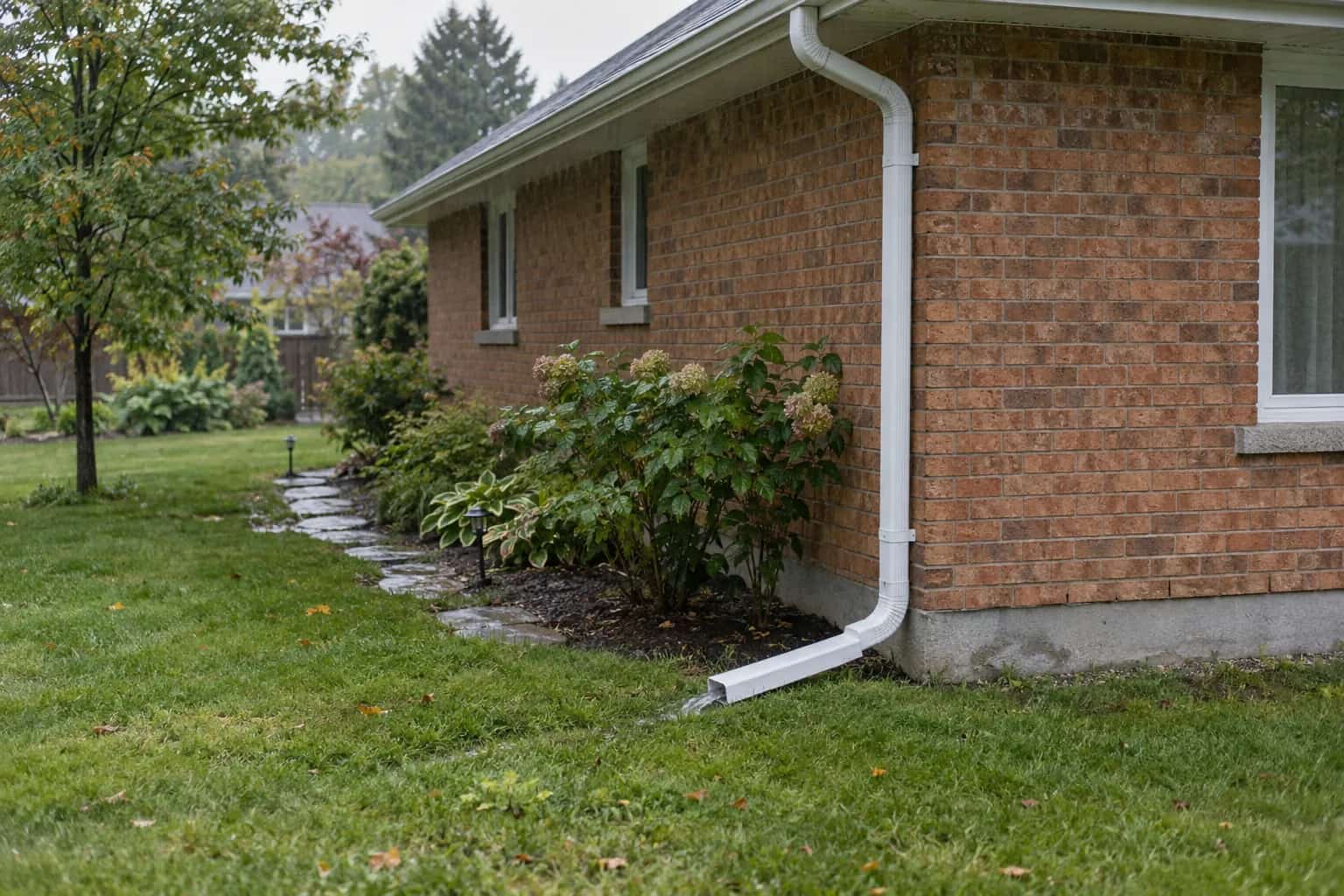
A new garage-door seal lay on the workbench. Outside, the driveway sloped toward the door and a downspout fed its upper corner.
Pat pointed at the seal. "We can make the last few millimetres better."
Dave pointed uphill. "There is rather a lot happening before the last few millimetres."
We kept the door repair on the list. We moved the start of the investigation farther up the driveway.
Separate water arriving from the roof from rain falling on the driveway, then inspect the levels that bring both toward the garage. A reverse-slope driveway, where the entrance is lower than the street, needs particular attention. Adding a drain is a possible design response, not a substitute for knowing its outlet.
Find the First Contribution You Can Change
Watch from indoors or another safe location during suitable rain. Does the stream begin beneath a downspout? Does gutter overflow land on the driveway? Or does water arrive across the full width from farther uphill?
Record these as separate arrows on a sketch. Include a side path or neighbouring higher surface if it visibly contributes, without assuming you have authority to alter it. A short video showing the source and direction is more useful than filming only the final puddle.
Suppose the main driveway slopes toward the garage but a rear roof leader also empties onto its upper corner. Correcting that leader may remove one contribution. It does not change the driveway's geometry or guarantee the remaining surface water can be handled. The quote should distinguish those outcomes.
A Low Garage Is a Site-Drainage Problem Too
Public Safety Canada's grading guidance specifically identifies reverse-slope driveways as needing special flood-protection attention. A professional level assessment should relate the street, driveway, garage floor, threshold and any existing drain.
Ask where water goes when the usual drainage route is unavailable. If the only next-lowest opening is the garage, that matters before a contractor promises that a new grate will solve everything.
Raising a strip of paving or adding a small hump can also move water sideways toward a wall, walkway or neighbour. Have that redirected route shown. The useful comparison is between complete drainage arrangements, not between attractive threshold products.
Separate the Sources Before Choosing a Drain
Identify roof inflow separately from water arriving across the paving.
Roof contribution
Identify downspout discharge or gutter overflow reaching the driveway.
Driveway contribution
Map direct rainfall and any uphill surface inflow.
Intercepted water
A drain needs an established, suitable outlet and maintenance access.
Excess water
Check what route remains when normal drainage is exceeded or blocked.
A Channel Drain Needs More Than a Slot
A channel across the entrance can intercept water, but its capacity, grating, outlet and maintenance access must suit the site. Ask where its pipe discharges and whether the receiving system is permitted and capable of accepting it. A line on an estimate saying "connect to existing" should identify what existing means.
Consider leaves, road grit and winter conditions at the inlet. A long grate can still be obstructed. Access for cleaning must remain practical once the car is parked and the snowbanks are in place.
If an existing private catch basin already serves the driveway, investigate it before duplicating it. Surface debris, a downstream obstruction and an undersized or poorly positioned inlet call for different work. A second grate connected to the same unresolved restriction may add very little.
The proposed channel drain looked reassuring across the sketch. Then the line leaving it ended at the words "existing drain". Dave circled those words. A new grate connected to an unexplained old restriction would be a handsome way to have the same argument next spring. The outlet had to earn its place on the drawing.
Keep the Door Repair in Its Proper Place
A damaged bottom seal, distorted door or deficient threshold can need attention. Have the door contractor assess those details without treating them as a flood barrier unless the system is specifically designed for that role.
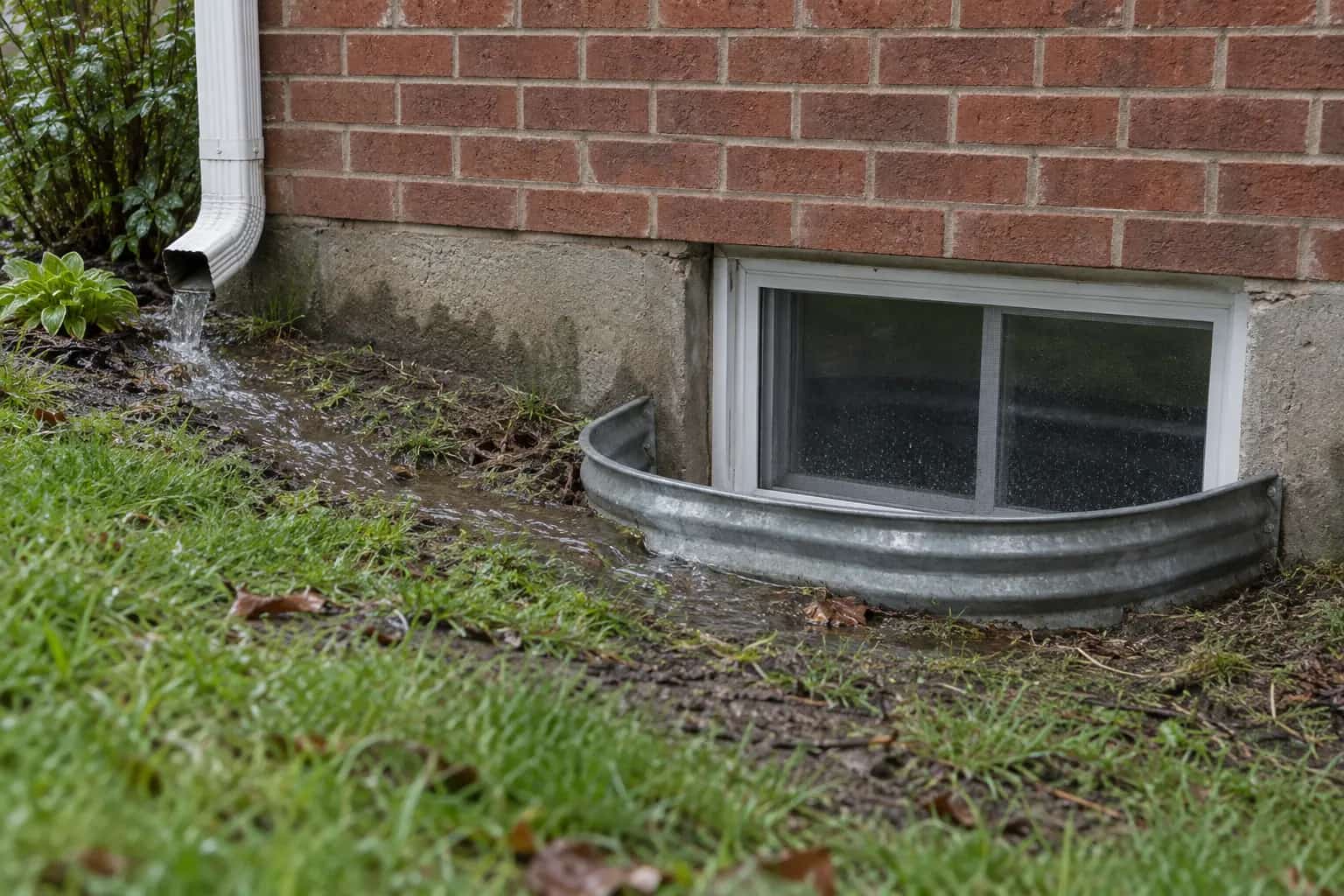
Do not block intended wall drainage or ventilation openings with sealant. If water has reached the garage interior, check affected finishes and anything stored at floor level after safe access is established. Water near electrical equipment needs electrical assessment, not a mop and an extension lead.
For roof discharge changes in Toronto, the City's disconnection guidance requires a safe receiving route that avoids harm to neighbouring property and direct discharge onto a City sidewalk. Other municipalities set their own conditions. Redirecting the pipe to the pavement is not automatically an acceptable shortcut.
Compare the Scope Against the Observations
Before work starts, list which route each part of the job addresses: roof overflow, downspout discharge, driveway fall, inlet or door detail. Keep any unresolved route visible in the agreement.
At completion, preserve the level drawing and outlet information. Observe the same approach during later suitable rain, without stepping into flowing water or traffic. If the garage stays dry but a new stream crosses the entrance path, the result still needs review. See keeping downspout water off walkways for that adjoining decision.
The seal still had a job. It simply did not get promoted into the entire drainage department.