
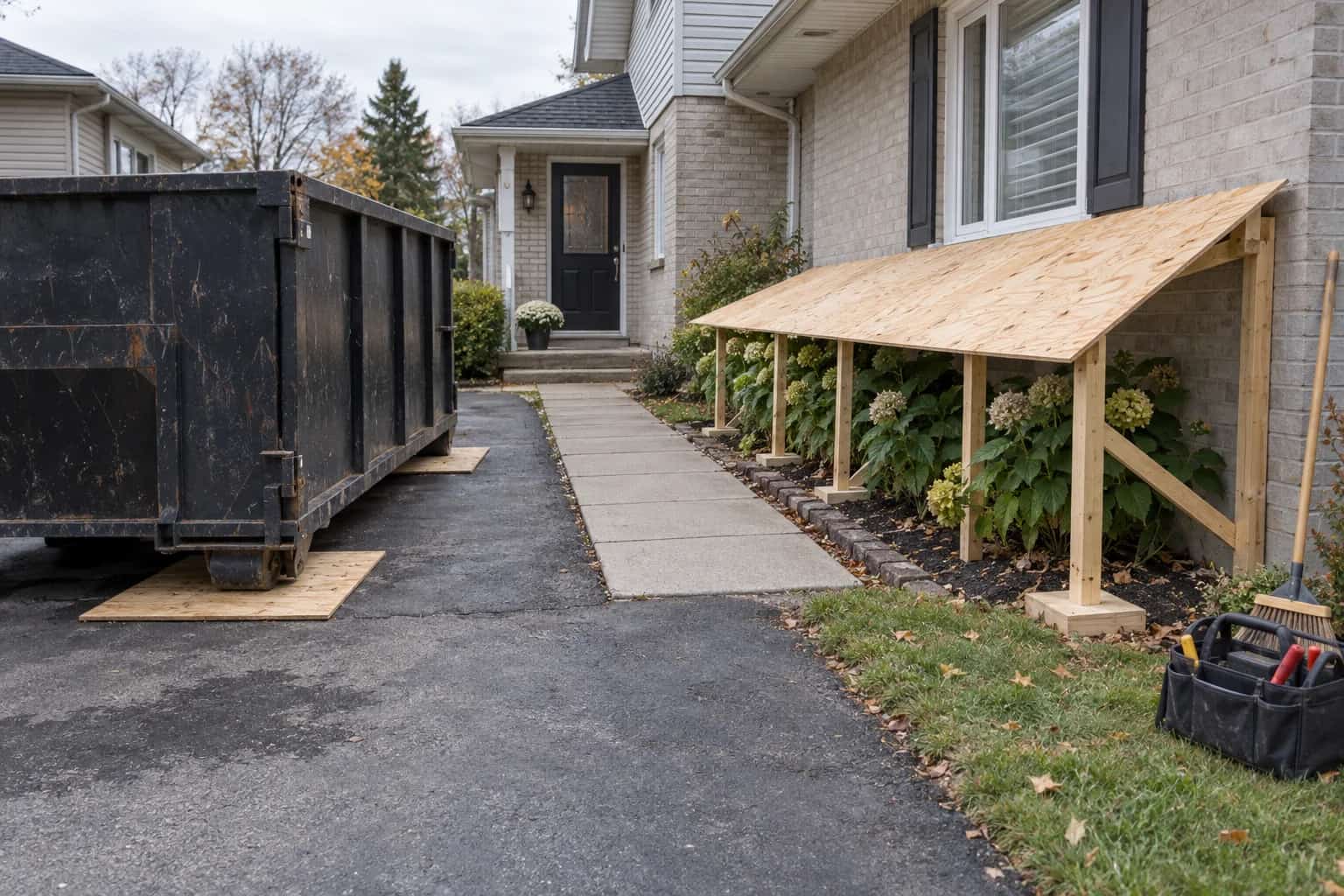
Pat is ready for the final ground check. The bin is still occupying a large rectangle of driveway. The homeowner spots the omission before he says anything: "And underneath that?" Cleanup needs stages, including a pass after equipment moves. One tidy-looking sweep cannot inspect ground nobody can reach yet.
Old roofing produces more than nails. Shingle fragments, plastic, wood splinters and metal offcuts need to be found too. Some are not magnetic, and some sit where a sweeper cannot pass effectively.
Start With the Debris Route
Ask how removed material travels from the roof to the bin. The route below active tear-off, the loading area and the path used by workers deserve particular attention. A sweep only along the driveway centre misses many likely locations.
IKO's preparation guide distinguishes nail-finding equipment from visual inspection for other debris. That is a useful standard to discuss before the job, while cleanup is still a line in the agreement.
Keep the ground accessible where possible. Move loose belongings out of the work area and tell the crew about features concealed by planting.
Beside the flower bed, Dave folds the cover carefully instead of shaking it into the planting. The owner has been watching the magnet; this is the less glamorous part of cleanup. Shingle pieces, plastic and hidden debris need attention too.
Garden Beds Need a Different Approach
Mulch, thick foliage and uneven soil make small debris hard to see. Ask how covers will be lifted and emptied without spilling their contents into the bed. A magnet held over dense growth cannot establish that everything below it has been recovered.
Point out areas used by children or animals and agree a careful final check there. Do not let a familiar garden become the shortcut around the contractor's work zone before cleanup is complete.
If access to a neighbour's property is needed to recover stray material, arrange permission rather than leaving the area unchecked or entering without asking.
A Cleanup Sequence That Reaches the Hidden Areas
Removing large objects creates access for the passes that follow.
Collect bulk debris
Remove shingles, packaging and scraps from covers and work routes.
Inspect visually
Check beds, corners and surfaces for material a magnet cannot collect.
Sweep accessible areas
Use magnetic equipment where suitable and pay attention to edges.
Revisit cleared footprints
Inspect again after the bin and stored materials are removed.
The Bin Footprint Is a Separate Visit
The same blind spot exists under trailers and pallets. Once they move, inspect the newly exposed ground and the route they travelled. Put a name against any later return; "the crew handles cleanup" is too vague if the crew and hauler leave at different times.
The bin-planning guide connects pickup timing with that follow-up. Include any newly exposed route used to remove the equipment, as well as the place where it stood.
The hauler is coming after the roofing crew leaves. Mike assigns the follow-up rather than describing the job as finished and hoping the rectangle sorts itself out. At the walkthrough, the homeowner knows which areas were checked and who to call about a later discovery.
Review the Result, Then Keep Watching
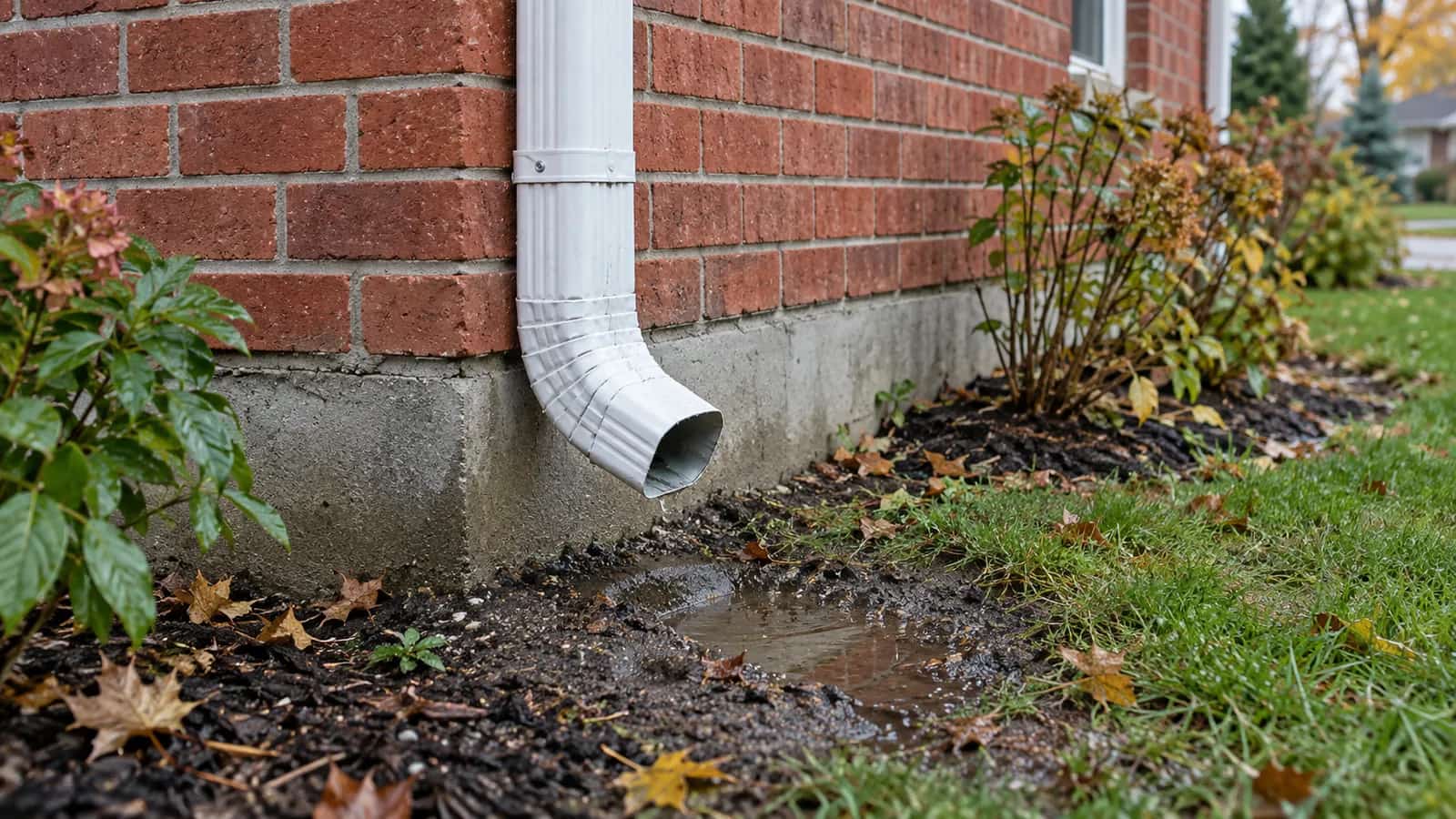
Walk the accessible ground with the supervisor once overhead work has stopped. Wear suitable footwear and keep children and pets elsewhere during the review. Identify missed areas by location rather than saying only that the yard looks messy. Include a contractor check of gutters and drainage components for tear-off debris where accessible and appropriate; homeowners should not climb ladders as part of the walkthrough.
If you find a nail later, photograph or mark the spot and contact the contractor for a follow-up. A single discovery does not tell you how much remains, but it is a reason to check the surrounding area again. Rain and normal movement can reveal material that was previously hidden.
A useful cleanup promise names the areas, methods and follow-up. A promise of zero nails sounds stronger but tells you less about whether the concealed corner beside the shed was ever checked.