
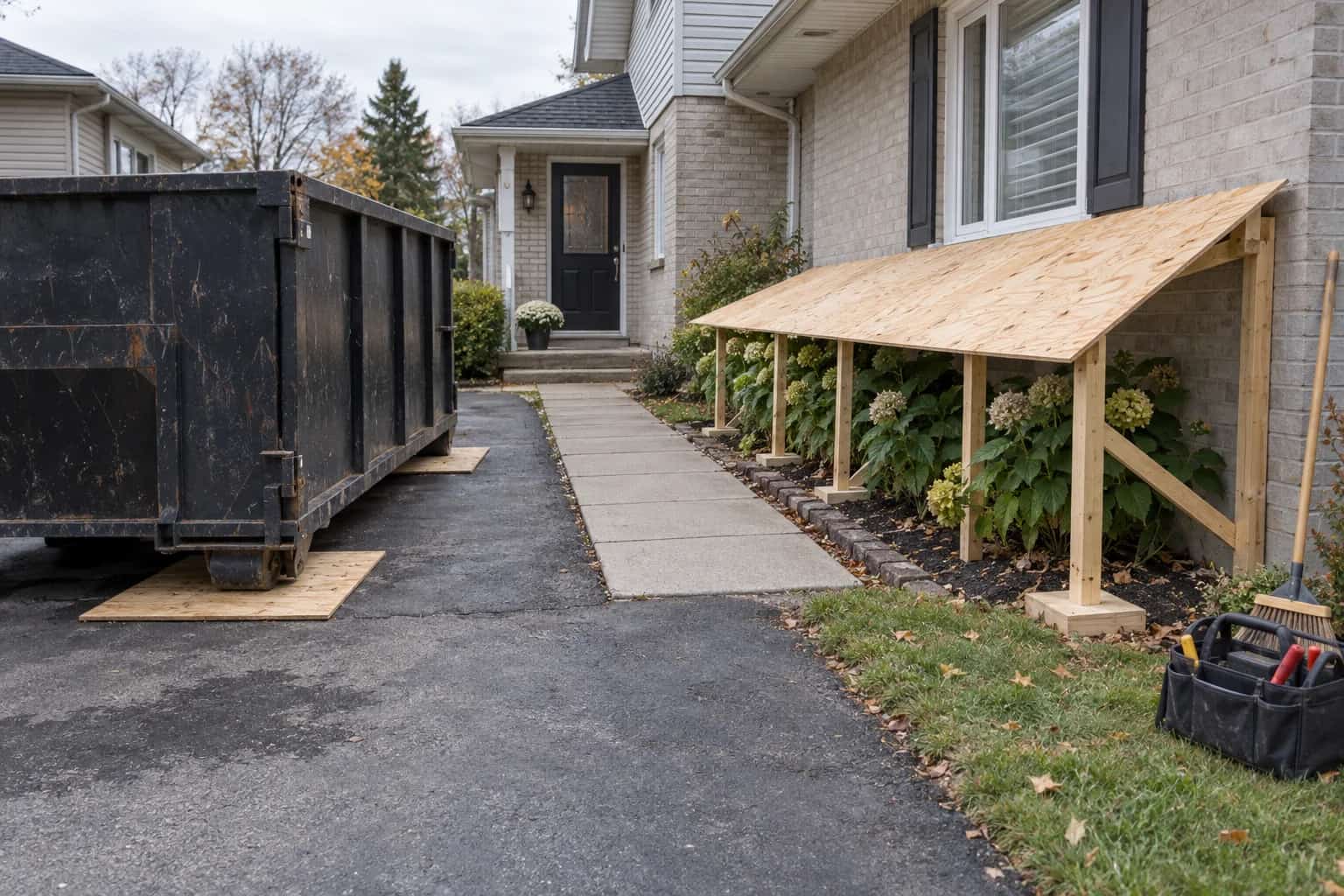
Before the roof comes off, Ruth walks Pat through the garden. She steps over an ordinary patch of lawn and stops at a rather unimpressive twig: a young tree that matters to her. A stranger would have protected the large shrub first. This is exactly why the garden walk comes before the tarps.
The hydrangea cannot move out of the way. The pots beside it can. Separate what can be relocated from what needs supported protection, then choose the debris route around both. A tarp dropped over everything does not make those decisions for you.
A tall hydrangea under an eave, a young tree beside the driveway and a pond hidden behind reeds present different problems. Naming them before the crew arrives gives the contractor a chance to choose a workable setup.
Move What Can Be Moved
Relocate pots, ornaments, furniture, small lights and other loose items outside the agreed work area. Ask where the temporary safe area will be; moving everything from the front wall to the side wall may simply transfer it under another tear-off zone.
Photograph the garden first, including existing damage to edging, paving and fences. The purpose is a shared reference, not an assumption that something will go wrong. Keep the pictures clear enough to show locations.
IKO's preparation guidance includes yard preparation before replacement. A site walk turns that broad advice into a plan for the actual garden.
Shield Fixed Features Thoughtfully
Tell the roofer which plants are fragile or difficult to replace. Protection may need a supported cover that prevents falling material from simply pressing the cover onto the plant. Let the contractor choose a secure method that fits the work and wind conditions.
Ask how long coverings will remain and when they will be removed. Prolonged covering can create its own problems for planting, especially in warm conditions. An overnight weather delay should prompt a check rather than leaving every cover untouched by default.
Do not attach improvised supports to gutters, cladding or delicate trees. The protection should not damage the feature it is intended to save.
Give Each Garden Area a Plan
Protection changes with the type of object and the work route above it.
Movable items
Relocate pots, furniture and ornaments before the crew arrives.
Fixed planting
Identify fragile plants and agree suitable supported protection.
Hidden features
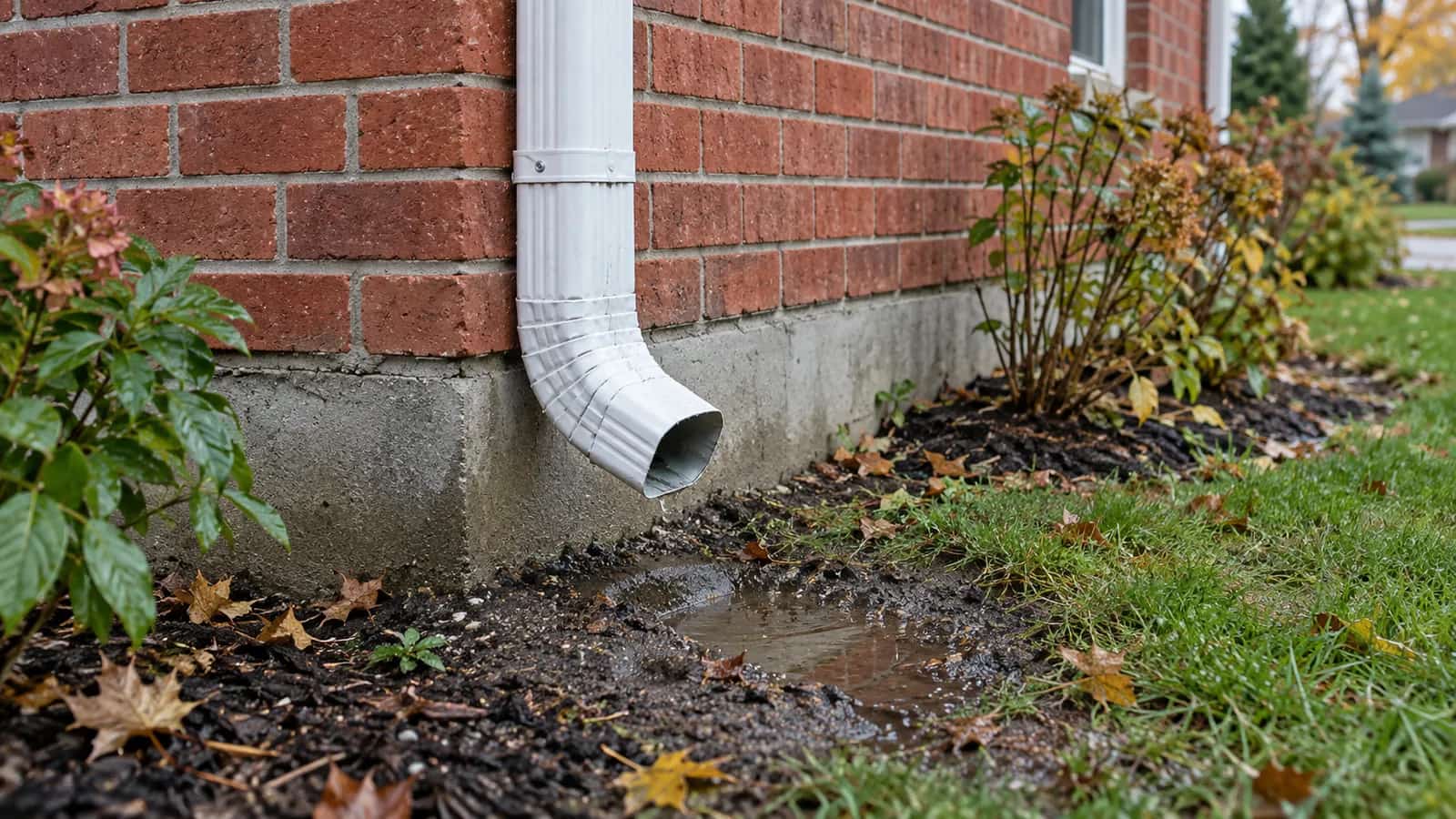
Mark irrigation, lighting cables and ponds so the crew can avoid them.
Debris route
Choose a controlled path to the bin that limits repeated traffic through beds.
Spend the Attention Where Replacement Would Hurt
Ruth adds the irrigation head under the hostas and the pond edge behind reeds to Pat's list. Those are the details a stranger would miss. The roof is the biggest job on the property; it is not permission to treat every small thing below it as replaceable.
They agree on one carrying route instead of repeated traffic through several beds. Ruth has given Pat priorities he can work with, rather than the impossible instruction to touch nothing. That clear route does more for the fixed planting than another loose cover would.
Photograph the agreed arrangement before work starts, while the important features are still visible.
Dave and Ruth move the pots toward the side gate, then stop. That is also the proposed carrying route. Moving something is only helpful if its new address is actually outside the work. The pots get a second, less convenient home for the day.
Mark What Is Easy to Miss
If access crosses a neighbour's garden, obtain permission and agree protection and cleanup first. A convenient route is not automatically an authorized route.
Keep children and pets away from the whole work area. Our household planning guide covers the routines that often bring people back through it.
Plan the Cleanup Before Covering the Beds
Ask how debris will be removed from the covers without spilling into the planting below. Confirm that the garden edges and route to the bin are included in visual inspection and appropriate magnetic sweeping.
Dense planting and mulch can conceal nails, while magnets do not collect every type of debris. A final inspection should combine methods. If a sensitive bed cannot be fully checked immediately, agree the follow-up rather than declaring the entire yard finished.
When the protection comes away, Pat follows Ruth's original list: young tree, pond edge, irrigation head, planting beside the bin route. A magnet is useful, but it is not a certificate that nothing else remains in the mulch. The final walk needs eyes as well as equipment.