

The dog considers the side gate a reliable part of the household. Dave considers it the route for material deliveries. On roofing morning, those two arrangements cannot share one latch. Make pet containment independent of crew movements, and plan children's arrivals as carefully as their time indoors. Transitions are where a workable day can unravel.
Tear-off, deliveries and cleanup move around the building. Gates may open frequently, and small debris can land beyond the area that looks busy at any one moment.
Plan Around the Household's Hardest Hour
Think about naps, school collection, feeding, medication and the dog's usual walk. Mike asks which hour will be hardest. School collection and the dog's walk turn out to coincide with a planned delivery. Moving one arrangement now is easier than holding a family meeting over the compressor later. Arrange a family visit, sitter or alternative care where that makes sense for the household.
If an animal is particularly distressed by construction noise, discuss arrangements with its usual care provider or veterinarian beforehand. Do not improvise medication because the roof is loud.
IKO's replacement preparation advice recommends considering alternative arrangements for children and pets. The details should fit your household rather than a generic assumption that everyone can simply leave for two days.
Gates Are for the Crew, Containment Is for You
Tell the supervisor which gates normally keep animals in. Do not rely on a busy roofing team to maintain a pet boundary every time materials pass through it. Use an independent secure indoor area or arrange for the animal to be elsewhere.
Remove outdoor bowls, toys, litter equipment and bedding from the working area before the crew arrives. If you must take a pet outside during the job, coordinate a safe route with the supervisor. Do not cross under active overhead work to reach a familiar patch of grass.
A Household Route Through Roofing Day
Plan the transitions when doors, gates and outdoor areas are most likely to be used.
Before arrival
Move toys and arrange care or a quiet indoor room.
During work
Keep children and animals away from gates, ladders and debris zones.
Coming home
Contact the supervisor before crossing the site.
After cleanup
Wait for the agreed inspection before reopening the yard.
Rehearse the School-Pickup Moment
An adult collecting a child may arrive while the front roof is being stripped and the normal door is inside the work zone. Pat raises the other possibility: a teenager arriving with headphones and taking the usual route without looking up. Familiar routines do not automatically update because a truck is parked outside. Tell them the agreed route in advance and give them the supervisor's contact.
For a dog walk, have the leash and other essentials ready in the safe indoor area before the crew starts. That avoids opening doors or crossing the yard repeatedly to fetch one forgotten item.
The plan need not fill a page. One entrance, one contact and one clear rule about staying out of the work zone are easier for everyone to remember.
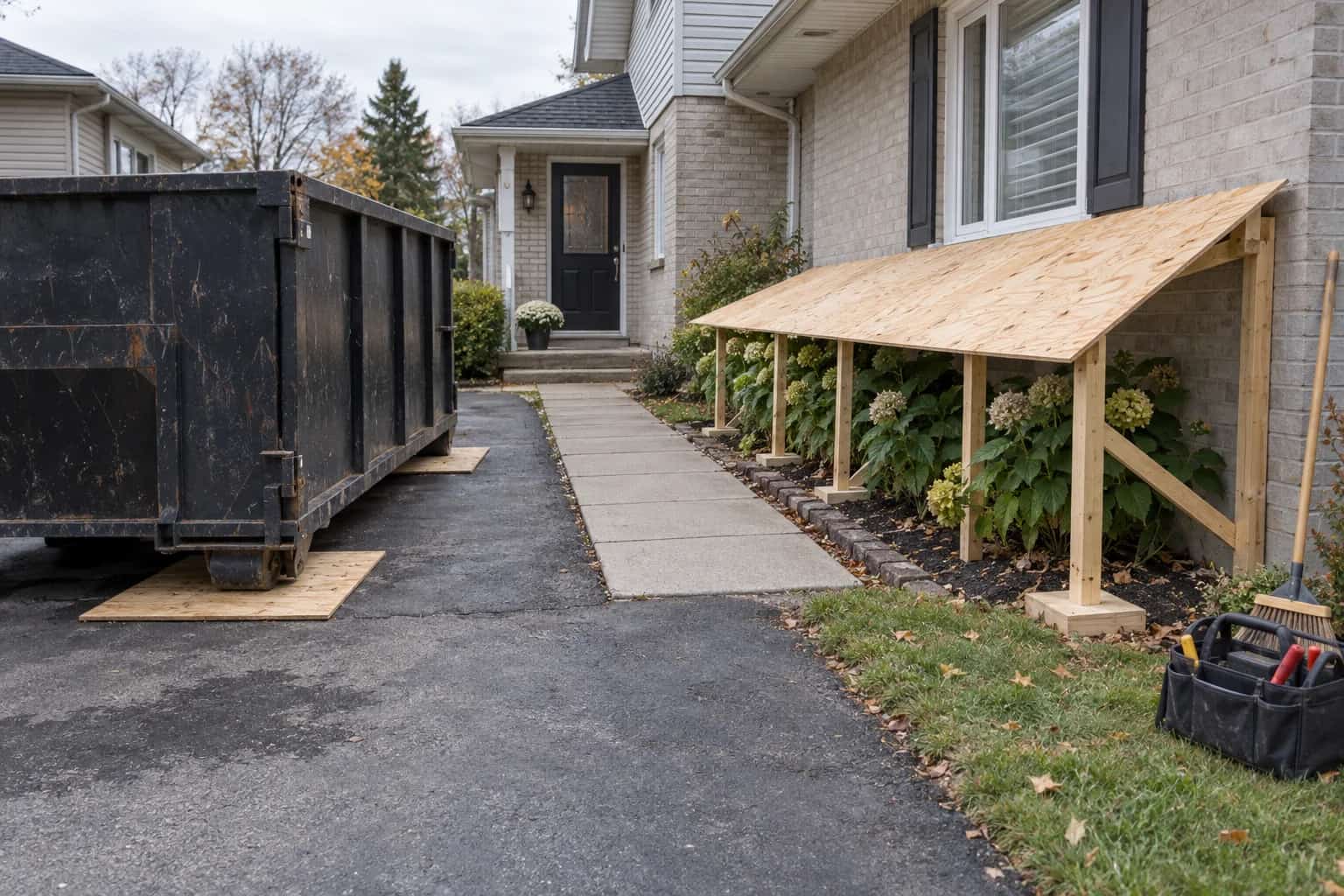
Make Arrival Instructions Specific
For deliveries, leave clear instructions that keep drivers away from the work zone. Essential care visits need advance coordination, not a note stuck to a blocked door after setup.
Inside, create a comfortable room with the items people or animals need, while keeping normal safe exit arrangements. A closed door helps separation; it does not eliminate roof noise.
The Yard Reopens After Inspection
Nails, shingle fragments and packaging can remain after the loud work ends. Wait for the contractor to finish cleanup and confirm the areas inspected before allowing children or pets to roam.
Our nail-cleanup guide explains why magnetic sweeping is only part of the process. Garden beds, under-deck edges and narrow side passages need particular attention. Shoes are sensible, but they are not a substitute for removing debris.
If a sharp object appears later, keep people and animals away from the spot and arrange a follow-up check. Dave agrees a clear handover with the household. Quiet means the nail gun has stopped; it does not mean the lawn has been checked. The yard reopens after the agreed cleanup.