

The first scrape overhead answers the work-from-home question rather quickly. You may be able to stay inside; your video call may not appreciate it. Decide around noise, safe access and the people at home, not simply whether the house remains occupied.
Ask about the actual work planned over the rooms you use. Replacing shingles above a bedroom feels different from work over a detached garage. Deck removal or major structural work can change the answer, so do not treat staying home as automatic permission for every project.
Expect Noise Through the Building
Scraping, footsteps, material movement and fastening transmit through the roof structure. Moving downstairs can help, but it will not turn the house into a quiet office. Headphones may make a call possible without making the microphone forget the nail gun.
IKO's preparation guide recognizes noise and vibration as part of the disruption. Use that as a reason to plan, rather than discover the problem when your meeting starts.
Keep an Exit Available
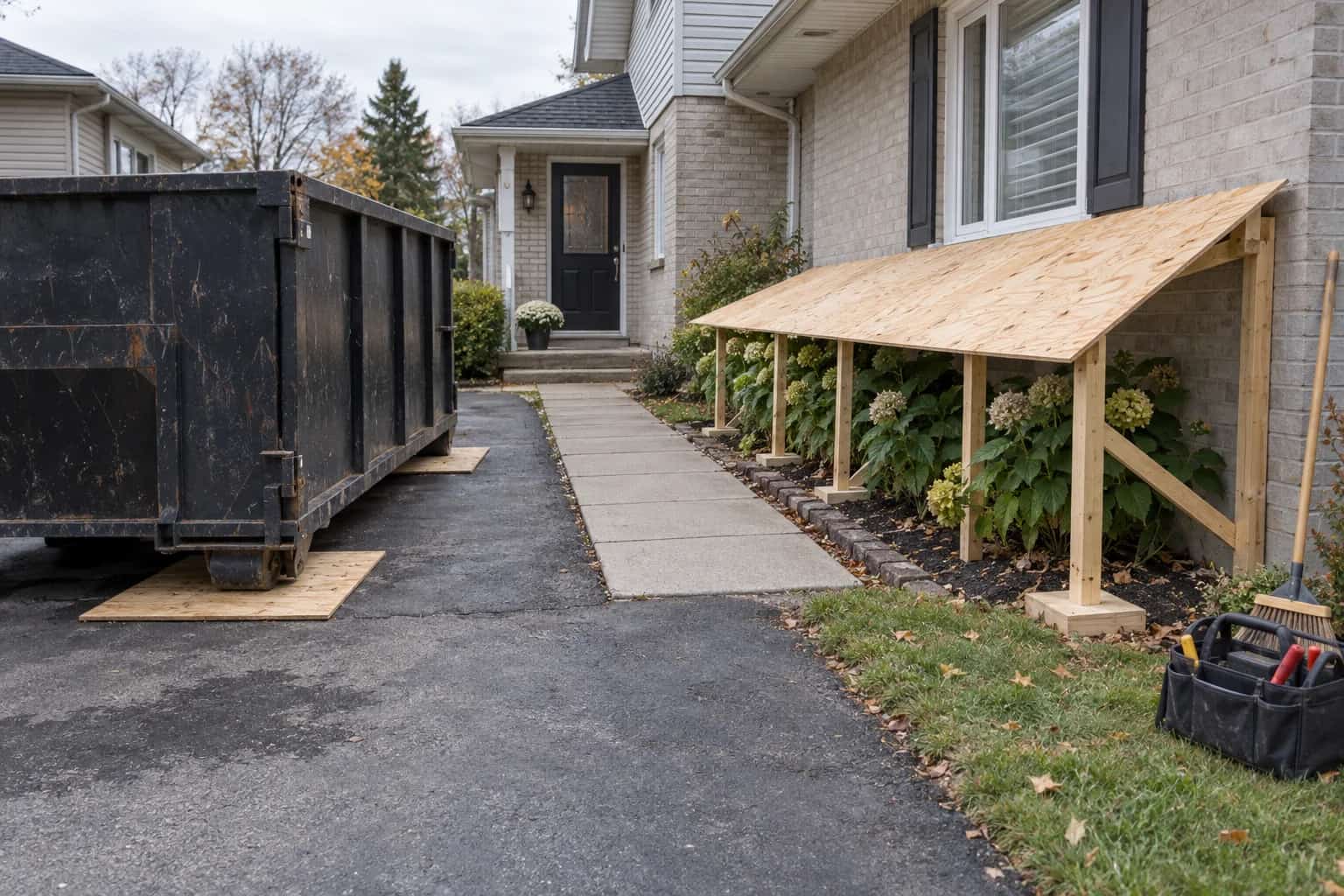
Agree which door household members should use and how to contact the site supervisor before entering an active area. A bin, ladders and falling-debris zone can make the usual route unsuitable.
Tell the contractor about mobility requirements, deliveries and scheduled care visits. Safe emergency access must remain part of the site plan. Do not accept an arrangement that relies on stepping over equipment or walking beneath active tear-off.
Move the car before deliveries arrive. A car inside the garage may be inaccessible once the driveway is occupied, even though it appears safely parked.
Choose a Workday Arrangement
Base the decision on the people at home and the access the contractor can maintain.
Stay inside
Suitable when noise is tolerable and safe entry and exit can be maintained.
Leave for work hours
Useful for calls, sleep, sensory needs or household routines that cannot absorb the disruption.
Arrange extra support
Plan assistance when mobility, medical equipment or care visits make access more complicated.
Choose the Disruption You Can Live With
- Quiet work or daytime sleep: a day elsewhere may save more trouble than repeatedly changing rooms.
- Ordinary household tasks: staying can be workable if the agreed entrance remains usable and noise is tolerable.
- Care visits or mobility needs: settle the access arrangement before delivery, including whom to contact when someone arrives.
Leaving and staying both require a reachable decision-maker. The less useful arrangement is leaving without a phone contact, then returning to find the crew waiting for approval on exposed deck repairs.
If roofing odours enter occupied rooms, use a product, exposure and air-route investigation rather than assuming every new-roof smell is harmless.
Prepare the Rooms Below
Secure fragile objects that could be affected by vibration, especially on upper floors. Record existing ceiling cracks or stains if you are concerned about distinguishing old conditions from new ones. Photographs should be dated and clear rather than a hurried video of the whole house.
Ask whether any interior access is required for attic inspection, ventilation work or a skylight. Agree how access is arranged and who will be present. Routine reroofing should not leave you guessing why someone needs to enter.
Leaving Does Not Mean Becoming Unreachable
Give the supervisor a reliable phone number and a backup contact. If deck damage is uncovered, a timely decision may be needed. Discuss any limited pre-authorization in advance rather than approving an undefined extra while distracted.
Children and pets need their own plan, especially when gates are in regular use. If you return while the crew is working, call before driving or walking into the site.
When returning, confirm which routes are clear and whether cleanup is complete. The quiet after the crew leaves is welcome; it does not, by itself, mean the yard is ready for bare feet or a dog walk.