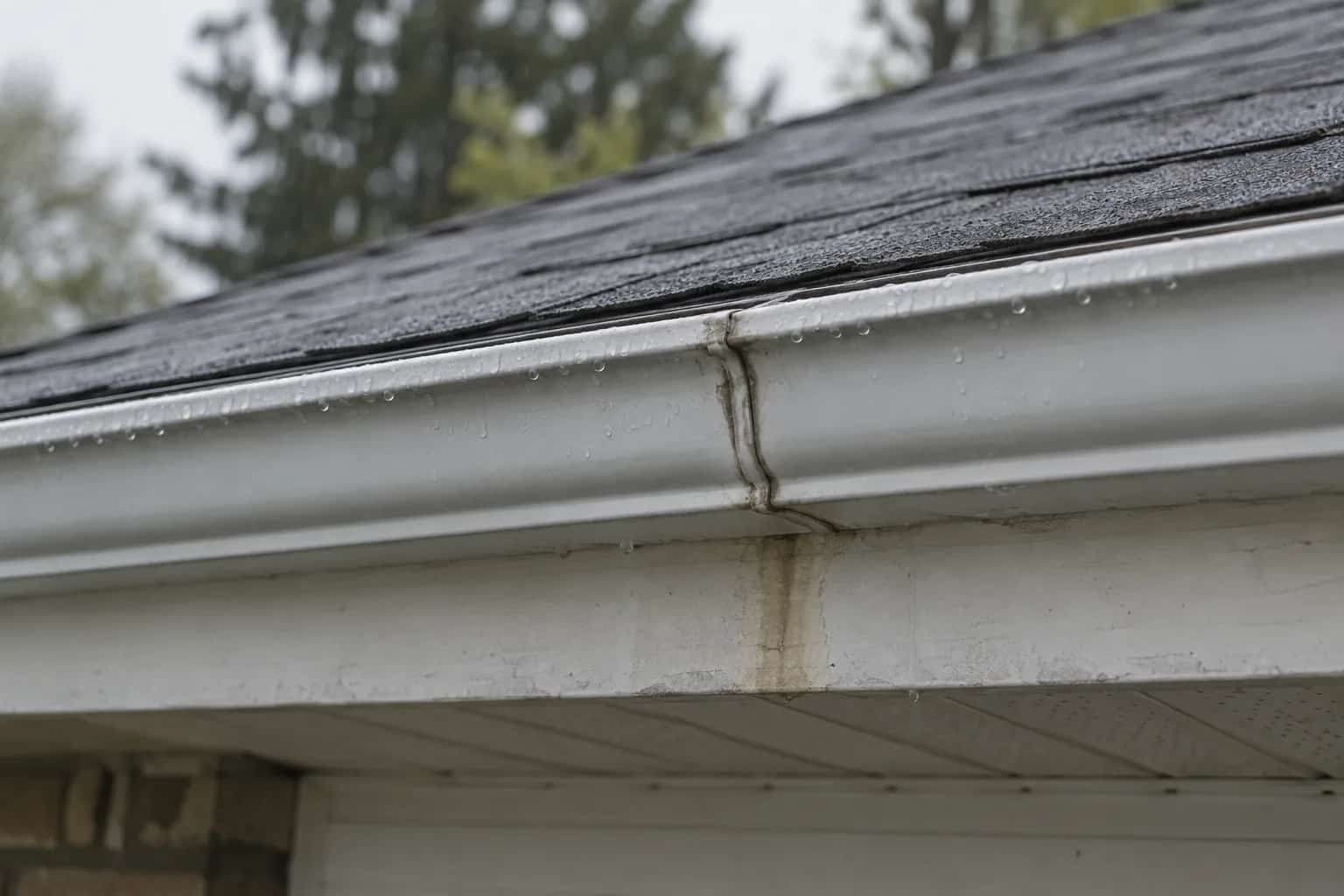
The patio chair sits beneath the only dripping corner. It has moved twice. The gutter has been resealed three times. Neither household nor gutter seems satisfied with the arrangement.
Pat looks at the repair history. "What changes this winter?"
That is more useful than choosing another tube. A gutter seam repair needs to match the metal's condition, the fit of the joint and the movement at that location. Sound metal with a failed seal may need a modest repair. Missing metal, poor support or a trapped long run needs a different answer.
Three Different Repairs
A separated seal in otherwise sound metal calls for a properly prepared joint and compatible sealing system. A distorted corner fitting may need replacement because its mating surfaces no longer fit. Metal with pinholes, crumbling edges or broad corrosion needs a repair assessment beyond surface sealant.
For an aluminium joint, the proposed sealant needs both material compatibility and appropriate preparation. Sashco's Through the Roof technical sheet lists aluminium among suitable substrates and requires removal of loose material and old caulk, including silicone residue. It also gives application and curing limitations. The name of a flexible sealant does not excuse a dirty joint or repair unsupported metal.
If the trough is sound and the concern is dark exterior streaking, compare finish-safe cleaning with replacement before buying new gutters.
Two Quotes, Two Different Assumptions
One quote says reseal; another says replace the corner. Before moving the chair a third time, ask both contractors to show the condition they are pricing. If one has found a pinhole under an old patch and the other has not looked beneath it, the prices are answering different questions.
If both contractors are describing the same sound corner, ask what the larger scope achieves. If the metal is actually damaged, a more thorough preparation and another bead cannot restore it.
The least expensive useful repair is the one that fixes the identified defect. Repeating a cheap bead every autumn can cost more than replacing one failed fitting once. That does not make wholesale replacement necessary; it makes diagnosis worth paying for.
The repair proposal should identify the gutter material, the sealant or joint method, and the manufacturer's preparation requirements. Old incompatible material, dirt and water can interfere with adhesion. Application temperature and curing conditions also matter. There is no universal promise that every product can be applied during an October shower.
Copper joints may involve soldered work and need someone familiar with that system. Vinyl connectors can use seals and movement allowances that should not be treated like an aluminium seam. Ask what is being repaired, rather than accepting the same answer for every material.
Support it without trapping movement
A seamless aluminium run, a gasketed vinyl connection and a soldered copper assembly cannot share a generic expansion repair. The Copper Development Association's gutter specifications show designed movement arrangements for copper. Their dimensions should not be transferred to another system.
Ask the installer to sketch fixed points, corners, downspout connections and intended movement locations. A run trapped between rigid corners behaves differently from one with a designed free end. Randomly loosening screws leaves insecure support; adding screws everywhere may restrain movement further. Neither is a substitute for the appropriate detail.
The movement connection must still pass water and resist becoming a debris trap. Keep its fabrication or product information and a photograph before the access equipment leaves. A water check establishes immediate drainage. Comparing the same joint after the next temperature change helps assess the recurring failure.
Match the repair to the joint
The failed joint needs a cause as well as a patch.
Sound metal, failed seal
Prepare the joint and use a compatible sealing method.
Distorted or missing metal
Assess fitting or section replacement.
Seasonal recurrence
Inspect support, fixed points and intended movement.
After repair
Check drainage now and compare the same joint after temperature changes.
A Repeat Leak Deserves a Wider Look
A joint that opens again may be moving. A loose hanger, an overloaded run or restricted temperature movement can stress the connection. Keep a dated record if the same corner opens in winter and looks tighter in summer; that pattern is useful evidence for a movement review, not proof of the cause.
Also check standing water. A joint that spends days submerged has a different exposure from one that drains promptly. Fixing a low spot may belong in the same visit, provided the supporting timber is sound.
Watch the repaired location and the fascia behind it during the next rain. If the seam stops dripping but the fascia still gets wet, the repair may have solved one path while leaving another. That is a reason to trace the remaining water, not automatically add more sealant.