
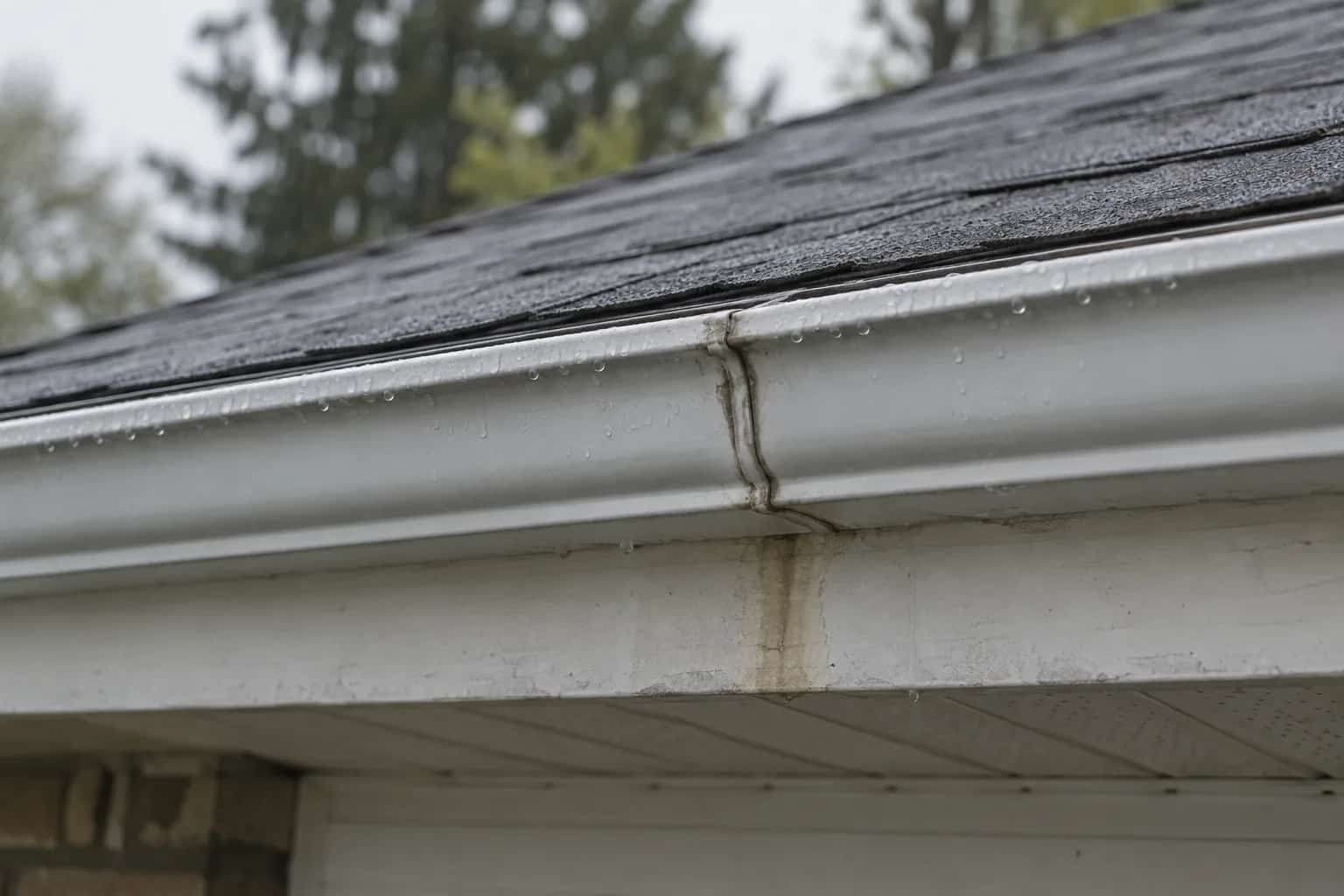
There is a brown streak beneath the cornice, but no ordinary gutter to replace. The trough is tucked inside the roof edge, where the attractive trim hides most of the parts that matter.
A built-in gutter is a waterproofing and drainage assembly, not just a visible seam to seal. Find out what lines it, what supports it and where water can escape if the normal outlet blocks. The exterior drip may be the end of the route. A good repair starts farther back than the paint stain.
The Visible Drip May Be the Last Part of the Route
An external metal gutter is readily recognizable as a separate trough. A hidden gutter can involve a lined channel within the roof-edge construction, with support and junctions concealed by finishes. Water escaping that lining may travel before showing on the underside.
A wet fascia therefore identifies an area to investigate, not a precise hole. The useful inspection follows the lining through corners, seams, changes of level and the outlet connection. It also assesses concealed support where there is reason to suspect prolonged wetting. Painting the stain cannot establish whether that support is sound.
Where Can Water Escape Safely?
The outer lip, the roof-side upstand and any emergency overflow have a relationship. If an outlet blocks, the rising water needs a route that does not send it into the building. A newly lined trough can still have a drainage problem if those elevations are wrong.
BC Housing's construction standards address built-in gutters through lining, slope and overflow-related details. They also reject caulking as a primary roof water seal. These are specifications for BC Housing work, not an Ontario code prescription or a universal material requirement. Their useful lesson for a homeowner is the number of connected details a proper gutter specification addresses.
Ask the contractor to show the intended water level and escape route on a simple section drawing. That reveals more than a product name written beside the word waterproofing.
The cornice paint is peeling and Mike's first photograph shows almost nothing useful. Pat asks where the trough drains. Nobody can identify an emergency escape route from the ground. The attractive trim has been very effective at hiding the part that matters.
Dave separates the inspection into lining, support and drainage. A fresh bead over the visible seam might improve the photograph, but it cannot answer those three questions. The owner gets a scope for the concealed assembly before anyone promises a tidy cosmetic finish.
Follow a Blocked-Outlet Example
Ask the designer to mark three levels: trough bottom at the outlet, intended overflow level and the lowest vulnerable inward junction. The purpose is to show a safe escape before water reaches the building-side opening. This is not a homeowner instruction to cut an overflow hole; the outlet, structure, lining and receiving area need a coordinated detail.
Then compare two quotations. A local lining repair may restore a confirmed isolated hole but leave a high outlet or inadequate overflow unchanged. A rebuild may include those level changes, support repair and reinstatement under the adjoining roof. Neither scope wins simply by being larger. Each should identify the defect it corrects and how the drainage will be checked.
What Happens When the Hidden Outlet Blocks?
Show the backup route as well as ordinary drainage.
Trough bottom
Lining and fall lead normal water to the outlet.
Rising level
A blockage makes the backup route important.
Safe overflow
The designed escape must precede vulnerable inward entry.
Building junction
Lining, roof and concealed support must remain connected and sound.
Compare Repair Scopes at the Same Depth
A useful quotation identifies the existing lining, compatible repair materials, how far the work extends under adjacent roofing, which outlets are included and what happens if concealed deterioration is found. It should explain how opened finishes will be reinstated and how the completed drainage will be checked.
If one price covers surface coating and another includes opening the edge, they are different jobs. Ask what evidence makes the smaller scope sufficient. Conversely, do not assume every hidden gutter requires full replacement merely because inspection is less convenient.
Our ordinary gutter seam guide covers a different assembly and should not be used as a hidden-gutter repair recipe. For this detail, the goal is a continuous, compatible lining connected to working outlets and a safe overflow arrangement. The trim can look exactly as it did before; what matters is what now happens behind it.
The cornice can look exactly the same after a good repair. The difference you are buying is a sound concealed water route, and the record should show it.
