
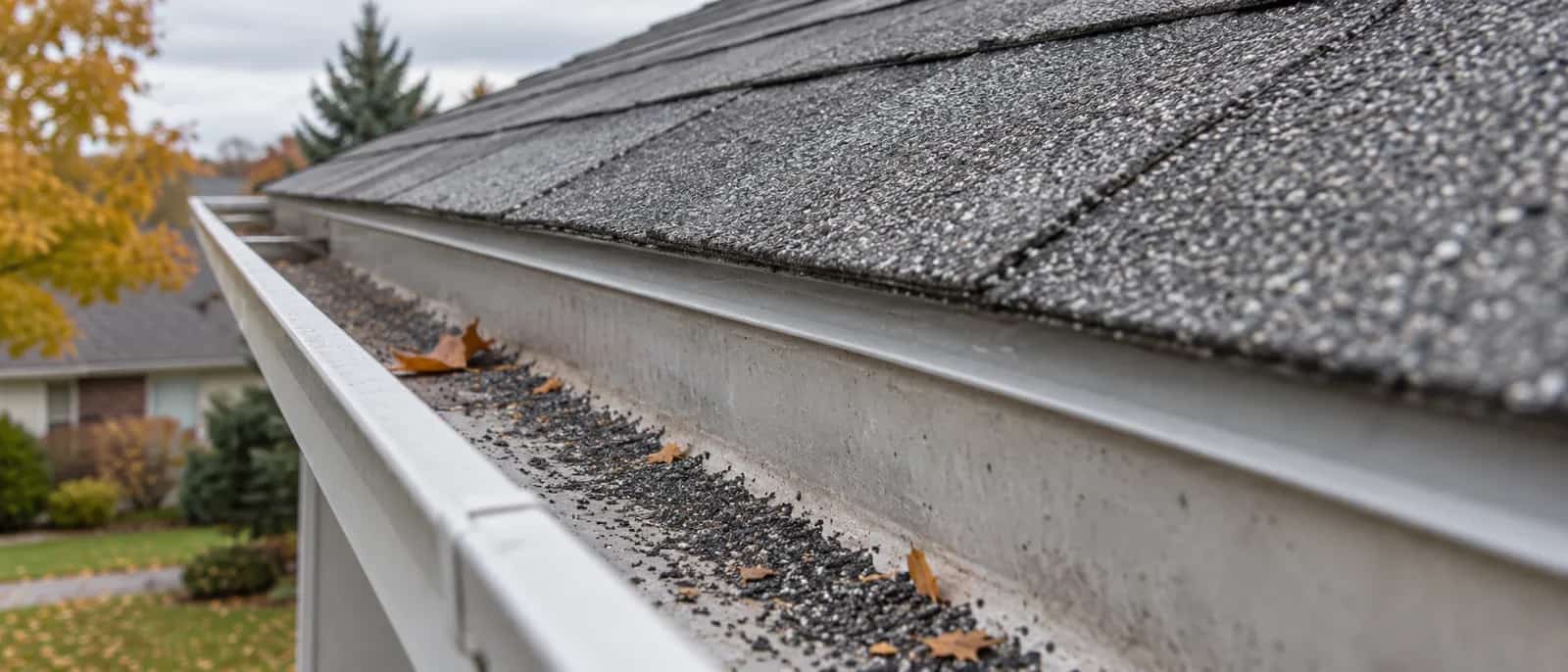
The roof went on in May. Now you move the downspout extension to rake the leaves and find a pile of gritty black specks. You paid for those to stay on the roof.
Some shedding after installation is normal. The useful distinction is between loose surplus granules washing away and the shingles losing their protective surface. The pile alone cannot tell you which is happening.
New shingles arrive with some loose granules
Manufacturers apply more mineral granules than remain firmly embedded in the asphalt. Some loose material comes away after installation. GAF's new-shingle bulletin says this initial shedding generally diminishes over time.
Before judging the amount, check two dates: when the roof was installed and when the gutters were last cleared. A pile collected since May tells a different story from one left by a single rain after cleaning.
There is no reliable teaspoon test. A downspout draining a large roof area has more material to collect, and months of deposits should not be mistaken for overnight damage.
The surface matters more than the pile
Loose particles can wash off while the embedded surface remains covered. A newly exposed patch of asphalt is a different finding. This comparison shows the distinction to ask an inspector about; it cannot identify the cause or remaining life from a gutter sample.
Schematic view. Shows relationships, not installation dimensions.
Look at what is left on the roof
The roof surface matters more than the pile. From the ground, use binoculars or a zoomed photograph to look for patches that appear newly bare, damaged or different from neighbouring shingles. Do not climb up to rub the surface as a test.
Occasional shedding also occurs on older roofs. GAF's roof-condition guidance identifies excessive loss with bare patches as a possible ageing sign, especially alongside cracking or curling.
If you spot a dark patch, ask for a closer inspection before deciding it is bare asphalt. Shadow and staining can fool a distant photograph. A useful inspection shows you the surface clearly and explains what has changed.
Use a repeatable comparison, not a handful of grit
Keep the gutter-cleaning date and photograph the deposit with its location. Ask the cleaning contractor which roof slopes feed that outlet and whether old grit was removed during the reroof. Material left in a gutter can make a new roof appear to be shedding more than it is.
- New roof, shedding decreases, surface remains intact: consistent with surplus manufacturing granules washing off. Continue ordinary observation.
- New roof, significant shedding persists or colour changes: send the installer and manufacturer dated photos. GAF's bulletin calls for contact when significant loss, colour change or other damage continues after several months; this is not an instruction to ignore visible damage until then.
- Older roof, bare areas plus cracking or curled edges: assess the affected slopes and repairability. A replacement decision needs the roof condition, not the gutter quantity.
- Abrupt change after an event: record the storm or roof work, but have the damage assessed before assigning a cause.
Do not brush, scrape or pressure-wash the shingles to find out whether more comes loose. That changes the surface you are trying to assess.
Grit plus broken shingles is a different concern
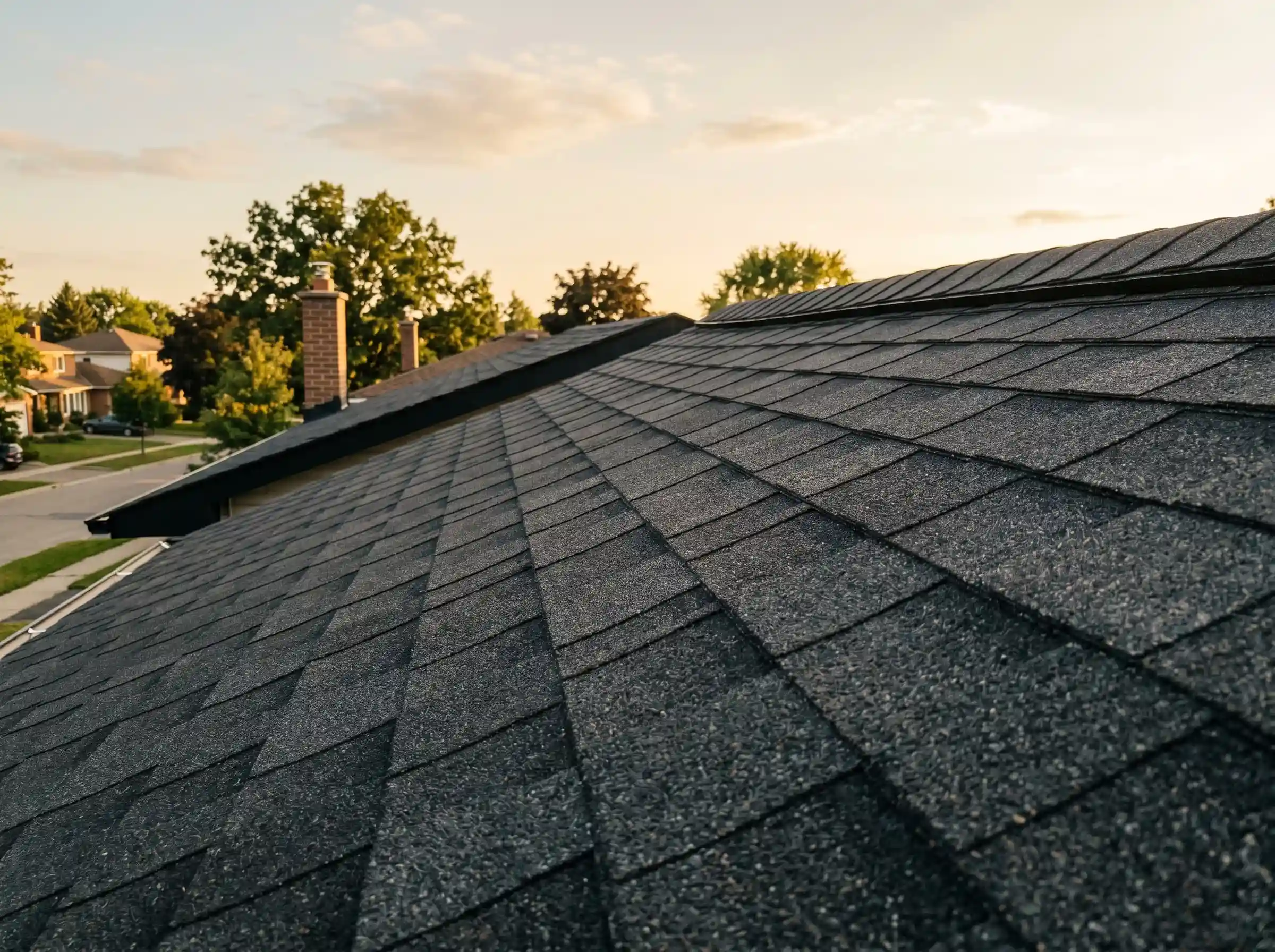
New grit alongside shingle pieces, impact marks or a fallen branch deserves prompt inspection. Storm-related loss can expose asphalt and accelerate deterioration; GAF's repair bulletin distinguishes this from harmless loose granules.
Timing alone cannot prove hail or wind caused the damage. Keep dated pictures of what you find and tell the roofer about recent weather, tree work or other work near the roof.
What would justify spending money?
For a new roof, send the installer dated photos if substantial shedding continues for months or the roof's appearance changes. Include the installation date, shingle product if known and gutter-cleaning date. That is more useful than a bag of grit with no history.
Missing shingles, obvious damage or water inside deserve earlier help. If you find a shingle on the lawn too, start with the wind-damage checks.
Be wary of a treatment sold on the strength of a dirty gutter. Ask which defect it fixes and whether the shingle manufacturer approves it. The reason to spend is a roof problem someone can show you.